


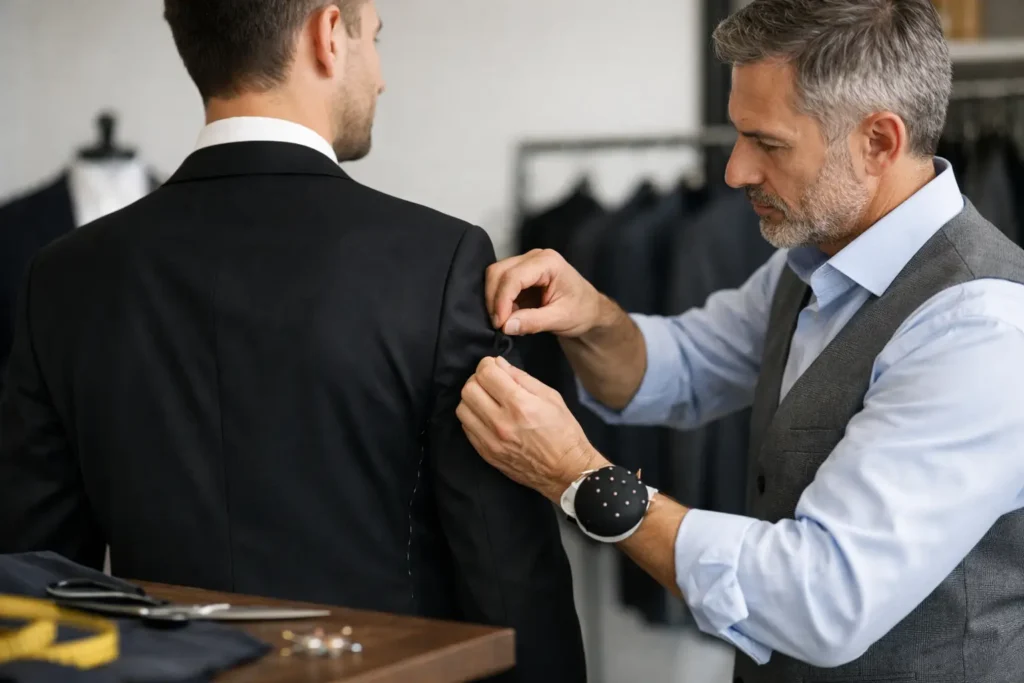
How to Resize Formalwear Correctly for a Better Fit
A formal outfit can look expensive on the hanger and still feel wrong the moment you put it on. A jacket that pulls across the shoulders, a gown that slips at the bodice or trousers that break heavily over the shoe can distract from the whole look. Knowing how to resize formalwear correctly means understanding that good alterations are not simply about taking fabric in or letting it out. They are about preserving proportion, movement and the original design of the garment.
For a wedding, black-tie event, school formal, race day or important work function, fit deserves more attention than a quick last-minute fix. Formalwear is usually more structured than everyday clothing, often with lining, boning, padding, delicate fabrics or carefully placed details. Each of these elements affects what can be altered and how the garment should sit on the body.
Start with the fit that matters most
Before any pins go in, decide what needs to feel better. A formal garment should allow you to stand naturally, sit comfortably and move without strain. It should also look balanced from the front, side and back. This is why trying on formalwear in front of a mirror is only part of the process. Walk, sit, raise your arms and wear the shoes and undergarments you intend to use on the day.
For suits and tuxedos, the shoulders are the first point to assess. A well-fitting shoulder sits flat and ends close to your natural shoulder point. Shoulder alterations are possible in some garments, but they are complex and can change the sleeve pitch, collar and chest shape. If the shoulders are significantly too wide or too narrow, choosing a better starting size is often the wiser option.
For dresses, the bodice is usually the key fitting area. It needs to support the wearer without gaping, digging in or flattening the shape of the garment. A waist adjustment may be straightforward, but the work becomes more specialised when there is boning, built-in cups, beading, lace or a zip close to the side seam.
How to resize formalwear correctly without changing its character
The best alteration follows the garment’s construction rather than fighting it. A tailor considers where seams sit, how the lining is attached, whether the fabric has enough seam allowance and how an adjustment will affect the overall silhouette.
Taking in a suit jacket, for example, is often done through the side seams or centre back seam. The goal is to remove excess fabric while keeping the lapels, pockets and vents in their intended position. Taking in too much can make the jacket pull when buttoned, distort the vent or create horizontal drag lines across the back.
With formal trousers, the waist, seat and hem often need to work together. A waistband can sometimes be reduced or extended, but the amount depends on the original seam allowance and pocket placement. The hem should then be set to suit the shoes. For a classic tailored look, trousers usually rest lightly on the shoe with a small break, rather than bunching around the ankle.
A formal dress may need adjustments at the side seams, centre back, shoulders or hem. A fitted gown can be made smaller through more than one area to keep the shape even. If all excess is removed from one seam only, darts, bust shaping or the placement of a zip may become unbalanced. A careful approach creates a smooth fit that still looks like the dress was made that way.
Choose the right size before relying on alterations
Buying formalwear one size too large is often safer than buying it too small, especially where there is room in the seams to take it in. But this is not a universal rule. A garment that is much too large can require extensive work through the shoulders, armholes, neckline and torso. By the time all those areas are adjusted, the result may not be as clean or cost-effective as selecting another style or size.
Formalwear that is too small presents different limits. Many quality garments include seam allowance that allows for a modest amount of letting out, particularly through the waist or centre back. However, not every garment has spare fabric. A dress with a narrow seam allowance, a tightly fitted lining or an exposed zip may have little room to expand.
It also depends on the fabric. Wool suiting is generally forgiving and responds beautifully to pressing and reshaping. Satin, silk, crepe and chiffon can show every needle mark and pressed seam. Velvet, sequins and heavily beaded fabrics need extra care so that the pile, surface detail and drape are not damaged during the alteration process.
Bring the complete outfit to your fitting
A precise fitting is only possible when the final outfit is considered as a whole. Bring the shoes you will wear, along with shapewear, hosiery, a bra or any undergarments that affect the fit. Even a small change in heel height can alter a dress hem or trouser length noticeably.
Accessories also matter for some garments. A sash, belt, detachable straps, jacket, shawl or overskirt may change where a garment sits. If you are having a bridesmaid dress or wedding outfit altered, bring any pieces that will be worn with it. This helps the tailor assess the complete silhouette rather than making decisions based on only one layer.
At the fitting, be honest about how you want to wear the garment. Do you prefer a close, sculpted fit, or do you need more ease for dancing, sitting through a dinner or moving between meetings? There is no single correct amount of comfort. The right choice is one that looks polished while allowing you to enjoy the occasion.
Hemming is more than measuring from the floor
A formal hem should look intentional, whether it is a full-length gown, cocktail dress, tuxedo trouser or tailored skirt. The fabric needs to fall evenly all the way around the body, which is not always the same as measuring the same distance from the floor. Posture, hip shape and the way the garment hangs can make one area appear longer than another.
Long dresses may need to be pinned while you stand in your event shoes. A fuller skirt can be marked in several places so the hem follows the natural fall of the fabric. Where there is lace, beading, a scalloped edge or horsehair braid, the original finish may need to be removed and carefully reapplied. This takes more time, but it protects the design that made you choose the garment in the first place.
For trousers, avoid hemming too early if you have not selected your shoes. A pair intended for loafers will sit differently from a pair worn with heeled boots. The same principle applies to women’s tailored trousers, where a wide-leg style and a slim-cut style require different breaks and proportions.
Allow enough time for quality work
Formal alterations should not be left until the week of an event if you can avoid it. A simple hem may be completed quickly, while a lined jacket, beaded dress or wedding gown can require more than one fitting. Time allows for careful pinning, construction work, pressing and final checks.
Aim to arrange your first fitting as soon as you have your outfit and final shoes. If your weight is likely to change before the event, tell your tailor early. In some cases, it is sensible to complete major adjustments first and leave a final minor fitting closer to the date.
At AD Stitch, formalwear is assessed garment by garment because the best method depends on its fabric, construction and the fit you want to achieve. That personalised approach is especially valuable when a favourite suit, special dress or wedding piece needs skilled attention rather than a generic alteration.
Know when a resize may not be the best option
Not every formal garment should be significantly resized. Deeply altered shoulders, very small armholes, severe neckline changes and major changes to a lined or heavily embellished garment can be expensive and may compromise the original shape. A trusted tailor will explain these limits clearly, along with alternatives that may give a better result.
Sometimes a small improvement makes the greatest difference: shortening sleeves so shirt cuffs show neatly, refining a waist, lifting straps, adjusting a hem or shaping the seat of trousers. These details are subtle, but they are often what separates an outfit that merely fits from one that looks considered and feels completely your own.
Give your formalwear the time and attention it deserves. A thoughtful fitting, the right shoes and skilled tailoring can turn a good garment into one you feel confident wearing from the first photo to the last dance.