


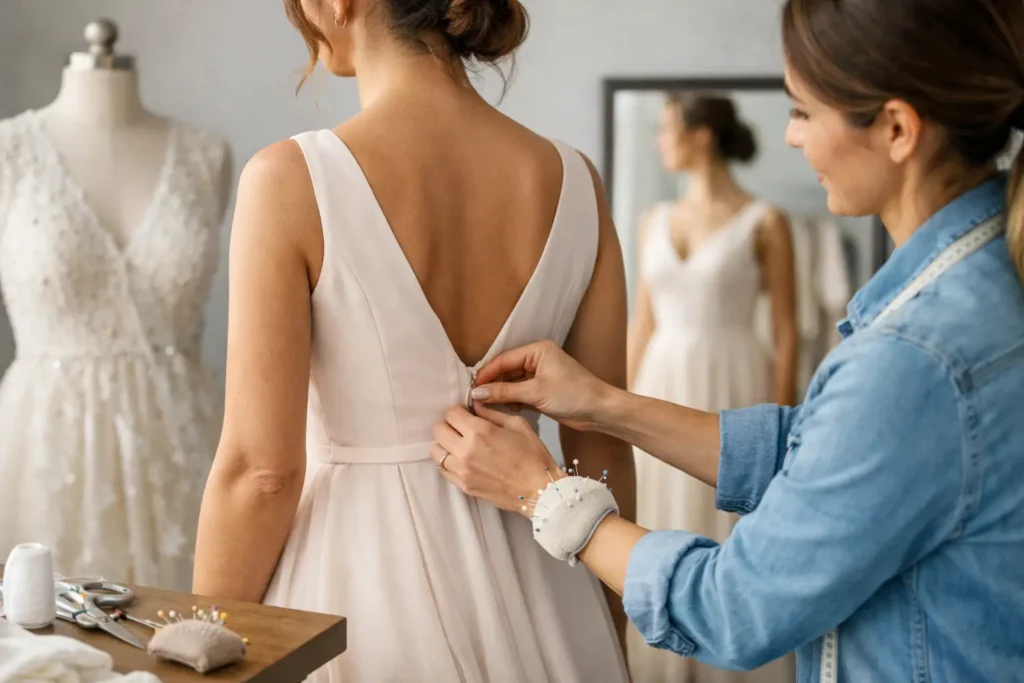
Why Do Dresses Need Alterations for a Better Fit?
A dress can look perfect on the hanger, then feel slightly wrong the moment you put it on. The waist may sit too low, the straps may slip, the hem may catch at an awkward point, or the bodice may pull when you move. Why do dresses need alterations? Because clothing is made to standard measurements, while every body, occasion and preferred fit is different.
A professional alteration is not about changing a dress for the sake of it. It is about making a garment sit where it should, move comfortably and look intentional. Whether it is a work dress, a special-occasion outfit, a bridesmaid dress or a treasured vintage piece, a few precise adjustments can make a remarkable difference.
Why Do Dresses Need Alterations?
Most ready-to-wear dresses are produced in a limited set of sizes. Those sizes are useful starting points, but they cannot account for individual proportions. You might have a size 12 waist and a size 10 bust, a longer torso, narrower shoulders, a fuller hip or a shorter back length than the pattern was designed for.
That does not mean the dress is poor quality or that there is anything unusual about your shape. It simply means the dress was made for a general size chart rather than for you. Alterations close that gap between an off-the-rack garment and a considered, comfortable fit.
The right adjustment also protects the overall design. Taking in side seams, refining darts or adjusting shoulder straps can improve the shape without losing the character that made you choose the dress in the first place. Good tailoring respects the garment’s original lines while making them work for your body.
A Better Fit Changes How a Dress Feels
Fit is more than appearance. If a bodice is too loose, you may spend the day pulling it into place. If it is too tight, sitting, eating or lifting your arms can become uncomfortable. A hem that is too long can become a trip hazard, particularly with heels, stairs or a busy dance floor.
A tailored dress should let you move naturally. You should be able to sit down, walk at your normal pace, raise your arms and feel secure without constantly checking the neckline or straps. This is especially valuable for long workdays, weddings, formal functions and family celebrations, when you want to focus on the occasion rather than your outfit.
Even a small change can improve comfort. Shortening straps may lift the bust and stop a neckline from gaping. Taking in the waist can prevent fabric from twisting around the body. Adjusting the hem can create cleaner proportions and make the dress easier to wear with your chosen shoes.
Standard Sizing Cannot Account for Proportion
Two people can wear the same labelled size and need completely different alterations. Dress sizing is based on a pattern block, but real bodies are not pattern blocks. Height, shoulder slope, bust placement, torso length and hip shape all influence the way fabric falls.
This is why buying a dress that fits the largest part of your body, then tailoring the rest, is often the smartest option. A skilled tailor can usually reduce excess fabric more effectively than they can create additional room where there is very little seam allowance. The exact possibilities depend on the construction, fabric and embellishment, so it is best to have the garment assessed before making assumptions.
Some dresses are straightforward to alter, while others require more technical care. A simple cotton shift dress may allow easy adjustments at the side seams. A lined satin gown, beaded formal dress or lace wedding gown needs a more considered approach so the lining, seams, pattern placement and finish remain balanced.
Hemming Is About More Than Height
Hemming is one of the most common dress alterations, but it is rarely just a matter of cutting fabric off the bottom. The correct finished length depends on the dress style, the shoes you will wear and where you plan to wear it.
A midi dress can look elegant at one point on the calf and unbalanced a few centimetres higher or lower. A full-length evening dress should usually skim the floor without dragging. A cocktail dress may need a shorter hem to sit neatly above the knee, while a work dress may call for a more conservative finish.
The shape of the hem matters too. Circle skirts, pleated fabrics, bias-cut dresses and dresses with uneven layers require careful handling. On a bias-cut garment, the fabric can settle or stretch after hanging. On a dress with lace or a decorative border, the hem may need to be reshaped so the design still looks even. These are details that distinguish a quick fix from a polished result.
Alterations Can Improve Shape Without Changing Your Style
Many people worry that alterations will make a dress look different. In reality, careful tailoring often allows the dress to look more like it was meant to. When the shoulders sit correctly, the waist is in the right position and the fabric follows the body cleanly, the original style becomes clearer.
A sheath dress can look sharper when the side seams are refined. A loose maxi dress can gain definition with a modest waist adjustment. A wrap dress may need a small internal fastening or neckline adjustment to provide better coverage. A sleeveless dress can sometimes be improved by reshaping the armholes, although this depends on the amount of fabric available and the position of the seams.
The goal should not always be a very tight fit. Some designs are intended to drape, float or have room through the body. A good fitting balances the designer’s intended silhouette with your comfort and confidence. There is a difference between an intentionally relaxed dress and one that simply looks too large.
Formal and Wedding Dresses Need Extra Care
Special-occasion dresses often need alterations because the stakes are higher. You may only wear the garment once, but photographs, movement and comfort matter for the entire event. A dress that fits beautifully in a changing room can feel very different after several hours of standing, sitting, greeting guests and dancing.
Wedding dresses and bridesmaid dresses may involve boning, multiple linings, delicate lace, tulle, appliqué, beading or built-in support. Formal gowns can have complicated hems, structured bodices and fine fabrics that show every stitch. These garments need careful measurements, thoughtful pinning and workmanship that preserves the finish inside and out.
Timing matters. Allow enough time for an initial fitting, the alteration work and any follow-up fitting that may be required. Bring the shoes and undergarments you plan to wear, as both can affect the hem, posture and fit through the bodice. If you are still choosing accessories, it is usually sensible to finalise the shoes before a hem is set.
When Is a Dress Worth Altering?
In many cases, alterations are a practical choice rather than a luxury. If you love the fabric, colour and overall style but the fit is not quite right, tailoring can help you get far more wear from the garment. It can also be a sensible alternative to replacing a quality dress that no longer fits after changes in weight, lifestyle or personal preference.
There are limits. A dress may not be worth extensive work if the fabric is worn out, the seams are too fragile, the required changes would alter the whole structure, or the cost exceeds the value you place on the garment. An honest assessment is part of professional service. Sometimes a simple repair or alteration is ideal; sometimes it is better to choose another dress.
Before booking, try the dress on properly rather than judging it by the label alone. Notice where it feels loose, tight, long or restrictive, but avoid pinning it yourself if you are unsure. During a fitting, a tailor can assess the fabric, seam allowances and construction, then advise on what can be achieved.
The Value of a Professional Fitting
Professional dress alterations are measured in small details: balanced seams, smooth lining, secure fastenings, even hems and a shape that remains comfortable when you move. These details are easy to overlook until they are missing.
At AD Stitch, each fitting begins with the garment and the person wearing it. The aim is not simply to make a dress smaller or shorter, but to create a refined fit that feels natural and suits the way you will wear it. For Melbourne locals preparing for an event or refreshing an everyday favourite, that personal attention can turn an almost-right dress into one you are genuinely pleased to put on.
The best dress is not necessarily the one with the most expensive label. It is the one that lets you stand comfortably, move freely and feel like yourself from the first step out the door.