


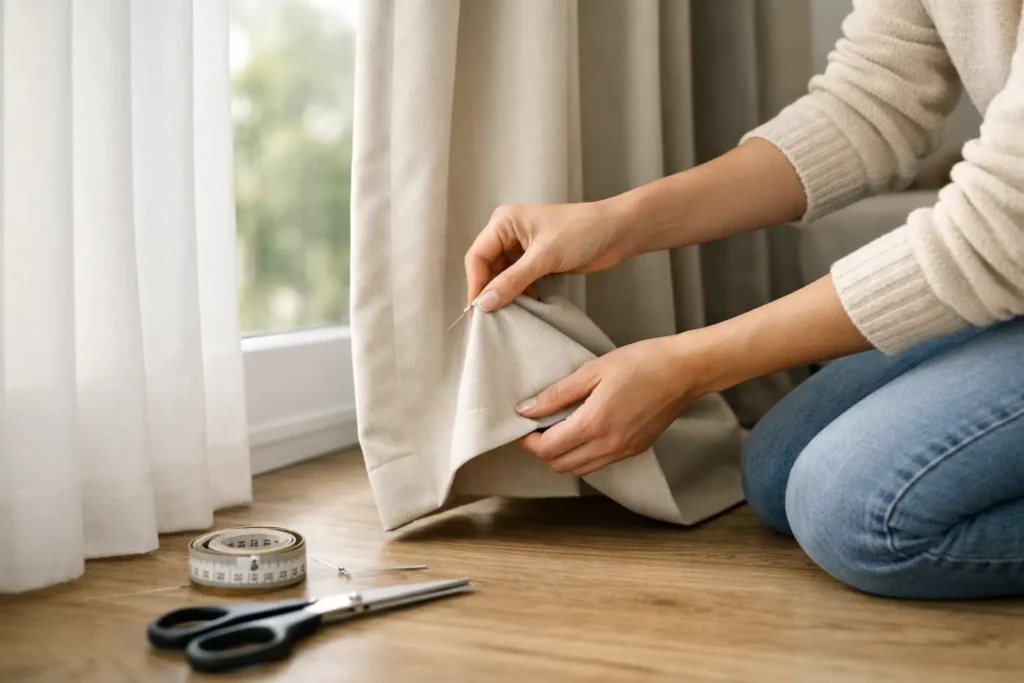
How to Adjust Curtain Length for a Tailored Look
Curtains that puddle untidily on the floor, hover awkwardly above it or catch under furniture can make an otherwise well-finished room feel incomplete. Knowing how to adjust curtain length properly is less about taking off a few centimetres and more about choosing the right finished look, measuring from the correct point and respecting the fabric’s weight and construction.
A careful alteration can make ready-made curtains appear custom-made. A rushed hem, however, can leave panels uneven, too short after washing or difficult to hang neatly. Before cutting anything, decide how the curtains should sit, then measure them while they are hanging in their final position.
Choose the right curtain drop first
There is no single correct curtain length. The best finish depends on the room, the curtain style and how practical you need the space to be.
A floating finish, where the hem sits around 1 to 2 cm above the floor, is a popular choice for busy family areas, bedrooms and sliding doors. It looks tidy, makes vacuuming easier and reduces wear along the bottom edge. This is usually the most practical option for lined blockout curtains and heavier fabrics.
A kissing finish means the curtain just touches the floor. It creates a refined, tailored appearance but needs more precise measuring, particularly if the floor is uneven. It suits formal living rooms, dining rooms and well-maintained carpeted spaces.
A puddled finish allows extra fabric to rest on the floor. While it can look luxurious with lightweight sheers or decorative curtains, it is less practical in high-traffic rooms. Dust, pet hair and regular cleaning quickly become factors, so this style is best chosen for appearance rather than convenience.
For curtains above a window, keep the same principle in mind: the finished length should look intentional. Short curtains that stop halfway down a wall can make a room feel smaller unless they are designed for a specific purpose, such as a kitchen or bathroom window.
How to adjust curtain length accurately
The biggest measuring mistake is measuring the curtain panel while it is lying flat. Fabric can stretch, headers can sit differently once hung and floors are rarely perfectly level. Always install the curtain rod or track first, hang the panels and let them settle before marking the hem.
Start with the hardware in its final position
The curtain length is measured from where the curtain actually hangs, not from the top of the rod. With eyelet curtains, the fabric drops from the top edge of the eyelet. With pencil pleat, pinch pleat or S-fold curtains, the hook position and track can change the finished drop considerably.
If you are changing curtain hardware at the same time, do that before altering the curtains. Raising a rod by a few centimetres may solve a short-curtain problem, while lowering it can create unnecessary work. This is particularly useful in older Melbourne homes, where window heights and ceiling lines may not be consistent from room to room.
Check the floor in more than one place
Measure the required drop at the left, centre and right of each window. Timber floors, carpet, tiles and older concrete slabs can all vary across a room. If there is a difference, use the shortest measurement as your guide for a floating or kissing finish, then shape the hem slightly to follow the floor line.
Marking one point only can result in a curtain that looks fine at one edge but drags at the other. A professional finish often comes down to this small detail.
Account for washing and fabric movement
Natural fibres such as linen, cotton and wool can shrink or change slightly after cleaning. If the curtains are new and washable, follow the care instructions and consider washing or steaming them before final hemming. This is especially important for unlined linen curtains, which can relax or draw up depending on humidity and handling.
For lined curtains, thermal curtains and blockout panels, avoid assuming the face fabric and lining will behave identically. Both layers need to be checked while hanging. A hem that appears straight from the front may pull or ripple if the lining has been folded incorrectly.
Mark the new hem carefully
Once the curtains are hanging correctly, use pins, fabric chalk or removable marking tape to indicate the desired finished length. Work across the full width rather than marking only the outside edges. For wide curtains, an extra pair of hands can make this job far easier.
Take the panels down and lay them on a clean, flat surface. Measure from the existing bottom hem upwards to your marked line. Add enough fabric above that line to create the new hem allowance. For most curtains, a deeper hem looks more substantial and hangs better than a narrow fold.
As a guide, a 7 to 10 cm double-fold hem suits many standard curtain fabrics. Heavy drapery may need a deeper hem to maintain a balanced fall, while very sheer fabric may need a narrower, carefully finished edge. The original curtain hem is often a useful reference, particularly on quality lined panels.
Do not cut first unless you are completely certain of the finished length. Excess fabric is forgiving. Fabric that has been cut too short is much harder to correct, especially where there is limited hem allowance.
Hemming options for different curtains
The right method depends on the fabric, the lining and how permanent you need the result to be.
Sewn hems offer the cleanest finish
A stitched hem is the strongest and most polished option for most curtains. On unlined curtains, the fabric is generally folded twice, pressed and stitched close to the upper fold. Matching thread and a straight, even stitch make the alteration disappear from view.
Lined curtains require more care. The face fabric and lining are often hemmed separately so the lining sits slightly shorter and does not show from the front. This allows the curtain to fall naturally and prevents the edges from pulling. Heavy blockout curtains can be bulky to handle on a domestic machine, so a professional alteration is often worthwhile.
Fusible hemming tape is useful, but temporary
Iron-on hemming tape can be a convenient option for lightweight curtains or a quick adjustment before an event, rental inspection or seasonal change. It works best on clean, smooth fabric that can tolerate heat.
The trade-off is durability. Tape may lift after repeated washing, in strong sunlight or on textured fabrics. It can also create a stiff line in soft sheers. Treat it as a short-term solution rather than the best choice for expensive curtains, lined drapes or panels you expect to keep for years.
Clip-up methods avoid cutting altogether
If you are unsure about a permanent alteration, curtain rings with clips or temporary fabric clips can lift the panel without cutting. This can work well for café curtains, casual linen panels or a trial run before sewing. The finish is more relaxed, though, and may not suit formal pleated curtains.
Pressing is part of the alteration
A hem can be perfectly measured and still look poor if it is not pressed properly. Use the correct heat setting for the fabric and test an inconspicuous section first. Synthetic blockout coatings, velvet, silk and delicate sheers need particular care.
Press the folds before stitching, then lightly press the finished hem from the reverse side. Avoid flattening pile fabrics or leaving shine marks on darker materials. A pressing cloth provides useful protection when you are working with delicate or heat-sensitive curtains.
After rehanging, step back several metres and check the overall line. Look at the curtains both open and closed. Panels that sit neatly when open can shift when drawn across the track, especially if the hooks are unevenly placed or the heading tape has stretched.
When professional curtain alterations make sense
Curtain hemming is manageable for straightforward, lightweight panels, but some jobs are better handled by an experienced tailor. Full-length lined curtains, wave-fold systems, velvet drapes, patterned fabric requiring pattern matching and large multi-panel windows all demand more precision than a quick fold and stitch.
Professional help is also sensible when the fabric is costly or the curtains are sentimental, custom-made or difficult to replace. A tailor can assess the construction, preserve the correct hem proportions and ensure each panel finishes at the same level. At AD Stitch, curtain alterations are handled with the same attention to measurement and finish as a well-fitted garment.
A well-adjusted curtain should not draw attention to the hem. It should simply hang cleanly, frame the window beautifully and make the room feel considered. Take the time to measure after hanging, allow for the fabric’s behaviour and choose a finish that suits the way you live in the space.