


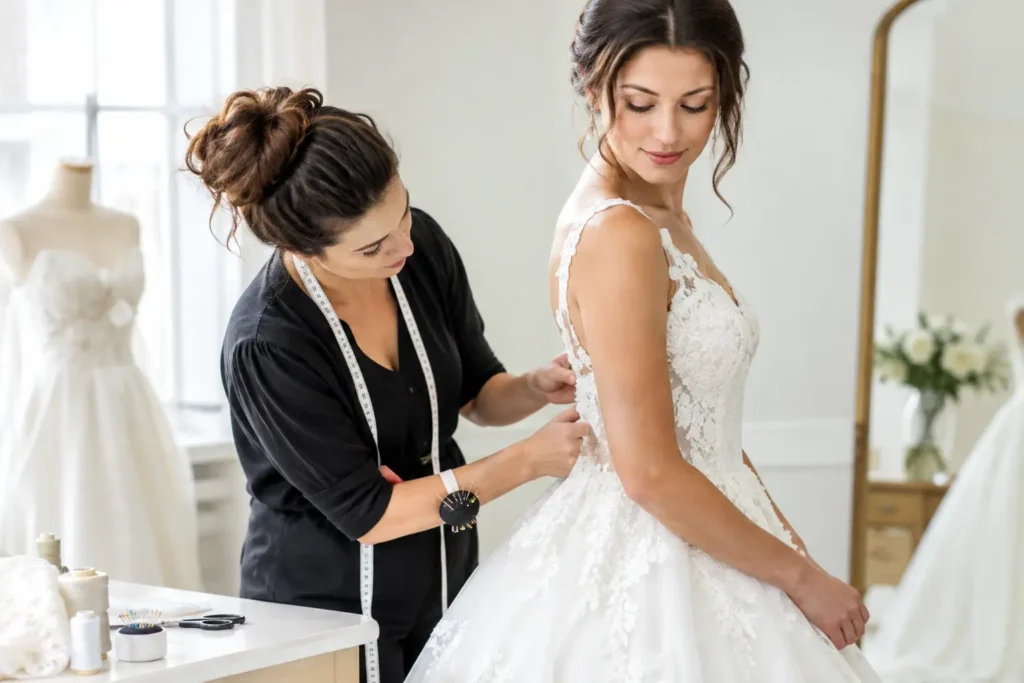
Wedding Dress Alterations: Complete Guide
A wedding gown can look perfect on the hanger and still feel wrong when you move. The hem may catch under your shoes, the bodice may shift when you raise your arms, or the neckline may sit differently once you have your veil and jewellery on. This wedding dress alterations: complete guide explains how to plan the process, what can realistically be changed, and how to arrive at your final fitting feeling calm and confident.
Why wedding dress alterations matter
Bridal sizing is not everyday sizing. Wedding dresses are often made to standard measurements, while every bride has her own proportions, posture and preferred level of comfort. Alterations refine the gown around your body so it looks balanced in photographs and feels secure from the ceremony through to the last dance.
A good alteration is not simply about making a dress smaller. It considers the fabric, boning, lining, lace placement, beading, train, bustle and the way the gown moves. A structured satin gown requires a different approach from a soft chiffon dress, while a heavily beaded bodice needs careful handling to preserve its finish.
The aim is a fit that looks effortless. You should be able to sit, hug people, walk comfortably and breathe without constantly adjusting your dress.
When to book your alterations
As a guide, book your first fitting around eight to 12 weeks before the wedding. This gives your tailor enough time for detailed work and allows room for follow-up fittings. For gowns with extensive lace, beading, corsetry or major redesign work, booking earlier is sensible.
Avoid starting too late, even if the alteration appears minor. Bridal work is precise, and a hem or bodice adjustment may involve several layers. Peak wedding periods can also mean tailoring appointments fill quickly.
Try to keep your weight stable once fittings begin. Small changes can affect the way a fitted bodice sits, particularly in gowns with boning, corsetry or delicate straps. If your size does change, tell your tailor early rather than waiting until the final appointment.
What to bring to your first fitting
Bring the shoes you plan to wear on the day, along with your bra, shapewear or cups if you will be using them. Heel height directly affects the hem, so substitute shoes can lead to a dress that is too long or too short.
It also helps to bring your veil or hair accessory if it affects the overall balance of the gown. If you have a particular concern, such as feeling exposed in the neckline or wanting more support in the bust, say so at the beginning. Clear communication lets your tailor recommend the most suitable solution.
The most common wedding dress alterations
Most bridal alterations focus on fit, length and movement. The right changes depend on the construction of your gown and how much room is available in the seams.
Taking in or letting out the bodice
A bodice should feel firm but not restrictive. If it is loose, it can gape at the neckline, slide down or create wrinkles through the waist. Taking it in often involves adjusting side seams, centre back seams or both, depending on the design.
Letting a dress out can be possible if there is sufficient seam allowance inside the gown. This varies widely between designers and styles, so it should never be assumed. A skilled tailor can assess the available fabric and explain whether an alternative, such as a lace-up back panel or discreet gusset, is appropriate.
Adjusting straps and sleeves
Straps that are too long can change the entire shape of a dress. The bust may sit too low, the armholes can gape and the waistline may drop. Shortening straps is usually straightforward, but detailed straps with lace appliqué, beading or multiple layers require more careful reconstruction.
Sleeves can sometimes be narrowed, shortened or reshaped. This is particularly useful if you want greater arm movement or a more refined fit through the shoulder. With lace sleeves, the pattern needs to be considered so the alteration remains natural-looking.
Hemming the gown
A wedding dress hem is more involved than an everyday dress hem because many gowns have multiple layers. Tulle, lining, organza and lace may all need separate work. A lace-edged hem or scalloped border takes additional time because the original design must be retained where possible.
Your hem should sit at the right point when you are standing naturally in your wedding shoes. It needs to be long enough to preserve the gown’s line, but short enough to reduce the risk of tripping or dragging dirt through the reception venue.
Adding a bustle
If your gown has a train, a bustle is often one of the most practical alterations you can make. It lifts and secures the train after the ceremony so you can walk, mingle and dance more freely.
There are different bustle styles, and the best option depends on the train’s weight, fabric and shape. Your tailor should show a trusted member of your bridal party how to fasten it at the final fitting. Ask them to take a short video on their mobile, as bustle points can be hard to remember in the excitement of the day.
Improving comfort and coverage
Small refinements can make a significant difference to how confident you feel. These may include adding bra cups, creating more support at the bust, raising a neckline, adjusting a low back, adding modesty panels or securing shoulder straps.
Not every change is advisable. A major change to a neckline, for example, can affect the way the bodice is supported. An experienced tailor will explain the trade-offs clearly and recommend alterations that protect both the structure and appearance of your gown.
Wedding dress alterations: complete guide to fitting appointments
Most brides need two or three fittings. At the first fitting, the tailor assesses the gown, pins the key adjustments and discusses what is achievable. This is the best time to raise all your questions, including whether you can sit comfortably and how the bustle will work.
At the second fitting, you will try on the gown after the initial work has been completed. The focus is on checking the overall line, movement and comfort. You may find that a small strap adjustment or final bodice refinement is needed once the dress is closer to your shape.
Your final fitting should happen close enough to the wedding that the fit is current, but with enough time to make small corrections if required. Wear the full foundation garments and shoes again. Walk, sit, lift your arms and practise a few dance steps. It may feel slightly awkward, but it is far better to test movement in the fitting room than discover an issue on the day.
What affects the cost of bridal alterations?
There is no single price for wedding dress alterations because the work depends on construction and detail. A simple strap shortening is very different from reshaping a boned bodice, hemming several layers or adjusting lace by hand.
Fabric and embellishment matter. Delicate silk, fine tulle, hand-sewn lace and beadwork require slower, specialised handling. The complexity of the gown, number of layers, required fittings and urgency of the timeframe will also influence the quote.
The most useful approach is to bring the gown in for an assessment before committing to changes. A professional tailor can inspect the seams, discuss your priorities and provide a clearer indication of the work involved. Be wary of choosing solely on the lowest price. Your wedding gown is a detailed garment, and careful workmanship protects both its look and its wearability.
Avoid these common mistakes
Do not leave your shoes or shapewear until the last minute. They are part of the fit, not an afterthought. Likewise, do not assume a gown can always be made larger, shortened without affecting the design, or altered dramatically after you have ordered it.
It is also wise to avoid repeatedly trying on the gown at home after the final fitting. Makeup, fake tan, perfume, pets and food can all create avoidable marks or damage. Store it in its garment bag, hang it safely as advised, and arrange transport that keeps it protected.
If you are travelling, ask your tailor how best to pack or carry the gown. Some fabrics crease more readily than others, and a little preparation can save stress on arrival.
Your wedding dress should support the day you have planned, not limit it. With enough time, the right undergarments and an experienced hand, alterations turn a beautiful gown into one that feels made for you. For brides in Melbourne, AD Stitch offers attentive bridal fittings shaped around precision, comfort and the details that matter most to you.