


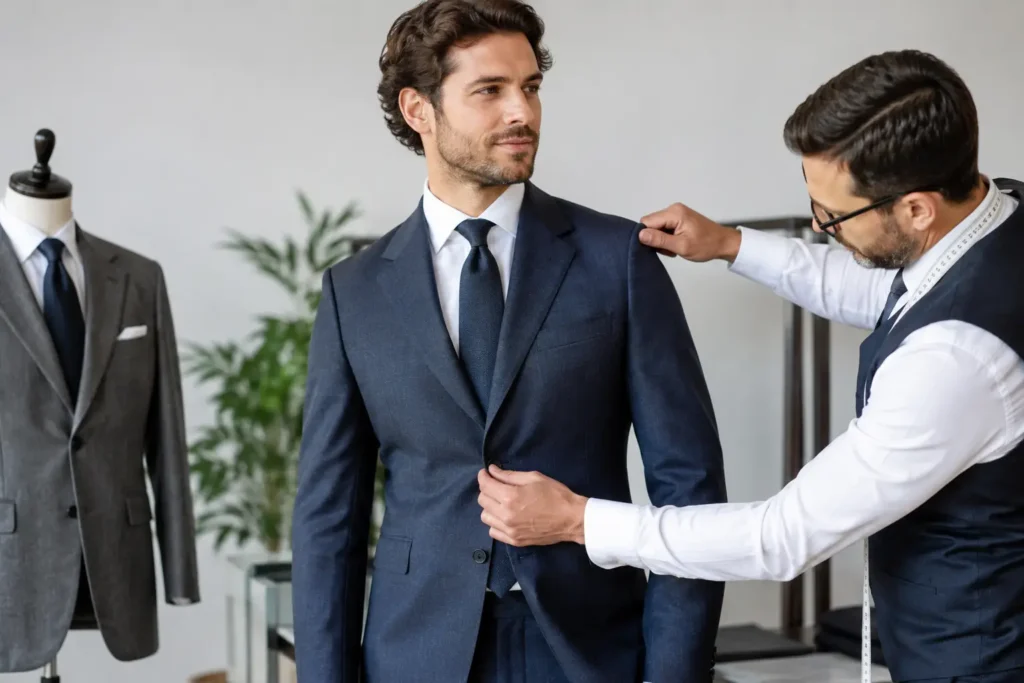
How to Modernise an Old Suit With Tailoring
A suit can be beautifully made, cut from excellent cloth and still look as though it belongs to another decade. The good news is that learning how to modernise an old suit is rarely about chasing every new trend. It is about improving proportion, restoring a clean fit and making considered updates that suit the way you dress now.
A quality older suit is often worth saving. Many have stronger construction, generous seam allowances and better fabric than a new off-the-rack alternative at the same price. With the right alterations, a trusted tailor can turn a suit that has spent years in the wardrobe into something you reach for again.
Start with the suit’s structure, not the accessories
Before choosing a new shirt, tie or pair of shoes, assess the jacket and trousers honestly. Put the full suit on with the shoes you would normally wear and stand naturally in front of a mirror. A jacket that is too large in the shoulders, too long through the body or baggy in the sleeves will still look dated, even with modern accessories.
The shoulders are the first consideration. They should sit neatly at the edge of your natural shoulder, without overhang or deep divots. Shoulder alterations are possible in some cases, but they are complex and can be costly. If the shoulder line is dramatically oversized, the suit may not be the best candidate for major work.
Look next at the chest, waist and back. Older jackets were often cut with more room through the body. Taking in the side seams or centre back can create a cleaner shape without making the jacket tight. You should be able to button it comfortably, sit down and move your arms without pulling across the back.
How to modernise an old suit through fit
Modern fit does not necessarily mean very slim. A sharply tailored suit should follow your frame while leaving enough ease for comfort. The most successful alterations make the garment look intentional, rather than altered.
Refine the jacket length and sleeves
Jacket length is one of the clearest signs of an older cut. A jacket that extends well below the seat can make the whole outfit feel heavy. Shortening it slightly can improve the balance, but it must be approached carefully. The placement of pockets, buttonholes and vents limits how much can be removed without affecting the jacket’s proportions.
Sleeve length is usually a more straightforward improvement. As a guide, the jacket sleeve should end around the wrist bone, allowing roughly 1 to 1.5 centimetres of shirt cuff to show. This small adjustment gives the jacket a more polished, current appearance immediately.
Shape the waist without overdoing it
A little waist suppression can transform a boxy jacket. The aim is a neat line from chest to hip, not an exaggerated hourglass shape. Too much shaping can strain the buttons and make an older jacket look forced rather than refined.
For double-breasted jackets, restraint matters even more. They are naturally fuller through the front, and their character is part of their appeal. A tailor can refine the fit, but trying to turn a classic double-breasted suit into a very slim single-breasted style usually works against the garment.
Taper trousers for a cleaner line
Trousers are often where an old suit shows its age most clearly. Excess fabric through the thigh, knee and calf can create a loose, untidy silhouette. Tapering the leg can make the suit feel more current while retaining enough room to sit and move comfortably.
The hem matters too. Full break, where the fabric pools noticeably over the shoe, can date an outfit. A slight break or no break creates a cleaner finish, depending on your height, footwear and personal style. If you wear loafers or slimmer leather shoes, a shorter, neater hem often works well. If the trousers have a wide leg or a traditional pleat, keep a little more length to preserve balance.
Preserve the details that give the suit character
Not every traditional feature needs to disappear. A well-cut pleat, a ticket pocket, a strong lapel or a quality horn button can be exactly what makes an older suit distinctive. The goal is not to make it look like every new suit in a shop window. It is to ensure the fit and styling feel relevant.
Lapels are difficult to alter significantly, so work with what you have. A classic notch lapel is versatile, while a wider lapel can look elegant when the jacket fits correctly. Very narrow lapels can feel dated in some suits, but a crisp shirt, open collar and cleaner trouser line may be enough to bring the overall look forward.
Check the lining, pockets, buttons and vents before committing to alterations. A worn lining can often be repaired or replaced, and loose or tired buttons are easily refreshed. These details matter because they affect how the suit feels to wear as much as how it looks.
Update the styling around the suit
Once the fit is right, styling helps move the suit out of its original era. You do not need to replace everything at once. Start with the pieces closest to the face and the shoes on your feet.
A crisp white or pale blue shirt is always reliable, but consider a fine-knit polo, merino crew neck or open-collar shirt for less formal settings. This approach works especially well with a navy, charcoal or mid-grey suit. It makes the suit feel relaxed without losing its structure.
Shoes can change the mood completely. Clean leather loafers, simple Derbies or minimal leather sneakers may suit the occasion better than heavily polished, square-toed dress shoes. The choice depends on the workplace and event. For a wedding, interview or formal business meeting, classic leather shoes remain the safer option. For a dinner, creative office or weekend event, a more relaxed shoe can make an older suit feel fresh.
Keep ties deliberate rather than obligatory. If you wear one, choose a textured silk, knit tie or subtle pattern instead of a shiny matching set. A well-chosen pocket square can add colour, but it should not compete with the tie. Usually, one strong detail is enough.
Know what can and cannot be altered
The best results come from choosing alterations that respect the original garment. Most quality suits can be taken in through the body, have sleeves shortened, trouser legs tapered and hems adjusted. Repairs to linings, pockets and seams are also common ways to extend a suit’s life.
Some changes have limits. Letting a suit out depends on whether there is enough seam allowance inside. Major shoulder changes, drastic jacket shortening and altering the position of buttonholes or pockets can be expensive and may not produce a proportionate result. Fabric condition also matters. If wool is thin at the seat, elbows or crotch, repairs may be visible or short-lived.
This is why an in-person fitting is valuable. A skilled tailor can assess the construction, explain what is achievable and recommend the alterations that will make the greatest difference for your budget. Sometimes a simple sleeve adjustment and trouser taper will do more than a long list of changes.
Give an old suit a new role in your wardrobe
An older suit does not need to return only as a formal matching set. A navy or grey jacket may work separately with chinos, dark denim or tailored wool trousers, provided the cloth and cut are versatile. The trousers may also be useful with knitwear and a casual jacket.
Be selective here. Very formal fabrics, strong pinstripes and highly structured jackets are usually best worn as a full suit. Breaking them apart can look mismatched. But a plain wool suit in a neutral colour often offers more options than people expect.
At AD Stitch, careful suit alterations are approached as an investment in fit, comfort and wearability. A good suit should not sit in the back of the wardrobe because its cut has dated. Bring it in, try it on properly, and let the garment tell you what it can become.