


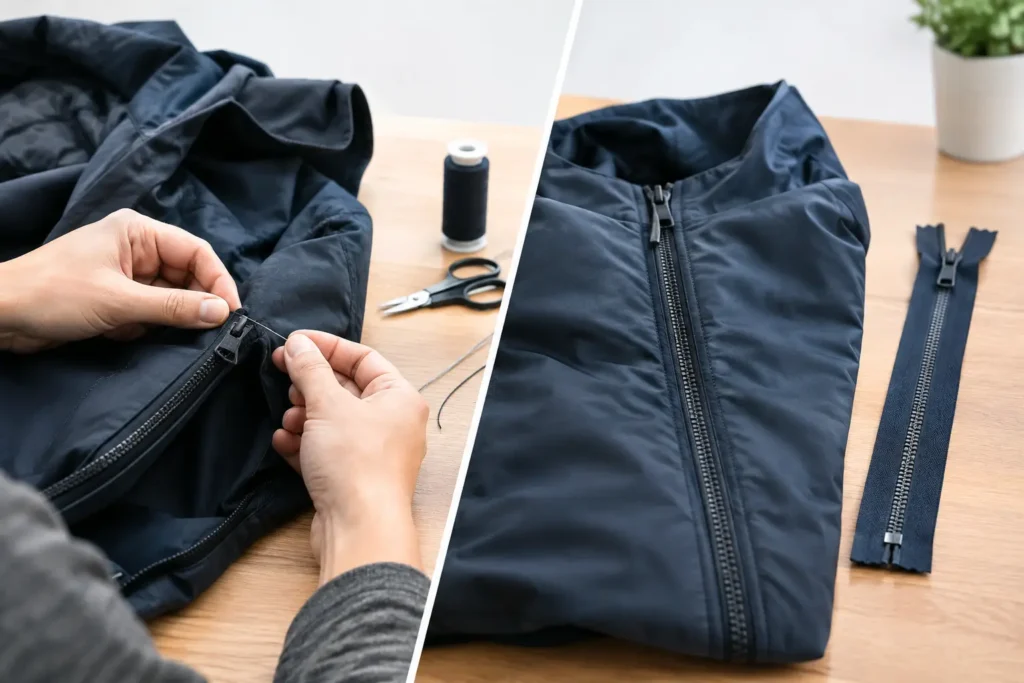
Zip Replacement vs Garment Repair – What Lasts?
A zip that splits on your work trousers or refuses to close on a favourite dress can make an otherwise good garment feel unusable. The choice between zip replacement vs garment repair is not always as simple as fitting a new zip. Sometimes a small, precise repair restores the garment quickly. Other times, replacing the entire zip is the only dependable way to protect the fit, shape and life of the piece.
The right answer depends on what has failed, how the garment is made and how much wear it needs to handle. A formal dress worn once a year calls for a different approach from jeans, a school jacket or a much-loved leather coat worn every week.
Zip Replacement vs Garment Repair: Start With the Fault
A zip is made up of more than its visible teeth. There is the slider, the pull tab, the teeth or coil, the tape on either side, the top and bottom stops, and the stitching that holds everything in place. A problem in one part does not automatically mean the whole zip has reached the end of its life.
When the slider is loose, worn or no longer gripping the teeth properly, the zip may separate behind the slider even though the teeth themselves are in good condition. In some garments, replacing or carefully adjusting the slider can solve the problem without disturbing the original zip tape or seams. This is often a sensible repair when the zip is otherwise sound and a matching replacement slider is available.
A missing pull tab can also be repaired without replacing the zip. The same applies to a loose top stop, a small section of unpicked stitching, or a hem that has caught in the teeth. These issues can look alarming, but they are often localised faults that respond well to careful tailoring.
When a repair is the better option
Garment repair is usually the better choice when it preserves a functioning original component and avoids unnecessary work. This matters particularly for delicate dresses, lined garments and pieces where the zip is difficult to access. Removing a zip can involve opening a lining, waistband, facing or seam, then rebuilding it neatly afterwards.
A repair is also worth considering where an exact colour or style match would be difficult. An older jacket may have a distinctive metal zip, or a dress may use a fine invisible zip in a shade that is no longer readily available. If the existing zip can be made reliable, preserving it may deliver the cleanest finish.
That said, a quick repair should never be used to hide a larger issue. If teeth are bent, missing or damaged, or if the tape is fraying along a long section, a slider repair is unlikely to last. It may work briefly, then fail when you are getting ready for work or an event.
When zip replacement is the safer investment
Full zip replacement is generally recommended when the teeth no longer align, the coil is broken, the tape has torn, or the zip repeatedly opens after closing. These faults affect the zip’s structure, not just one small component. Trying to force it can damage the surrounding fabric and make the eventual repair more involved.
A new zip is often the best option for jeans with a broken metal zipper, jackets with damaged separating zips, trousers with worn fly zips, and dresses where an invisible zip has lost teeth. It provides a dependable closure rather than a temporary fix.
Quality replacement work is not simply about sewing in a new zip. The zip needs to suit the garment’s weight, use and finish. A heavy-duty jacket needs a different zip from a silk dress. A skirt may require a fine concealed zip, while trousers need a zip that can cope with regular movement and pressure. The length, colour, pull style and opening direction all matter to the finished result.
The Garment Itself Can Change the Decision
The value of a garment is not only its purchase price. A well-fitting blazer, a wedding dress, a leather jacket or a pair of trousers that sits perfectly at the waist may be worth repairing because replacing it would mean starting the search for the right fit all over again.
For everyday garments, it helps to weigh repair cost against remaining wear. If the fabric around a zip is thin, torn or badly worn, a new zip alone may not solve the problem. The area may need reinforcing, patching or reconstructing first. On the other hand, if the fabric is strong and the garment fits beautifully, zip replacement can give it years of additional use.
Lined dresses and skirts require particular care. The lining must be opened and reattached cleanly so the finished garment sits flat on the body and does not catch in the zip. With wedding, formal and bridesmaid dresses, the zip may also sit beside beading, lace, boning or delicate fabrics. These details call for an experienced hand, because the goal is not merely a working closure but a finish that looks as though it has always belonged there.
Leather garments are another specialist case. Needle holes in leather remain visible, so the original stitching line and zip size need to be considered carefully before any work begins. A poorly chosen zip or uneven stitching can change the look of the jacket permanently. This is where tailored assessment is far more valuable than a rushed, one-size-fits-all fix.
What a Tailor Checks Before Recommending a Fix
A proper assessment starts with the zip, but it does not stop there. The tailor will check whether the garment pulls across the body, whether the zip is under strain, and whether seams or fabric have weakened nearby. A zip that fails repeatedly may be signalling a fit issue rather than a faulty zip alone.
For example, a dress zip that regularly bursts open at the waist may need a small alteration to relieve pressure. Replacing the zip without addressing that tension can lead to the same problem again. Similarly, if trousers are tight through the hip or seat, the fly zip and surrounding seam may be placed under more stress than they were designed to take.
The construction also matters. A visible zip needs to sit straight and flat. An invisible zip needs to disappear into the seam. A separating jacket zip must engage smoothly at the base, while a bag or boot zip may need a tougher option designed for frequent use. Matching the repair to the purpose of the item is part of craftsmanship, not an optional extra.
At AD Stitch, each garment is assessed for the most practical and lasting solution, whether that means a targeted repair or a carefully fitted replacement zip. For Melbourne customers, bringing the item in allows the fabric, lining, fit and original construction to be checked properly before work begins.
Cost, Timing and the Value of Doing It Once
A small zip repair may cost less and take less time than a full replacement, especially where only the puller, slider or stitching needs attention. Full replacement usually involves more labour because the old zip must be removed without damaging the fabric, a suitable new zip selected, and the garment reassembled with a neat finish.
The cheapest option is not always the most economical. Repeated temporary fixes can add up, and a failed zip can cause damage at the worst possible moment. If you rely on a garment for work, travel, school or an upcoming occasion, a well-executed replacement can offer better peace of mind.
It is also worth acting early. A zip that catches or needs extra force is easier to assess before it tears the tape, pulls out stitching or snags delicate fabric. Avoid forcing it, applying excessive oil or lubricant, or pulling hard on a jammed slider. These attempts can stain fabric, attract dirt or turn a manageable repair into a more complex one.
Give Good Clothes Another Wear
A broken zip does not automatically mean a garment belongs at the back of the wardrobe. The best choice comes down to the exact fault, the garment’s construction and the standard of finish you want. A small repair can be ideal when the zip is fundamentally sound. When the structure has failed, replacement provides the stronger long-term answer.
Bring the garment in before the next important wear, especially if it is a favourite piece that already fits you well. With the right repair, it can return to your wardrobe ready to be worn with confidence.