


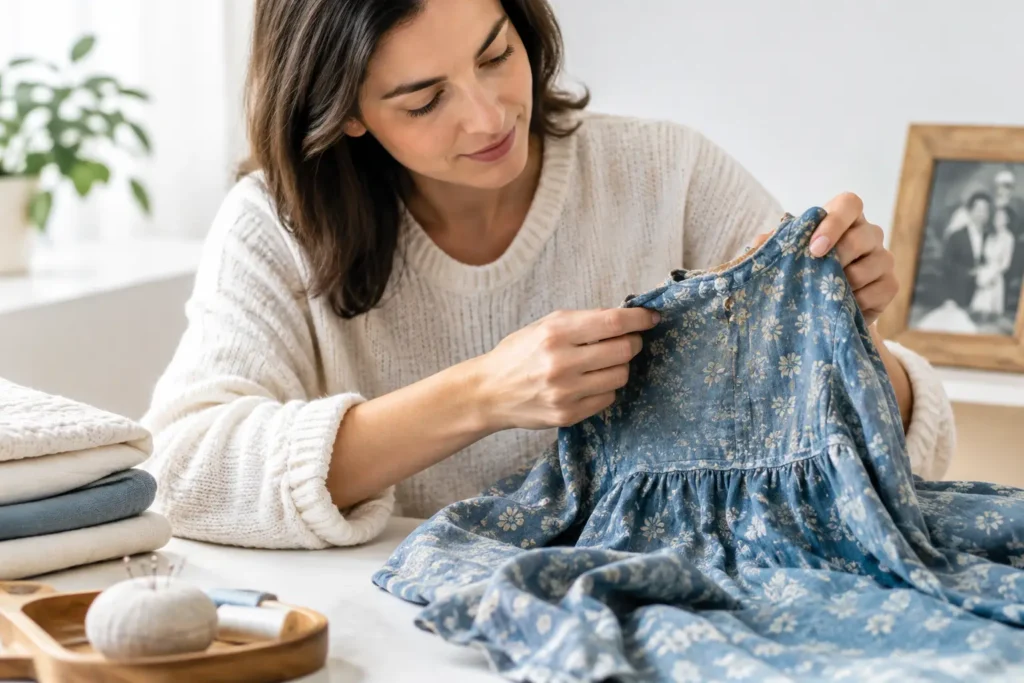
Restoring Sentimental Clothing: Real Examples
A garment can hold a moment more clearly than a photograph. A wedding dress may remind you of the walk down the aisle; a father’s jacket can bring back his familiar shape and scent; a child’s tiny cardigan can make an ordinary drawer feel precious. Restoring sentimental clothing examples shows that careful alterations are not just about making an item wearable again. They are about preserving the story attached to it.
Not every treasured garment should be altered, and not every repair is invisible. Fabric age, damage, construction and future use all matter. But with a skilled tailor’s assessment, many pieces that seem beyond saving can be stabilised, repaired or thoughtfully repurposed.
Restoring sentimental clothing examples that matter
A wedding dress prepared for its next chapter
A wedding gown is often packed away after one wear, only to be found years later with yellowing, loose beading, a damaged bustle or a zip that no longer moves smoothly. Restoration may involve repairing seams, replacing a zip, securing beads and lace, or adjusting the fit so the dress can be worn again for a vow renewal, anniversary portrait or family celebration.
Sometimes the goal is not to wear the gown as it was. A full-length dress may be shortened into an evening dress, while preserved lace or appliqué can be incorporated into a smaller keepsake garment. The right approach depends on the gown’s fabric and condition. Delicate silk, old lace and heavily embellished fabrics need gentle handling, and an alteration should never put irreplaceable detail at unnecessary risk.
A loved one’s suit or jacket made wearable
A well-made suit jacket can outlast changing sizes and changing styles. When it belonged to someone important, restoring it can be particularly meaningful. A tailor may repair a lining, reinforce worn elbow areas, replace missing buttons or mend a split seam that has kept the jacket in the wardrobe.
Fit alterations can also make a real difference. Sleeves may be shortened, the waist refined or the jacket adjusted for a new wearer, provided there is enough seam allowance and the garment’s structure allows it. With a structured suit, however, major changes to the shoulders or chest are more complex. An honest consultation should explain what can be done neatly and where preserving the original cut is the better choice.
A vintage coat brought back into regular use
Vintage coats often carry family history as well as exceptional construction. A wool coat inherited from a grandparent may have a torn lining, moth holes, worn cuffs or a dated hem length, yet still be far better made than many new alternatives.
Small moth holes can sometimes be carefully repaired or reinforced, while a new lining can make the coat comfortable to wear again. Frayed cuffs may be turned up, shortened or finished with a complementary fabric, depending on the design. These repairs are not always completely undetectable, especially on textured wool, but a well-considered repair can look intentional and extend the coat’s life for years.
Children’s clothing kept as a usable keepsake
Baby clothes are small, soft and full of memory, but they are also commonly stained, stretched or fragile. A treasured christening gown may need a loose trim secured, a damaged fastening replaced or a split seam repaired before it can be passed on to another child.
For garments that cannot safely be worn, preservation is still worthwhile. A tailor can advise whether a repair will stabilise the fabric without overworking it. In some cases, keeping the garment intact, clean and properly stored is more valuable than altering it into something new. Sentiment does not require a dramatic transformation.
A cultural or ceremonial garment restored with respect
Saree blouses, formal dresses, traditional jackets and ceremony outfits often carry both personal and cultural significance. They may be brought out for weddings, religious occasions or milestone family events, sometimes after many years in storage.
Restoration can include repairing hooks, replacing a zip, reinforcing seams or adjusting a blouse for a more comfortable fit while retaining its original detailing. Because these garments can include embroidery, beadwork, fine fabrics and specific construction methods, precision matters. The aim is to preserve the garment’s character, not make it look like something else.
What a tailor checks before restoring a treasured item
The first question is not, “Can this be fixed?” It is, “What condition is the fabric in?” Older fibres can weaken with age, sunlight, moisture, poor storage or previous cleaning. A garment that looks sound on the surface may tear when placed under tension.
A professional assessment considers the fabric, seams, lining, fastenings and any embellishment. It also looks at whether extra fabric is available inside the seams, which affects how much a garment can be let out or reshaped. Before work begins, it helps to be clear about the outcome you want: to wear it, display it, pass it on or simply prevent further deterioration.
Photographs are useful before any restoration, particularly where a garment has visible marks, ageing or unique details. If an item has a story, share it. Knowing that a dress is intended for a daughter’s wedding, or that a coat belonged to a late relative, helps a tailor recommend a careful and appropriate path.
Repairs, alterations and preservation are not the same thing
These terms are often used together, but they serve different purposes. A repair fixes damage such as a broken zip, torn seam or loose hem. An alteration changes fit or shape, such as shortening trousers or taking in a dress. Preservation focuses on reducing further damage, which may mean minimal intervention rather than a full restoration.
For sentimental clothing, the best option is sometimes the least invasive one. Replacing a missing button may be sensible, while replacing every original fastening could remove part of the garment’s history. A visible repair can also be the right decision if an invisible repair would require cutting away too much original fabric.
This is where craftsmanship and judgement matter. A good result should respect the garment’s age, purpose and emotional value, rather than treating it as an ordinary item of clothing.
How to prepare sentimental clothing for an alteration appointment
Avoid washing or attempting a home repair immediately before bringing the item in, especially if it is old, delicate or embellished. Harsh cleaning, ironing and adhesive repair products can make professional work more difficult. Instead, transport the garment clean and dry in a breathable bag or wrapped in a clean sheet.
Bring any spare buttons, matching fabric, removed trims or original belt that came with the garment. If another person will wear it, have them attend the fitting where possible. A photograph of the garment being worn in its original form can also help, particularly with vintage pieces that have been altered before.
At the appointment, ask what will be repaired, whether the work will be visible, and what the risks are. Sentimental pieces deserve clear communication. It is better to choose a modest repair you feel comfortable with than a major change you may regret later.
When a keepsake should stay untouched
There are occasions when restoration is not recommended. Fabric that has become brittle, severely weakened silk, extensive dry rot or very fragile lace may not tolerate stitching, pressing or reshaping. In these cases, careful storage and minimal handling are often the safest choice.
If you would like to honour the item without wearing it, consider preserving it as it is and displaying photographs alongside it. The value of sentimental clothing is not measured by how often it leaves the wardrobe. Sometimes its most meaningful role is simply to remain a tangible connection to someone, somewhere or a day you never want to forget.
For treasured garments that are still strong enough to be worn, expert clothing alterations can offer a respectful second life. At AD Stitch, each piece can be assessed individually, with practical advice focused on protecting the details that make it yours.