


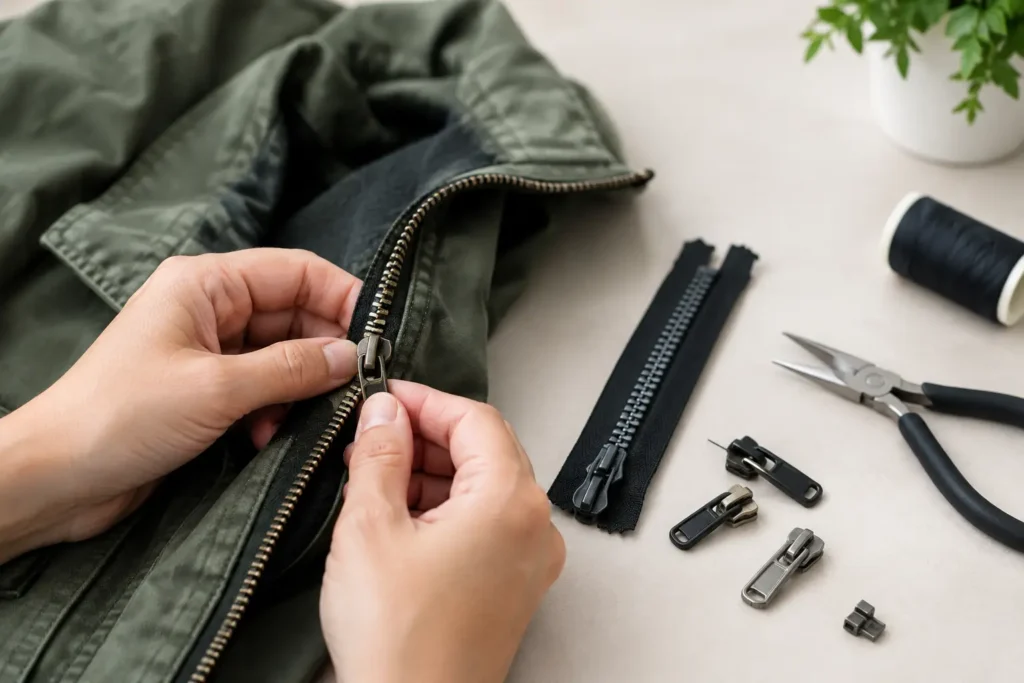
Can a Zipper Be Replaced? When It’s Worth It
A zip that will not close can make an otherwise excellent garment feel unwearable. Whether it is your favourite jeans, a work skirt, a leather jacket or a formal dress, the question is usually the same: can a zip be replaced without compromising the garment? In most cases, yes. A carefully fitted replacement can restore both function and appearance, often for far less than the cost of replacing a quality item.
The right solution depends on what has failed, where the zip sits and how the garment is constructed. Sometimes a small adjustment to the slider is all that is needed. Other times, replacing the full zip is the only reliable way to achieve a neat, lasting result.
Can a zip be replaced on any garment?
Most zips can be replaced, but some garments require more technical work than others. A zip in a simple skirt, pair of trousers or cushion cover is generally straightforward. A concealed zip in a fitted dress, a heavy-duty jacket zip, or a zip set into leather requires greater precision because the surrounding material can be difficult to handle or easy to mark.
A professional tailor will assess more than the damaged zip itself. They will look at the seam allowance, lining, fabric weight, stitching, topstitching and the way the garment sits on the body. The goal is not merely to install a zip that opens and closes. It is to make the repair look considered, sit flat and preserve the original shape of the garment.
Replacement is often worthwhile when the garment is well made, fits beautifully or has sentimental value. It also makes good sense for occasionwear, tailored suits, quality coats and leather pieces, where finding a comparable replacement can be expensive.
First, identify whether the zip needs repair or replacement
Not every zip problem calls for a new zip. The slider is often the culprit. Over time, it can loosen slightly and no longer press the teeth together firmly enough. This is why a zip may appear to close, then split open behind the slider. In some cases, a tailor can replace or adjust the slider rather than remove the entire zip.
A full replacement is usually the better option when teeth are missing, bent or worn down; the tape is torn; the pull has broken away from the slider; or the zip has come away from the garment’s seams. A zip that repeatedly catches or opens may also have damage that a quick fix cannot solve.
It is tempting to force a stuck zip, particularly when you are dressing for work or an event. That can pull teeth out of alignment, tear delicate fabric or damage the seam beside it. Stop before the problem becomes larger, and have the garment assessed while the repair is still manageable.
Zip replacement on common clothing items
Dresses and skirts
Dresses often use concealed or invisible zips, especially through the centre back or side seam. These zips need to be inserted accurately so the teeth remain hidden and the seam lines up perfectly above and below the opening. On a fitted dress, even a few millimetres out of place can affect the way the garment sits.
For formal dresses and wedding garments, matching the colour and choosing a suitable zip type matters. A strong zip that is too bulky can distort a lightweight fabric, while a delicate zip may not cope with the tension of a close-fitting bodice. An experienced alteration specialist will select a zip appropriate to both the fabric and the fit.
Jeans, trousers and shorts
Trouser zips are exposed to regular movement and strain, particularly on jeans. They also include details such as a fly shield, waistband, button closure and topstitching. Replacing the zip properly means reconstructing these layers so the fly lies flat and the finish remains tidy from the outside.
A jeans zip may look like a minor repair, but the original stitching pattern and heavy denim call for suitable machinery and thread. A professional result is less likely to pucker the fabric or leave the front of the jeans looking uneven.
Jackets and coats
Jacket zips do more than close the garment. They help the front hang correctly and can be essential for warmth and weather protection. Replacing a separating zip on a coat or puffer jacket requires the correct length, strength and base fitting. If the replacement is too short, too long or poorly aligned, the hem can twist and the jacket may not sit properly when worn.
For jackets with linings, the work is more involved because the lining may need to be opened and re-stitched invisibly. This is also why a cheap, rushed repair can be disappointing on a favourite outerwear piece.
Leather garments and bags
Leather is less forgiving than woven fabric. Needle holes are permanent, and unpicking old stitching can leave visible marks. Zipper replacement on leather jackets, boots and bags needs specialised handling to avoid stretching, marking or weakening the material around the seam.
The new zip must also be strong enough for the item’s use. A handbag zip, for example, faces repeated pulling and may need a sturdier option than a light dress zip. With quality leather goods, professional repair is frequently a sensible investment because the item itself can have many years of wear left.
What affects the cost of replacing a zip?
The cost is driven mainly by the garment construction rather than the zip alone. A standard zip in an unlined skirt takes considerably less work than a concealed zip in a lined dress or a heavy-duty jacket zip with multiple layers.
Fabric also matters. Delicate silk, beaded garments, leather, waterproof materials and thick denim each require different methods and care. If seams need to be unpicked, linings opened, stitching matched or hardware sourced, the repair takes longer. A tailor should be able to inspect the item and provide a clear quote before beginning work.
It is worth considering cost against replacement value, but price is not the only measure. A garment that fits you well is already valuable. Replacing a zip can save you from the time, expense and frustration of searching for something new that gives you the same comfort and confidence.
Choosing the right replacement zip
A replacement should suit the garment, not simply fill the opening. Length, tooth size, colour, material and zip style all affect the finished result. Metal teeth may suit denim or a leather jacket, while nylon coil zips work well for many dresses and skirts. An invisible zip is designed for a clean, discreet finish, but it is not always the strongest option for high-tension areas.
Colour matching deserves attention too. On a hidden zip, a close match is usually enough. On an exposed jacket or jeans zip, the tape, teeth and pull can become part of the garment’s visible design. Selecting the wrong finish can make an otherwise neat repair stand out for the wrong reason.
A skilled tailor may recommend a slightly different zip from the original where the old one was unsuitable for the garment’s use. That is not a compromise. It can be an improvement that gives the repair a longer life.
When replacement may not be the best option
There are occasions where replacing a zip is not economical or advisable. If the fabric around the zip has torn extensively, become brittle with age, or is badly stained and worn, a new zip may not solve the underlying problem. Very low-cost garments can also be difficult to repair neatly if their fabric or construction is too fragile.
Even then, it is worth asking for an assessment before discarding the item. A damaged area may be reinforced, a seam may be repaired, or another closure solution may be possible. The answer depends on the garment, its condition and how you hope to wear it.
Give a good garment a second life
A broken zip does not have to mean the end of a garment. With the right replacement and careful workmanship, a favourite piece can return to regular wear looking neat and functioning properly. For Melbourne locals, AD Stitch can assess damaged zips on everyday clothing, formalwear, jackets and leather items with the same attention to fit and finish that every alteration deserves.
Before placing a zip-damaged garment in the back of the wardrobe, bring it in for a professional look. The best repair is one you stop noticing – because your garment simply feels right again.