


What Is Clothing Alterations?
A jacket that pulls across the shoulders, jeans that bunch at the ankle, a dress that almost fits but never feels quite right – this is usually the point where people ask, what is clothing alterations? In simple terms, clothing alterations are professional adjustments made to a garment so it fits better, sits properly on the body, and feels more comfortable to wear.
That definition sounds straightforward, but good alterations are far more than basic sewing. They involve understanding garment construction, fabric behaviour, proportion, balance and movement. The goal is not just to make something smaller or shorter. The goal is to improve how the piece looks, feels and performs when you wear it.
What is clothing alterations in practice?
Clothing alterations refer to changing an existing garment after it has been made. That could mean shortening trousers, taking in a dress at the waist, adjusting shirt sleeves, reshaping a blazer, replacing a zip, or repairing worn areas so the item can be worn again.
Some alterations are cosmetic, such as refining the shape of a garment for a cleaner silhouette. Others are practical, such as fixing a split seam or replacing a broken fastening. Many sit somewhere in the middle. Hemming school pants, for example, improves both appearance and wearability. Taking up curtains changes both the look of a room and how the fabric hangs.
At a professional level, alterations are about preserving the integrity of the original garment while improving the fit. A skilled tailor or alteration specialist works with what is already there – seams, linings, darts, hems and finishes – and adjusts it with precision so the result looks intentional, not patched together.
Why clothing alterations matter more than people think
Most people do not buy clothes that were made for their exact body shape. Off-the-rack sizing is based on standard measurements, and real bodies rarely match those standards neatly. You might fit the hips of one size and the waist of another. Your shoulders might be narrow, your arms longer than average, or your height somewhere in between regular lengths.
That is where alterations make a real difference. They bridge the gap between mass production and personal fit.
A better fit changes how clothing sits on the body. Trousers break more neatly. Jackets button without strain. Dresses stop twisting or gaping. Beyond appearance, comfort improves as well. Clothing that fits properly moves with you more naturally, which matters whether you are at work, at an event or just getting through a normal day.
There is also a value question. A well-made garment that needs a few adjustments is often worth altering, especially if the fabric quality is strong and the style suits you. Alterations can extend the life of favourite items, reduce waste and help you get more wear from pieces you already own.
Common types of clothing alterations
Some adjustments are simple and common, while others require advanced tailoring skill. Hems are the most familiar example. Trouser hems, jean hems, skirt hems and dress hems are all routine, but even these need care because different fabrics and garment styles call for different finishes.
Taking in or letting out a garment is another common alteration. This might be done at the waist, side seams, back seam or hips, depending on how the garment is constructed and where extra room exists. Shirts and blouses are often reshaped through the body for a cleaner line, while dresses may need the bust, waist or straps adjusted.
Suit alterations are more technical. Jackets can be adjusted through the sleeves, body or trouser length, but not every change is equally straightforward. A slight sleeve shortening can be simple on one jacket and much more complex on another if working buttonholes are involved. Shoulder adjustments, while possible in some cases, are more specialised and need to be assessed carefully.
Formalwear and bridal alterations often involve multiple fittings. These garments usually need precision because they are worn for milestone events and photographed closely. Lace, beading, boning, delicate linings and structured bodices all add complexity.
Repairs also fall within the broader alterations space. Replacing zips, mending seams, patching damaged areas, reattaching buttons and reinforcing worn sections can all restore a garment and make it wearable again.
What clothing alterations can and cannot fix
This is where experience matters. Alterations can improve many fit issues, but they cannot solve every problem.
A garment that is slightly too long, a little loose through the waist, or gaping at the neckline can often be corrected successfully. A quality pair of trousers can be hemmed and tapered. A dress can be reshaped to sit better through the torso. A blazer can sometimes be refined through the sleeves and sides for a smarter fit.
But if a garment is dramatically too small, too large in multiple areas, or poorly proportioned from the start, results may be limited. Fabric allowances inside seams might not leave enough room to let something out. Large changes can also throw off balance, pocket placement or design lines.
The original construction matters too. Cheaply made garments can be harder to alter neatly because the seam allowance is minimal, the fabric is unstable, or the stitching quality is poor. In some cases, the alteration is possible, but the cost may outweigh the value of the item.
That does not mean you should never ask. It means the right advice is honest advice. A good alteration specialist will tell you when a garment is worth adjusting and when it may not be the best investment.
How the alteration process usually works
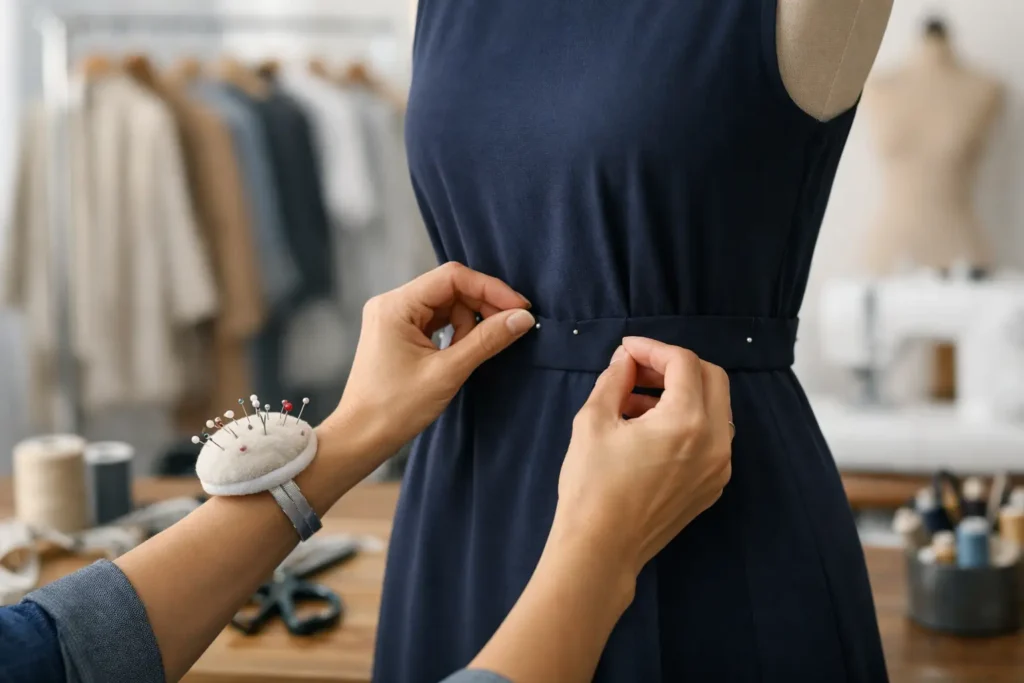
Most clothing alterations begin with a fitting. The garment is tried on, pinned and assessed on the body rather than judged flat on a table. This is important because clothing behaves differently when worn. The way fabric falls, pulls or folds reveals where adjustments are needed.
During the fitting, the tailor will look at several things at once: where the garment sits on your shoulders, how it falls from the waist or hips, whether the hem is balanced, and whether movement is restricted. Small details matter. A sleeve length, for instance, is not just about measurement. It is also about proportion and how much cuff should show.
Once the work is agreed, the garment is altered in stages depending on complexity. A straightforward hem might need one appointment. A wedding dress or tailored suit may need several. Timing depends on the garment, the fabric and how much reconstruction is involved.
This is one reason personalised service matters. Clear communication helps avoid disappointment. If you have a special event, it is wise to allow enough time for fittings rather than leaving alterations to the last minute.
When clothing alterations are worth it
Alterations are usually worth considering when the garment is good quality, the fit issue is specific, and you know you will wear the item often. Workwear, occasionwear, uniforms, favourite jeans and well-cut jackets are all common examples.
They are also worth it when a small change will make a big difference. Shortening sleeves, refining a waist or adjusting a hem can completely change how polished a garment looks. The item may go from sitting untouched in the wardrobe to becoming something you reach for regularly.
For special garments, the value is not always just financial. A wedding dress, heirloom piece or culturally significant garment may be worth altering because of its personal meaning. In those cases, craftsmanship and careful handling are especially important.
In Melbourne, where people often balance busy workdays, events and a practical approach to wardrobe spending, clothing alterations make sense for another reason. They let you improve what you already own instead of replacing everything that is not quite right.
Choosing the right person for the job
Not all alterations are equal, and not all providers handle the same level of work. Basic trouser hems are one thing. Bridalwear, leather, lined jackets and structured formal garments are another.
A trusted local business should be able to explain what can be done, what the likely result will be, and whether any trade-offs are involved. You want clarity, not guesswork. Craftsmanship shows in the details: balanced hems, smooth seams, invisible repairs where possible, and a finished result that respects the original garment.
It also helps to choose someone who listens. The best outcome comes from combining technical skill with an understanding of how you want the garment to feel and function. A perfect fit is not only about measurements. It is about confidence, comfort and how you live in your clothes.
At its best, clothing alterations are not a last resort. They are a practical way to make clothes work properly for your body, your style and your everyday life. And once you have worn something that has been adjusted well, it is very hard to go back to settling for almost right.