


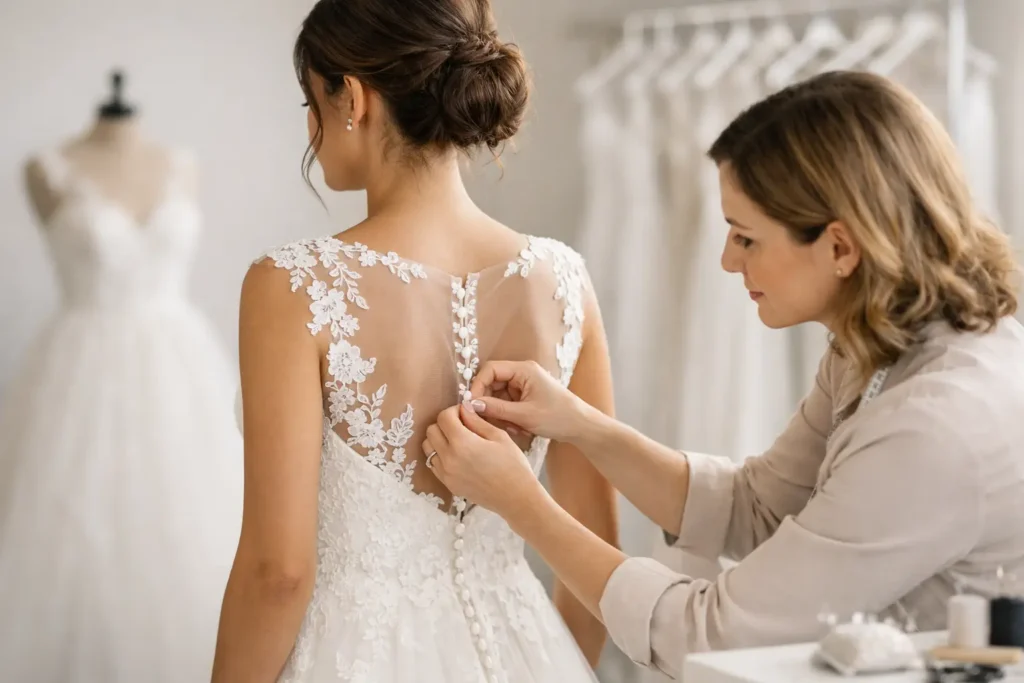
Wedding Gown Alteration Specialist Melbourne
A wedding dress can look perfect on the hanger and still need careful adjustment once it is on your body. That is why finding a wedding gown alteration specialist Melbourne brides can rely on matters so much. The right alterations do more than tighten a seam or shorten a hem – they shape the gown to your proportions, support comfort across a long day, and help the dress sit exactly as it should in photos, at the ceremony, and on the dance floor.
Bridal alterations are not the same as everyday clothing fixes. A wedding gown often includes layered fabrics, delicate lace, boning, structured bodices, hand-finished hems, built-in cups, beading, trains, bustles, or fine closures that need a steady, experienced hand. One small change can affect the way the whole dress hangs. That is where specialist skill makes a real difference.
What a wedding gown alteration specialist in Melbourne actually does
A true bridal alteration specialist is not simply adjusting size. They are refining balance, proportion and movement across the entire gown. If the bodice is too loose, the neckline may shift. If the hem is wrong, the train may not fall cleanly. If straps are shortened without checking bust placement, the whole upper section can sit awkwardly.
Good bridal tailoring starts by reading the dress properly. Different fabrics react in different ways. Satin can show every stitch line. Tulle can shift if handled roughly. Lace often needs to be lifted and reapplied so the pattern still looks natural after an alteration. Structured gowns need support points preserved. Softer gowns need the drape protected.
This is why bridal work takes fittings, patience and precision. It is detailed work, and it should feel that way.
When to book a wedding gown alteration specialist Melbourne brides trust
Timing matters more than many people expect. Book too late and you may feel rushed. Book too early and your body shape, shoes or undergarments may change before the wedding.
For most brides, the best time to begin is once the gown has arrived and you have your wedding shoes and undergarments sorted. This gives the tailor a stable starting point. If your dress has a long train, heavy embellishment or several layers, allow extra time. Complex gowns need more handling and often more than one fitting.
If your wedding date is close, it is still worth asking for advice rather than guessing or delaying. Some adjustments are straightforward. Others are more involved, and knowing that early helps you make calm decisions.
A specialist will usually guide you through a fitting schedule based on your gown, not a one-size-fits-all timeline. That is a sign of experience.
The most common bridal alterations
Most wedding dresses need at least a few changes, even when the labelled size is close. Bridal sizing is rarely consistent, and off-the-rack gowns are designed to fit a range of bodies before they are fine-tuned.
Hem adjustments are among the most common. The aim is not just to shorten the dress, but to get the length right with your chosen shoes and the shape of the skirt. A full skirt, fitted silhouette and layered hem all require different handling.
Bodice alterations are just as common. This may include taking in the sides, adjusting bust support, refining cups, reshaping the waist or shortening straps. The goal is a secure fit that still feels comfortable after hours of wear.
Bustles are another important part of bridal alterations. If your dress has a train, you may want a bustle added so you can move more freely during the reception. A well-made bustle should be practical, discreet and strong enough to last the event.
Sleeve changes, neckline refinements and lace repositioning are also common. These details can dramatically improve how polished the gown looks, but they should be approached carefully. It depends on the original construction of the dress and how much fabric or embellishment is available to work with.
Why bridal alterations need a different level of craftsmanship
Wedding dresses carry pressure that ordinary garments do not. You are likely to wear the gown for one of the most photographed and emotionally significant days of your life. That creates very little room for guesswork.
A specialist brings technical judgement as well as sewing skill. They know when a gown can be altered cleanly and when a requested change may compromise structure, line or fabric finish. Honest advice is part of good service. Sometimes the best answer is yes. Sometimes it is not exactly, but here is a better option.
That kind of guidance protects the dress and the bride. It helps you avoid over-altering, awkward proportions or last-minute surprises.
At AD Stitch, that approach is grounded in craftsmanship and personal service. Brides want to feel looked after, not processed through a busy counter. A wedding gown deserves attention, clear communication and careful fitting from start to finish.
How to prepare for your fitting
The fitting goes better when a few practical details are settled first. Bring the shoes you plan to wear, or a pair with the same heel height. Bring the undergarments you expect to use on the day, especially if the gown is fitted through the bodice or hips. If you have accessories that affect the dress, such as a hoop, overskirt or veil, mention them early.
It also helps to be clear about how you want the gown to feel. Some brides want a very firm, sculpted fit. Others want a little more ease for comfort and movement. Neither is wrong. It simply changes how the alterations are approached.
If there are cultural, religious or modesty considerations, raise them during the fitting. An experienced tailor will treat that as part of the brief, not an extra complication.
Choosing the right specialist
If you are comparing alteration services, look beyond price alone. Bridal work is specialised, and the cheapest option can become expensive if the result is poor or stressful.
Look for someone who handles formalwear and complex garments regularly, not just basic trouser hems and quick repairs. Ask how fittings are managed, what sort of bridal work they commonly do, and whether the service feels attentive. A wedding gown should not be treated like an ordinary booking.
Local convenience matters too. When fittings are involved, a trusted Melbourne specialist with clear communication and a reliable appointment process makes the whole experience easier. You are not just paying for stitches. You are paying for judgement, precision and peace of mind.
What brides often worry about, and what usually helps
The most common concern is whether the dress can be made to fit perfectly without changing its look. In many cases, yes – but it depends on the dress design, seam allowance, embellishment and structure. That is why an in-person assessment matters.
Another worry is weight fluctuation before the wedding. Small changes can usually be managed with sensible timing and a final fitting closer to the date. Large planned changes are more complicated, and honesty is best. Your tailor can only work well with accurate information.
Some brides also fear that alterations will make the gown feel less original or less like the dress they fell in love with. Good bridal tailoring does the opposite. It keeps the character of the gown intact while making it feel as though it was chosen for your body, not just your size.
The result you should expect
When bridal alterations are done properly, the dress looks calm on the body. It sits smoothly, moves naturally and feels secure. You should not spend the day pulling at the neckline, lifting the hem, adjusting straps or worrying about the train. You should be able to walk, sit, hug people, pose for photos and enjoy yourself.
That is the real value of specialist alterations. They turn a beautiful dress into your dress.
If you are searching for a wedding gown alteration specialist in Melbourne, choose someone who treats fit as both a technical skill and a personal service. On a day where every detail feels heightened, confidence in your gown is one thing you should not have to second-guess.