


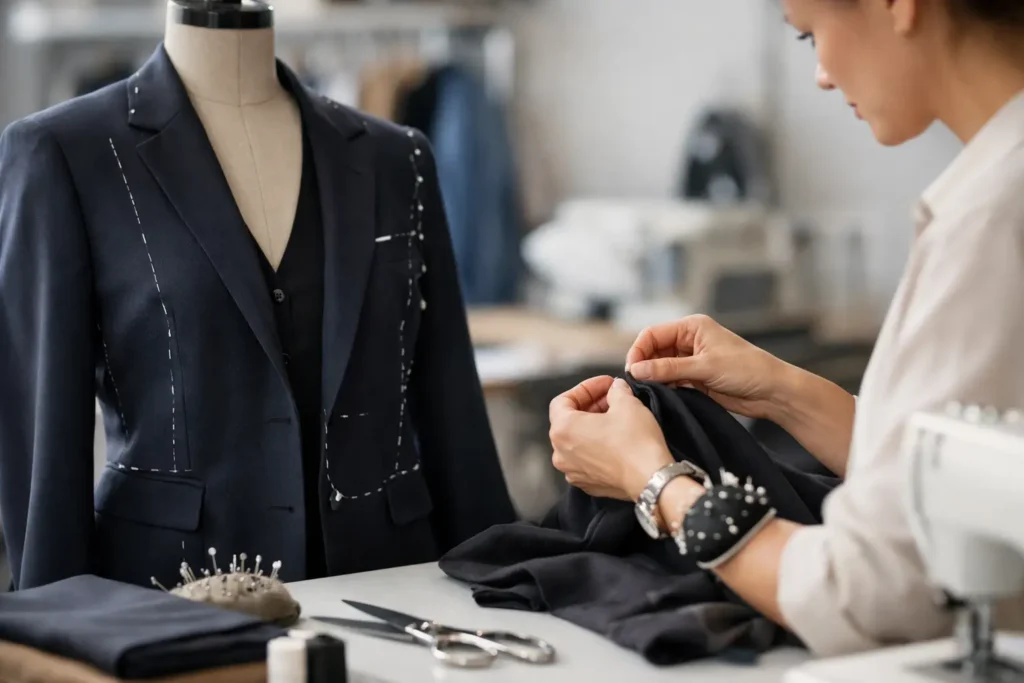
Urgent Alterations Done Properly
A zip gives out the night before a wedding. Your work trousers are suddenly too long for tomorrow’s meeting. A dress that looked fine on the hanger pulls awkwardly once it’s on. Urgent alterations are often less about vanity and more about getting through an important day feeling comfortable, polished and properly put together.
When time is tight, the temptation is to look for the fastest possible fix. Sometimes that works. More often, the real question is whether the garment can be altered quickly without compromising the finish. Good tailoring is not just about taking fabric in or letting it out. It is about preserving shape, balance and wearability, even when the turnaround is short.
What urgent alterations usually cover
Most urgent alteration requests fall into a few familiar categories. Hems are one of the most common, especially for trousers, jeans, dresses and skirts needed for work, events or travel. Simple tapering, sleeve shortening, waist adjustments and zip replacements can also be possible on short notice, depending on the garment’s construction.
Then there are the garments with higher stakes. Suits for interviews, dresses for formal events, bridesmaid outfits, school uniforms and last-minute repairs before a flight all tend to come with a deadline that cannot move. In these cases, speed matters, but so does judgement. An experienced tailor will know when a quick turnaround is realistic and when rushing the work risks a result that looks obvious, sits poorly or does not last.
That is why urgent does not always mean instant. A straightforward hem on an unlined garment is very different from reshaping a lined jacket, adjusting a beaded dress or altering leather. Two jobs might look similar at first glance, yet require completely different handling once the stitching is opened.
When urgent alterations are realistic
The best urgent alterations are the ones that solve a clear problem without forcing the garment beyond what it can sensibly handle in the time available. If a trouser hem needs shortening, or a skirt waist needs a modest adjustment, that is often manageable. If a zip has failed and the surrounding fabric is stable, replacing it may also be straightforward.
Where things become more complex is fit correction through multiple areas at once. A jacket that is too broad in the shoulders, too loose through the waist and too long in the sleeve is not a same-day job in most cases. The same goes for formalwear with layers, boning, delicate fabric or embellishment. It can still be altered, but the timeline depends on the work involved and whether the result can be delivered to a standard worth wearing.
This is where honest advice matters. A trusted tailor should tell you not only what can be done quickly, but what should not be rushed. That protects both the garment and your expectations.
What to bring to an urgent fitting
If you need fast tailoring, preparation helps more than most people realise. Bring the shoes you plan to wear with the garment if hem length matters. For suits and fitted dresses, wear or bring the undergarments you expect to use on the day. Small differences in heel height, shapewear or shirt thickness can change the fit enough to affect the final result.
It also helps to bring the garment clean and ready to assess. Marks, damage or previous alteration work can affect timing. If the item has already been altered elsewhere, say so upfront. Hidden stitching, cut seam allowances or uneven previous work can limit what is possible under pressure.
Most importantly, be clear about your deadline. “As soon as possible” is less useful than “I need this by 3 pm Friday for a wedding”. A specific timeframe allows the tailor to assess the job properly and advise whether it is achievable.
Why speed should never replace craftsmanship
Fast service is valuable, but speed on its own is not the mark of quality. Anyone can pin fabric quickly. The real skill is making the garment look as though it was always meant to fit that way.
That takes technical understanding. A hem needs the right break and proportion. A sleeve shortened from the cuff rather than the shoulder, or the reverse, changes both appearance and complexity. A waist adjustment must sit evenly and support the garment’s shape. If lining, pattern matching or fabric behaviour is ignored, the garment may technically fit but still look off.
This matters even more with urgent work because there is less room for correction later. The first pass needs to be accurate. Precision becomes the difference between relief and regret.
For customers, this often means choosing a local tailor who can assess the garment in person rather than relying on guesswork. A proper fitting saves time because it avoids avoidable mistakes. It also gives you direct, practical advice about what will make the biggest difference if only limited changes are possible.
Urgent alterations for different garments
Suits and workwear
Business clothing often needs prompt adjustments because presentation counts. Trouser hems, waist suppression and sleeve length are common requests. These changes can make off-the-rack suiting look sharper and feel more comfortable, which is especially important before meetings, interviews and events.
The trade-off is that jackets are more complex than trousers. Structured shoulders, canvassing and lining all add time. If your deadline is close, the most impactful adjustment may be the simplest one, such as trouser length or sleeve finish.
Dresses and occasionwear
Dress alterations vary widely. A plain fabric dress with a simple side seam is one thing. A formal gown with lace, layers or beadwork is another. When the event is near, an experienced fitter will usually focus first on the areas that affect wearability most – bust, waist, straps and hem.
If every issue cannot be perfected before the event, prioritising the most visible or uncomfortable problem is often the smartest approach. A dress that sits securely and hangs well will usually read better than one with multiple rushed changes.
Everyday clothing and repairs
Jeans, skirts, casual trousers, shirts and favourite wardrobe basics often come in as urgent jobs too. These are sometimes the most worthwhile alterations because they extend the life of pieces you already wear often. A quick hem, repair or taper can return an item to regular use instead of leaving it in the wardrobe unworn.
Repairs deserve just as much care as fit changes. Replacing a zip, restitching a split seam or reinforcing stress points should restore function without creating a rough, obvious finish.
How to improve your chances of a fast turnaround
The earlier you ask, the better. Even if your event is close, do not wait until the last minute hoping the issue will sort itself out. A quick fitting a few days earlier creates more options than a rushed visit on the morning you need the garment.
Be flexible where you can. If your tailor suggests focusing on the hem today and booking a more detailed reshape later, that may be the best path. Not every alteration has equal impact, and a practical fix now can still make the garment wearable and polished.
It also helps to choose specialists who handle a broad range of garments rather than a basic alteration counter. Experience across suits, dresses, bridalwear, leather and general clothing adjustments often means better judgement under time pressure. At AD Stitch, that craftsmanship-led approach is central to getting urgent jobs right, not just done quickly.
What a good urgent service feels like
Good urgent service is calm, clear and realistic. You should know what is being altered, when it will be ready and whether there are any limits based on the garment itself. There should be no vague promises and no pressure to agree to work that is unlikely to hold up.
You should also feel that the person handling your clothing respects both the item and the occasion behind it. Whether it is a suit for work, a wedding outfit or a much-loved everyday piece, the aim is the same – better fit, better comfort and the confidence that comes from wearing something that sits properly.
Urgent tailoring works best when it combines efficiency with judgement. If you have a garment that needs attention fast, the smartest move is not simply finding the quickest needle. It is finding skilled hands that know which changes matter most, and how to make them count before the moment arrives.