


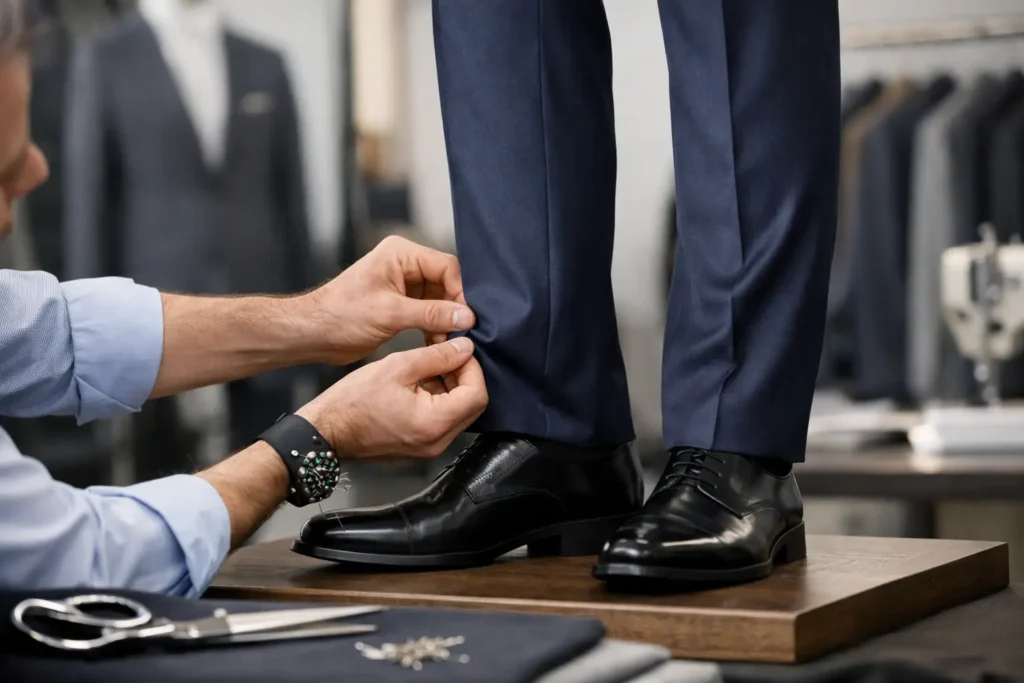
Professional Trouser Tapering Guide for Better Fit
A professional trouser tapering guide starts with one simple truth: the right trouser width can make an otherwise ordinary outfit look considered. Trousers that billow around the calf can overwhelm a sharp shirt or jacket, while legs tapered too aggressively can pull, crease and make sitting uncomfortable. A well-planned taper creates a cleaner line from the thigh to the hem without compromising how the garment moves.
For work trousers, suit pants, chinos and even quality denim, tapering is one of the most effective alterations for improving fit. It is also more technical than it first appears. The best result is not about making trousers as slim as possible. It is about shaping them around your proportions, footwear and the way you actually wear them.
What trouser tapering changes
Tapering means reducing the width of the trouser leg gradually, usually from around the knee down to the hem. Depending on the garment and the required fit, a tailor may also take in some width through the thigh. The purpose is to remove excess fabric and create a more balanced silhouette.
This differs from simply narrowing the hem. A narrow opening with a loose calf can create an awkward, pinched shape. Professional tapering follows the natural line of the leg, with enough room through the seat, thigh and knee for comfort.
The alteration can make a noticeable difference to several common fit concerns. It can stop fabric pooling over shoes, reduce the loose appearance of straight-cut trousers, and help suit trousers sit more neatly beneath a jacket. It can also refresh a favourite pair that still fits well at the waist but no longer suits your preferred style.
Professional trouser tapering guide: start with the full fit
Before deciding how much to taper, assess the whole garment. The waist, seat and rise need to be reasonably comfortable before the leg shape is adjusted. A taper cannot fix a seat that is too tight, a rise that pulls when you sit, or a waistband that slides down.
A tailor will usually look at the trousers while you are standing naturally, walking and sitting. This matters because fabric behaves differently in motion. A pair of trousers can look excellent in front of a mirror, then feel restrictive as soon as you climb stairs, get into the car or sit at a desk.
Bring the shoes you wear most often with the trousers if you can. Hem width and trouser length work together. A tapered trouser worn with sleek leather shoes may need a different opening from one worn with work boots or trainers. For business trousers, the aim is generally a tidy line with little or no bunching at the ankle. For casual chinos or denim, the preference may be a slightly shorter hem and a sharper finish.
The thigh sets the limit
The thigh is where good tapering is won or lost. If the trousers are already close through the upper leg, taking in too much can cause horizontal pulling, strained seams and discomfort. It can also make pockets gape and alter the drape of the fabric.
If there is excess fabric through the thigh, a modest reduction can create a more tailored appearance. The amount depends on the cloth, cut and wearer. Wool suit trousers usually need a restrained approach because their drape is part of their character. Cotton chinos can often handle a more casual, defined taper. Stretch fabrics offer some flexibility, but they can still become uncomfortable if narrowed beyond their intended fit.
The knee needs room to move
A clean taper should not grip the knee. When fabric is too tight at this point, it catches as you bend your leg and forms sharp creases behind the knee. This is particularly noticeable in trousers worn for commuting, office work or events where you will spend a lot of time seated.
An experienced tailor leaves enough ease to move comfortably while reducing the excess that causes a baggy look. This balance is why pinning and fitting are more reliable than choosing an alteration by a standard measurement alone.
The hem should suit the shoe
The hem opening is the final visual cue. Too wide, and the trousers can look dated or untidy. Too narrow, and they may snag on your shoe or look out of proportion to your frame.
There is no single ideal measurement. A taller person wearing broader shoes may suit a slightly wider opening than someone wearing slim loafers. The fabric also matters. Heavier wool, denim and corduroy often need enough width to fall cleanly, while lightweight trousers can support a neater shape.
Choosing the right amount of taper
Most customers do not need a dramatic change. Often, removing a small amount from each leg is enough to make trousers look sharper. The goal is a smooth line rather than a trend-driven silhouette that may feel dated next season.
For professional wardrobes, a moderate taper is usually the most versatile choice. It looks polished with dress shoes, works under a suit jacket and remains comfortable through a full day. This is especially useful for people who have bought off-the-rack trousers to fit their waist or thigh, only to find the lower leg too generous.
A stronger taper can suit contemporary casualwear, particularly cropped chinos or jeans. However, it needs to be considered carefully on formal trousers. A very narrow ankle on a traditional wool suit can look disconnected from the jacket and may limit how often you wear the garment.
It also depends on the original construction. Trousers with a side seam and inseam can often be shaped evenly from both sides. Jeans may have topstitching, rivets or a felled inseam that affects how the work is approached. Patterned cloth requires additional care so stripes, checks and seams remain visually balanced.
When tapering is not the best solution
Tapering can improve many garments, but not every pair is a good candidate. If the trousers are too tight through the seat or thigh, narrowing the leg will not solve the problem. If they are badly twisted, worn thin at the seams or distorted from repeated washing, the alteration may not deliver a clean result.
Very wide-legged trousers can be tapered, but changing them into a slim fit may alter their intended shape too dramatically. The same applies to pleated trousers. Pleats provide room through the upper leg, so an overly narrow lower leg can create an unbalanced outline.
Fabric condition is another consideration. Delicate wool, linen, leather and heavily worn denim need to be assessed before work begins. A careful tailor will explain what is achievable and recommend a proportion that protects the garment rather than forcing an unsuitable change.
Why a fitting matters more than a guess
At-home pinning can help communicate your preference, but it is not a substitute for a proper fitting. Pins can shift, and it is difficult to judge both legs evenly while standing in an unnatural position. More importantly, a good tailor looks beyond the line of a single seam.
During a fitting, the trousers can be pinned to account for your stance, leg shape and how the fabric hangs. Most people have small differences between their left and right side. A tailored adjustment can accommodate these details, helping the trousers sit naturally rather than looking technically symmetrical but feeling wrong.
This personal approach is particularly valuable for suit trousers and garments you wear regularly. A precise alteration can extend the life of a quality item and save it from being left at the back of the wardrobe because it never quite felt right.
Care after trouser tapering
Once tapered, treat the trousers according to their fabric care instructions. Avoid excessive heat when washing or drying, as shrinkage can change the carefully adjusted fit. For wool trousers, regular airing and gentle pressing can reduce the need for frequent cleaning.
Pay attention to changes in fit over time. Weight fluctuations, different shoes and changes in how you style the garment can affect whether the shape still works for you. A thoughtful alteration is designed for real wear, not just one fitting room moment.
For Melbourne customers who want trousers shaped with care, AD Stitch provides expert clothing alterations with a focus on comfort, proportion and a clean finish. The most useful starting point is to bring in the trousers, wear the shoes you pair with them most, and let the fit guide the decision. A measured taper can turn a good pair of trousers into the pair you reach for first.