


Local Tailor Review Guide for Better Fit
A five-star rating is reassuring, but it does not tell you whether a tailor can reshape the shoulders of your work jacket, preserve the drape of a formal dress, or repair a treasured leather piece. This local tailor review guide helps you read beyond the star count and choose a service that treats your clothing with the care it deserves.
The right alteration changes more than a hemline. It can make trousers sit cleanly over your shoes, stop a blouse pulling across the bust, give an older suit a sharper silhouette, and make an event outfit comfortable enough to wear with confidence. Reviews are one useful part of the decision, provided you know what to look for.
Start with reviews that describe the garment
A short comment such as “great service” is positive, but it offers limited evidence of technical skill. Look for reviews that name the item and the work completed. Details such as suit jacket sleeve shortening, bridal gown adjustments, denim repairs, curtain hemming, or alterations to a delicate fabric give you a clearer picture of a tailor’s experience.
The most helpful reviews explain the customer’s original problem and the result. For example, a customer may mention that a dress was too loose through the waist, a jacket sat awkwardly at the shoulders, or trousers needed taking in without losing their original shape. When several people describe accurate fitting and a comfortable finished garment, that is a stronger signal than general praise alone.
Pay attention to garments similar to yours. Someone needing a simple school uniform hem may prioritise convenience and a fair price. A bride, a professional with an expensive suit, or a customer altering a saree blouse needs evidence of careful fittings, fabric knowledge, and clear communication. A good local tailor may handle both, but your review search should reflect the level of work you need.
A local tailor review guide should check consistency
One exceptional review can happen anywhere. Consistency over time is more meaningful. Read a spread of recent feedback, rather than only the first few comments shown on a listing. Are customers repeatedly mentioning accurate measurements, friendly service, reliable collection dates, and garments that fit well when they get home?
Also consider how the business responds when a customer has a question or concern. Alterations are personal work, and occasionally a garment may need a small adjustment after the first fitting. A professional response that is calm, respectful, and focused on resolving the issue reflects the kind of service you want when your wardrobe is in someone else’s hands.
Do not dismiss a business solely because it has one less-than-perfect review. Read the circumstances. A missed collection date before a major event is understandably serious. A complaint about price, however, may simply show that the customer expected a complex alteration to cost the same as a basic repair. The detail and the response matter.
Match the tailor’s experience to the job
Not every alteration carries the same risk. Shortening a simple pair of trousers is different from rebuilding the fit of a lined suit jacket. Wedding gowns, beaded dresses, leather garments, formalwear and sentimental pieces often require more planning, specialist equipment, or hand-finishing.
Before booking, look for signs that the tailor understands your category of garment. Reviews and service descriptions should suggest experience with the construction, fabric, and fitting challenges involved. For wedding alterations, customers often value multiple fittings and a realistic timetable. For suit alterations, look for references to balance, sleeve length, trouser shape, and a clean fit through the body rather than a rushed adjustment at one seam.
It is also sensible to ask whether the requested change is advisable. Some garments can be altered beautifully, while others have limited seam allowance, fragile fabric, or design details that make major changes poor value. An honest tailor will explain the trade-off rather than promise a result that the garment cannot support.
Notice whether the fitting process sounds personal
The strongest tailoring reviews often mention being listened to. This is not a small detail. Two customers can ask to have a dress taken in, yet one may want a close, structured fit while the other needs room to sit, eat, dance, or move comfortably throughout a long event.
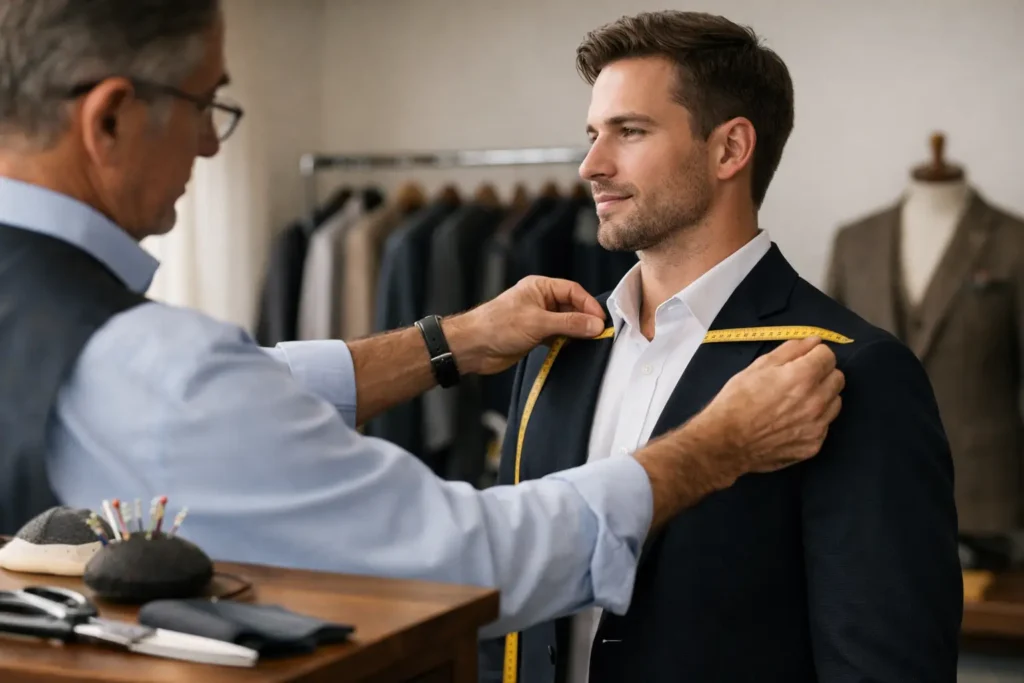
A proper fitting allows the tailor to assess how the garment sits on your body, not just where a tape measure lands. You should feel comfortable explaining where the clothing pinches, gapes, twists, or feels too long. Bring the shoes, bra, belt, or shapewear you expect to wear with the garment when they affect the final length or shape.
For more involved work, a second fitting can be a mark of care rather than inconvenience. It provides the chance to refine the result before the final stitching is complete. This is particularly valuable for bridalwear, structured dresses, and tailored jackets.
Ask clear questions about price and timing
Reviews can help you set expectations, but a quote should be based on seeing the garment. The same alteration can vary in complexity depending on lining, fabric, seams, embellishment, original construction, and how much reshaping is needed.
A trustworthy tailor should be able to explain what the quote covers and when the garment will be ready. If you have a wedding, job interview, holiday, or formal event approaching, mention the date at the start. Fast service can be possible for straightforward jobs, but quality work still needs enough time for fitting, stitching, pressing, and any required follow-up.
Be cautious when a quote seems unusually cheap for detailed work. There is nothing wrong with seeking fair value, but good alterations involve skilled labour and careful handling. Replacing a zip, shortening lined sleeves, or adjusting a formal gown is not comparable to a quick hem. The best choice is usually the tailor who is transparent about scope and gives you confidence in the expected result.
Watch for practical signs of professional care
Online feedback is only one source of information. When you contact or visit a tailor, the everyday details can confirm what reviews suggest. Is the communication clear? Do they ask useful questions about the garment and deadline? Is there a sensible process for labelling, fitting, and collecting items?
For valuable or delicate clothing, ask how the work will be approached. You do not need a technical lecture, but a skilled professional should be able to explain the likely method in plain language. They should also be comfortable saying when a repair has limitations or when an alternative alteration would give a better result.
In Melbourne, where busy work weeks and event calendars can make timing tight, local convenience is valuable. Still, proximity should not be the only reason to choose a tailor. A short trip is worthwhile when it gives you access to careful measurements, responsive service, and craftsmanship that extends the life of clothing you already own.
Red flags worth taking seriously
A few warning signs deserve attention, especially with high-value garments. Be wary if a business guarantees a major alteration without seeing the item, cannot provide a clear collection timeframe, or dismisses your questions about fit. Pressure to decide immediately, vague pricing, and no interest in how you will wear the garment can also indicate a transaction-focused service rather than thoughtful tailoring.
Equally, avoid assuming that every request should be accepted. A professional tailor may advise against taking a garment in too far, moving a complicated seam, or altering damaged fabric that may not hold. That honesty protects both your clothing and your budget.
Choose confidence, not just convenience
The purpose of reading reviews is not to find a perfect business with identical customer experiences. It is to find evidence that a tailor delivers careful work, communicates clearly, and understands that fit is personal. For customers seeking expert clothing alterations in Heidelberg, AD Stitch brings European tailoring heritage to garments ranging from everyday repairs to formal and wedding wear.
Bring your garment in with a clear idea of when and where you will wear it, then let the fitting conversation do its job. The right adjustment should feel natural when you put the piece on – comfortable, considered, and unmistakably yours.