


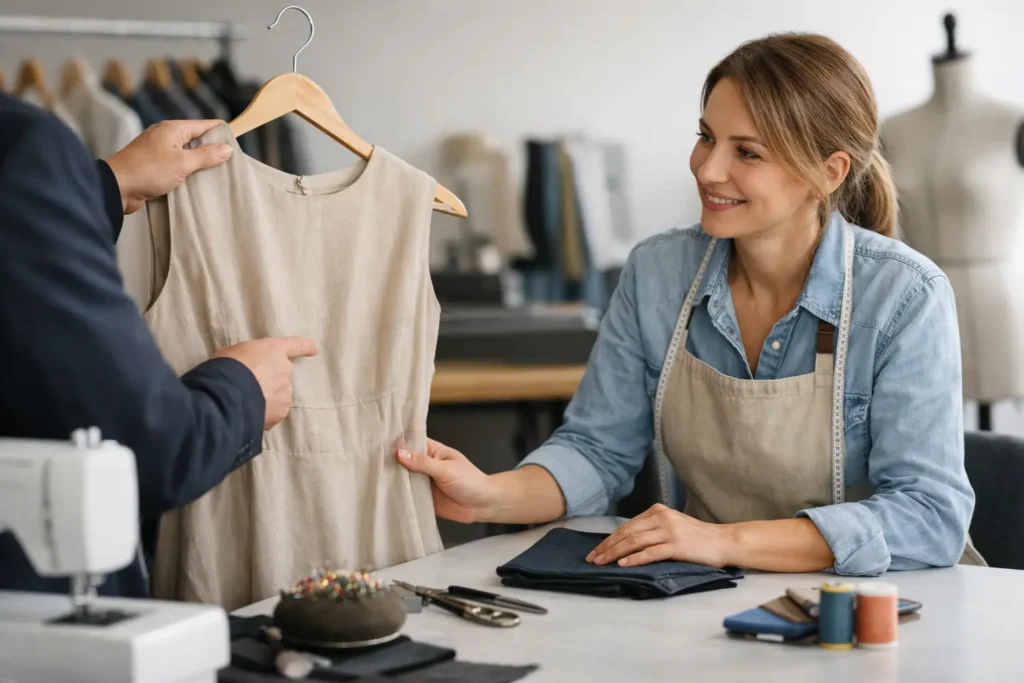
How to Choose Garment Alterations Near Me
A jacket that pulls across the shoulders, jeans that drag at the heel, a dress that almost fits – these are the moments people start searching for garment alterations near me. The problem is not finding someone with a sewing machine. It is finding a tailor who understands fit, fabric and finish well enough to make your clothes look right, feel comfortable and last.
Good alterations are rarely about one quick fix. They are about proportion. A trouser hem changes how a shoe sits. Taking in a waist affects the line through the hips. Shortening sleeves can improve the whole balance of a jacket. When the work is done properly, the garment looks as though it was made for you in the first place.
What to look for in garment alterations near me
The best local tailor is not always the closest counter or the cheapest quote. Convenience matters, but so does skill. A quality alteration should improve both fit and appearance without damaging the garment’s original shape, stitching or finish.
Start with the range of work offered. If a business only handles simple hems, that may be fine for basic jobs, but more complex garments need broader expertise. Dresses, suits, wedding wear, leather pieces and lined garments all behave differently. A full-service alterations studio is usually better equipped to assess what can be changed, what should be left alone and what will give the best result for your budget.
It also helps to notice how the service is delivered. A proper fitting conversation matters. A good tailor will ask where the garment feels tight or loose, how you want it to sit, what shoes you will wear with it, and whether you want room for movement. That level of attention is often the difference between an item that is technically altered and one that genuinely fits.
Why experience matters more than a quick turnaround
Fast service is useful, especially if you have an event, work commitment or last-minute wardrobe issue. But speed should not come at the expense of workmanship. Some adjustments are straightforward. Others need careful pinning, internal reconstruction or hand-finishing to avoid puckering, strain or visible stitch marks.
This is where experience shows. An expert tailor knows when a garment can be taken in cleanly and when fabric limitations make that risky. They know that delicate lace, beading, sequins, silk, linen, wool suiting and leather all require different handling. They also know that cheaper alterations can become expensive if the garment has to be repaired after poor work.
There is always a balance. If you need a simple hem before the weekend, a quick turnaround may be entirely reasonable. If you are altering a wedding dress, a structured blazer or a favourite leather jacket, patience is usually the smarter choice.
Signs of careful craftsmanship
You do not need technical tailoring knowledge to spot quality. Look at the finish. Seams should sit smoothly. Hems should hang evenly. Topstitching should match the garment’s original style as closely as possible. The fit should feel natural rather than forced.
You can also listen to how a tailor explains the job. A skilled professional will be clear about what is possible, what may affect the garment’s shape, and whether the result will justify the cost. Honest advice is a very good sign.
The most common alterations people actually need
Most people imagine alterations as something reserved for formalwear, but everyday clothing is often where tailoring makes the biggest difference. Work trousers that break awkwardly over shoes, shirts that billow at the waist, skirts that twist, and jeans that gape at the back are all common issues.
For professionals, suit alterations are often the most valuable. A jacket sleeve length, trouser hem, waist suppression or seat adjustment can change how polished you look at work without the cost of replacing the whole suit. For women, dress alterations are just as important, especially for occasion wear where fit across the bust, waist and straps can affect both comfort and confidence.
Then there are garments with sentimental or practical value. Wedding attire, family pieces, a favourite coat, or trousers that are otherwise perfect except for the length. Repair and alteration work can extend the life of these items significantly. In many cases, that is better value than buying again and hoping the replacement fits properly.
When cheap alterations are worth it – and when they are not
Not every garment needs premium tailoring. If you have a basic pair of casual pants that only need shortening, the job is relatively simple. If the garment is low-cost and easy to replace, you may not need a highly specialised service.
But there are jobs where going cheap is a gamble. Structured jackets, formal dresses, bridalwear, lined coats and leather garments can be costly to alter badly. Once needle holes are visible, fabric is cut incorrectly, or proportions are changed without care, the garment may not recover. A lower quote can end up meaning lower value.
The better question is not just, “How much does it cost?” It is, “Will this alteration improve the garment enough to make it worth wearing more often?” If the answer is yes, quality workmanship usually pays off.
Questions worth asking before you book
If you are comparing local tailoring services, ask practical questions rather than vague ones. Find out whether fittings are done in person, how turnaround times are handled, whether complex garments need multiple appointments, and how pricing is assessed. Some jobs can be quoted quickly, while others need the garment to be seen on the body before anyone can give sensible advice.
It is also worth asking whether the tailor regularly works on the type of item you need altered. Bridalwear is different from business wear. Leather is different from cotton. Curtains are different again. Specialisation within a broad alterations service is a strong advantage because it means the person handling your garment understands the material, construction and expected finish.
A fitting should feel collaborative
A good fitting is not rushed. You should feel comfortable describing what is wrong, even if you cannot explain it in technical terms. Most customers do not say, “The balance is off through the back panel.” They say, “It rides up when I walk,” or “It feels bulky here.” A skilled tailor translates that into the right adjustment.
That personal service matters because fit is not only about measurements. It is also about how you wear your clothes, what level of ease you prefer and where you need movement. Two people with similar body measurements may want very different outcomes.
Local matters when service matters
Searching for garment alterations near me usually means you want more than an online booking form. You want a place you can visit, a person you can speak with, and the confidence that your garment is being handled properly.
That is where a trusted local business stands out. For Melbourne customers, especially those balancing work, family and social commitments, being able to drop in for a fitting, discuss changes clearly and collect on time makes the process much easier. Local service also helps when follow-up adjustments are needed, which can happen with fitted garments or special occasion outfits.
At a dedicated studio such as AD Stitch, the value is not just in shortening hems or taking in seams. It is in combining expert clothing alterations with genuine customer care, so the result feels considered rather than transactional.
Why alterations are often the smarter buy
People often hesitate over alterations because they compare the cost to what they originally paid for the garment. That is understandable, but it is not always the best measure. The real comparison is between the cost of altering something you already own and the cost of replacing it with something that still may not fit.
A well-altered garment gets worn. It earns its place in your wardrobe. You stand better in it, move better in it and feel more confident in it. That applies to office wear, event outfits and everyday staples alike.
There is also a practical side. Alterations reduce waste, extend the life of quality clothing and help you make better use of pieces you already love. For many people, that is not just about style. It is about value.
When you are choosing a tailor, look for the combination that matters most – technical skill, honest advice, reliable turnaround and service that makes you feel looked after. The right alterations do not draw attention to themselves. They simply make your clothes feel right, which is exactly what good tailoring should do.