


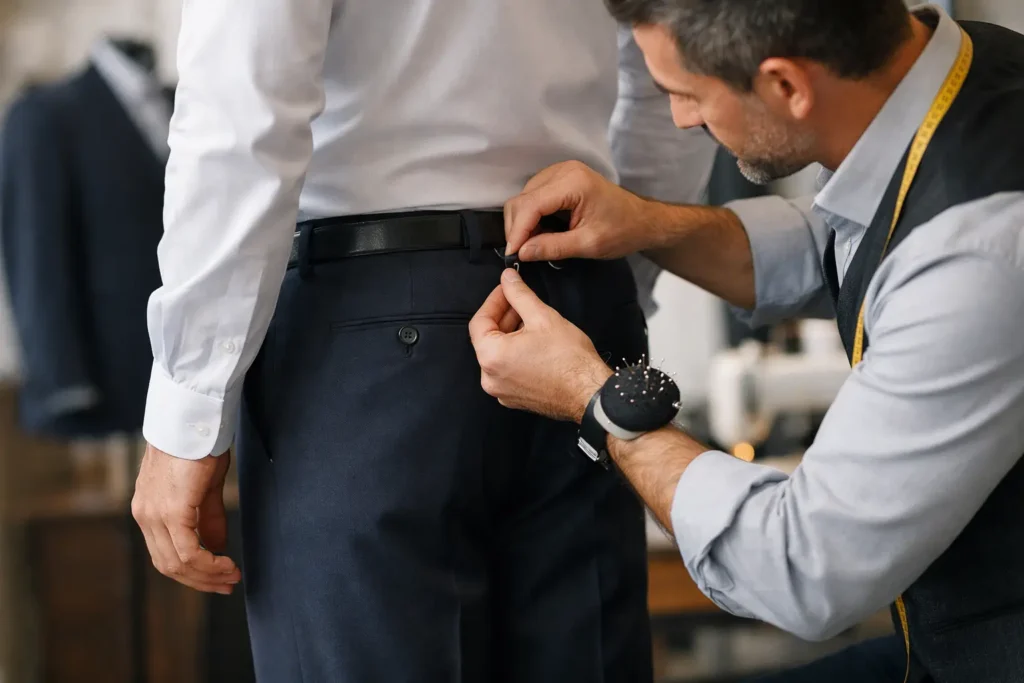
How to Alter Suit Trousers Properly
A suit can look expensive and still sit poorly if the trousers are off. Too long at the hem, too loose through the seat, too tight at the waist – these small problems are exactly why people ask how to alter suit trousers and whether it is worth doing professionally. In most cases, it is. Well-fitted trousers change the line of the whole suit, improve comfort, and make the jacket sit better too.
Suit trouser alterations are not all equal, though. Some adjustments are straightforward and low risk. Others depend heavily on the trouser construction, seam allowance, fabric and pattern. Knowing the difference helps you decide what can be done cleanly and what needs a more careful approach.
How to alter suit trousers for the right fit
The first step is identifying where the fit is actually wrong. Many people focus only on trouser length, but the waist, seat, crotch depth, thigh width and taper all affect how polished the trousers look. A clean fit should feel comfortable when you sit and walk, while still keeping a neat silhouette through the leg.
If the waistband digs in, slips down, or gaps at the back, the waist needs adjustment. If fabric pulls across the front or folds heavily under the seat, the issue may be in the rise or seat rather than the waist alone. If the lower leg looks bulky, tapering can sharpen the shape, but it has to be balanced so the trousers still drape naturally.
That is why fittings matter. Pinning trousers on the body shows how the fabric behaves in motion, not just when you are standing still in front of a mirror.
Hemming is the most common alteration
Trouser length is usually the simplest and most effective change. The right hem break depends on the style of suit, the width of the trouser leg and the shoes you wear most often. A slim business trouser often suits a slight break or no break, while a more classic cut may look better with a fuller break.
The important part is proportion. If trousers are too long, they bunch around the ankle and make the whole suit look untidy. If they are too short, they can expose too much sock and throw off the balance of the outfit. A proper hem also needs to respect the original finish, whether the trousers are plain hemmed or cuffed.
Taking in or letting out the waist
Waist adjustments are common, especially with off-the-rack suits. Usually, the waistband can be taken in or let out slightly from the centre back seam. How much is possible depends on the available seam allowance. A modest adjustment is often clean and invisible when done well.
Larger waist changes are more complex because they can affect the seat, pocket position and overall balance. If too much is taken in, the back can start to pull. If too much is let out, there may simply not be enough fabric hidden in the seams. This is one of those areas where the answer is often: it depends.
Tapering the leg
Tapering removes excess width from the leg for a slimmer line. Done properly, it can modernise older suit trousers and make them sit more neatly over dress shoes. Done badly, it creates twisting, pulling or a shape that looks forced.
A good taper starts higher than most people expect. Narrowing only from the knee down can leave the upper leg looking full and disconnected from the lower leg. On the other hand, taking too much from the thigh can reduce comfort and strain the seams. The aim is not to make the trousers as tight as possible. It is to create a balanced line that works with your build and the cut of the jacket.
Altering the seat, rise and crotch area
This is where tailoring becomes more technical. Seat and rise adjustments are possible, but they require experience because small changes have a big effect on comfort and shape. If trousers pull under the seat, sag at the back, or feel restrictive when sitting, the problem may sit deeper than a simple waist alteration.
Adjusting the seat can remove excess fabric or create more room, depending on the issue and the available seam allowance. Rise alterations are more limited. The crotch curve and fork shape are central to how trousers move with the body, so reshaping this area has to be handled carefully.
Not every pair of suit trousers is a good candidate for major work here. Fine wool suiting, lined trousers, patterned fabric and tightly finished seams all raise the level of difficulty.
What can be altered – and what often cannot
Most suit trousers can be hemmed, tapered, and adjusted slightly at the waist. Many can also be refined through the seat. Beyond that, feasibility depends on construction.
Pleated trousers, side adjusters, cuffs, lining, silk trims and delicate fabrics all change the approach. Trousers with very little inlay may not let out much at all. Checked or striped trousers need extra precision because every seam adjustment affects pattern matching. Even if a change is technically possible, it may not always be the right choice if the finish will be compromised.
That is one reason experienced tailoring matters. Good alterations are not just about making the garment smaller or shorter. They are about preserving the look the suit was meant to have.
DIY vs professional tailoring
If you are searching how to alter suit trousers because you are thinking of doing it yourself, the safest home job is usually a temporary hem on inexpensive trousers. Beyond that, suit alterations are easy to underestimate.
Suit fabric shows needle marks, pressing mistakes and seam changes more readily than casual cotton or denim. Waistbands need to sit smoothly. Hems need the right finish and weight. Tapering has to remain symmetrical from left leg to right leg. Once fabric has been cut or stitching holes have set in, there is not always an easy way back.
For good-quality work trousers or a suit you wear for the office, weddings or important events, professional alteration is usually the better investment. You protect the garment, and you get a result that looks intentional rather than improvised.
How a fitting should work
A proper fitting is practical, not complicated. You try on the trousers with a shirt and the shoes you are most likely to wear with them. The tailor checks the waistband, seat, leg line and hem, then pins the garment where changes are needed.
This step matters because trousers behave differently on different bodies. Two people with the same waist size can need completely different adjustments depending on posture, hip shape and preferred fit. A good tailor will also ask how you wear the suit. Daily office use, occasional formal wear and modern slim styling all call for slightly different decisions.
If you are in Melbourne and getting a suit altered for work or an event, it is worth choosing a tailor who does fittings in person rather than guessing from flat measurements alone. That extra care usually shows in the finished result.
Questions worth asking
Before alterations begin, ask what can realistically be changed, how much can be taken in or let out, and whether the original finish will be maintained. It is also sensible to ask about turnaround time, especially if the suit is needed for a wedding, interview or last-minute event.
Clear advice is a good sign. Skilled tailors will tell you when an adjustment will improve the trousers and when the change may not be worth doing.
When altering suit trousers is worth it
It is usually worth altering suit trousers when the fabric and overall quality are good, but the fit is slightly off. A strong wool trouser with extra length, a loose waist or a leg that needs refining can often be transformed. That is often far better value than replacing the whole suit.
It may be less worthwhile if the trousers are poor quality, badly out of proportion in several areas, or too small in places where there is no fabric to let out. In those cases, even excellent tailoring has limits.
The best outcomes come from realistic adjustments that respect the garment. Hem the length, refine the waist, clean up the leg line, and the trousers can look sharper without losing comfort.
At AD Stitch, this is exactly how we approach suit alterations – with careful fitting, honest advice and attention to the details that make a suit feel right to wear.
A well-altered pair of suit trousers should never look altered at all. They should simply look like they were made for you.