


How Much Can Clothing Be Resized by a Tailor?
A shirt that fits perfectly through the shoulders but balloons at the waist is not a lost cause. Neither is a favourite dress that has become a little snug, or a quality suit found on sale in the wrong size. But how much can clothing be resized? The honest answer is that it depends on the garment’s construction, fabric, available seam allowance and where the fit needs to change.
Expert clothing alterations can make a remarkable difference, often turning an almost-right garment into one you genuinely enjoy wearing. The best results come from assessing the garment in person, rather than relying on its tagged size alone. Sizes vary widely between brands. Fit is personal.
How Much Can Clothing Be Resized in Practice?
Most garments can be taken in more easily than they can be let out. Taking in removes excess fabric along existing seams, while letting out requires spare fabric inside those seams. A skilled tailor will look for this allowance before promising a result.
As a general guide, many trousers, skirts, dresses and shirts can be taken in by several centimetres through the waist, side seams or centre back seam. Sometimes more is possible, especially on garments with generous seam allowances or designs that can be reconstructed without upsetting their proportions. A jacket can often be shaped through the body and sleeves, while a dress may be reshaped at the bust, waist, hips or hem.
Letting out is usually more limited. A waistband might have enough reserve to gain a few centimetres, while a dress or jacket with narrow seams may only allow a small adjustment. If there is no extra fabric, an experienced tailor may suggest another solution, such as adding a discreet panel, moving a closure or adjusting the style of the garment.
The number on the label matters less than the fit issue. A quality size 14 dress may be easier to reduce to a 10 than another size 14 dress is to reduce to a 12. Construction always decides what is realistic.
Taking Clothes In: Where Tailoring Delivers the Biggest Change
Taking in is the most common resizing service, and it can be highly effective when the shoulders, armholes and overall length are already close to right. A well-made garment has enough structure to be shaped without looking altered.
Dresses and skirts
Dresses are often excellent candidates for resizing. Side seams, centre back seams, darts and waist seams can all be adjusted to create a closer, more flattering fit. A simple shift dress is generally more flexible than a heavily beaded, boned or lace-covered gown, but both may be altered with the right care.
Skirts can usually be taken in at the waist and through the hips. A tailor may adjust the side seams, centre back seam or waistband depending on the design. Pleats, pockets, lining and zip placement affect the method, but they do not automatically rule out an alteration.
Trousers and jeans
Trousers can often be taken in at the waist, seat and leg. For work trousers, this can restore a sharp silhouette without making the garment feel restrictive. Jeans can also be resized, although their heavy stitching, rivets and curved waistband make the work more specialised.
The waist is not the only consideration. Taking in the back rise, seat or inner leg can improve comfort and prevent fabric from pulling or bunching. For a clean result, the adjustment needs to follow the original shape of the garment rather than simply narrowing one seam.
Shirts, blouses and casualwear
Shirts and blouses can be tapered through the side seams, shaped with darts or adjusted at the sleeves. This is especially worthwhile for good-quality work shirts that fit the neck and shoulders but feel too loose through the body.
Casual garments such as tops, jumpers and T-shirts are also alterable, though fabric type matters. Stretch knits require the correct stitching and careful handling so the seam remains comfortable and flexible.
Suits and jackets
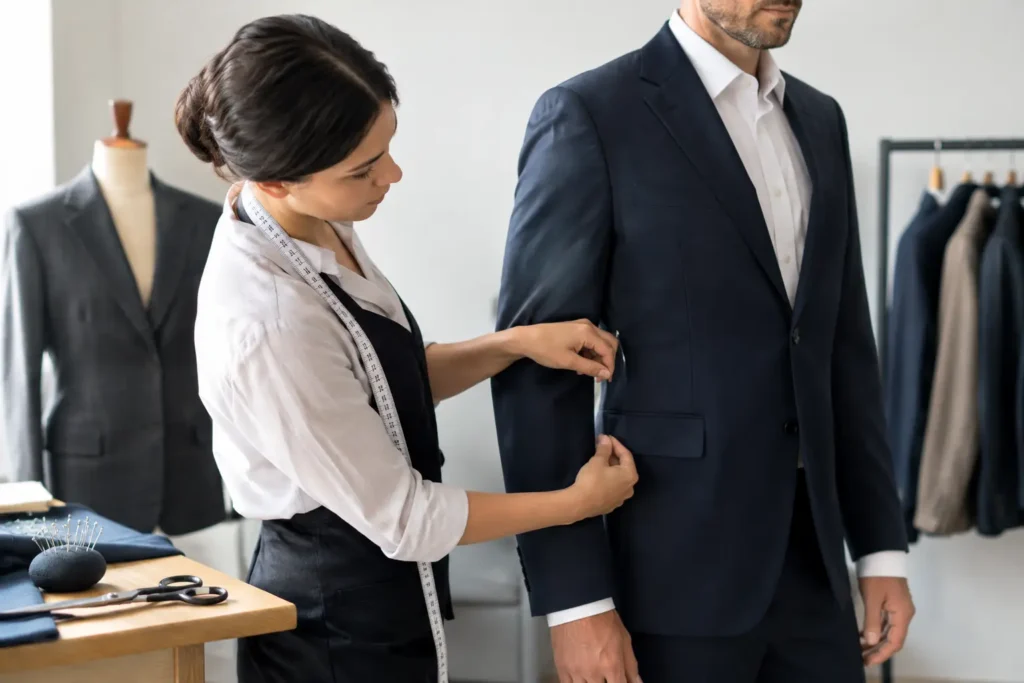
Suit alterations need a more detailed assessment because jackets are structured garments. Taking in the body, refining the sleeves and adjusting trouser fit can make an off-the-rack suit look far more considered. These changes can be particularly valuable for professional wear, interviews and formal events.
Shoulders are the main caution. Altering jacket shoulders is possible in some cases, but it is complex, labour-intensive and not always cost-effective. If the shoulder line sits correctly, the rest of the jacket is usually much easier to refine.
Letting Clothes Out: What Is Realistically Possible?
Letting out a garment depends on the seam allowance hidden inside it. Older garments and higher-quality tailored pieces sometimes have more fabric available, while many modern mass-produced garments have very little.
Trousers may be let out at the waistband or centre back seam. A dress may have enough allowance at the side seams to create a little more room at the bust, waist or hips. With formalwear, there can sometimes be additional options, such as repositioning a zip or adding a matching or contrasting panel.
It is worth knowing that letting out can leave faint seam marks, particularly on linen, silk, velvet or fabrics that have faded over time. This does not mean the alteration cannot be done, but it should be discussed before work begins. A trusted tailor will explain both the likely improvement and any visible trade-offs.
What Cannot Easily Be Resized?
Some fit problems are technically possible to alter but may not be worthwhile. The shoulders of a blazer, armholes of a fitted dress, collar of a shirt and crotch depth of trousers are all structural areas. Major changes here can involve dismantling and rebuilding much of the garment.
Very small garments are also difficult to make substantially larger without adding fabric. A garment usually cannot be expanded by multiple full sizes unless its design allows for panels, gussets or a creative redesign. This is common with wedding dresses and occasionwear, where a carefully chosen addition may be preferable to forcing an invisible alteration.
Fabric condition matters just as much as construction. Worn fibres, sun damage, thinning fabric and brittle faux leather may not withstand unpicking and restitching. Leather garments require specialised techniques because needle holes are permanent and the material cannot be treated like woven fabric.
The Details That Affect a Resizing Result
A garment is more than its outer fabric. Linings, pockets, zips, buttons, prints, stripes, pleats and embellishments all influence what can be changed and how long the work takes.
Patterned fabric needs particular attention. Checks and stripes should align at the seams, while prints should remain balanced across the body. On a formal dress, lace motifs or beadwork may need to be removed and reapplied by hand. These details are why a professional fitting is valuable: the work is planned around the garment, not applied as a one-size-fits-all fix.
The alteration also needs to suit how you move. A dress that looks fitted while standing may feel uncomfortable when sitting. Trousers need enough ease through the seat and thigh. A suit jacket should allow you to reach forward without pulling across the back. During a fitting, wear the shoes and undergarments you plan to use with the garment where possible. Small changes in heel height or support can alter the way clothing sits.
When Is Resizing Worth It?
Resizing is often worthwhile when the garment is well made, made from a quality fabric, sentimental, expensive to replace or otherwise difficult to find again. It is also a practical choice when you have lost or gained a small amount of weight and your wardrobe still has plenty of life in it.
A lower-cost item is not automatically a poor candidate. If you wear it every week and the adjustment is straightforward, altering it can be better value than buying another item that still does not fit properly. Conversely, a complicated alteration on a low-cost, poorly made garment may cost more than the item is worth. The right decision balances the garment’s quality, the scale of the work and how often you will wear it.
For wedding gowns, formal dresses, suits and leather pieces, seek an assessment early. Leaving alterations until the last minute limits options, particularly if several fittings are needed.
A Better Fit Starts With an Honest Assessment
The most successful resizing work respects the original garment while adapting it to your body. Rather than asking whether an item can change from one labelled size to another, focus on the areas that feel wrong: a gaping waist, loose sleeve, tight hip, dragging hem or boxy shape.
At AD Stitch, each garment is assessed for what will create the best fit without compromising its finish or comfort. Bring in the piece you have been putting aside. A careful fitting can show whether a small adjustment is all that stands between an unworn garment and a favourite you reach for again.