


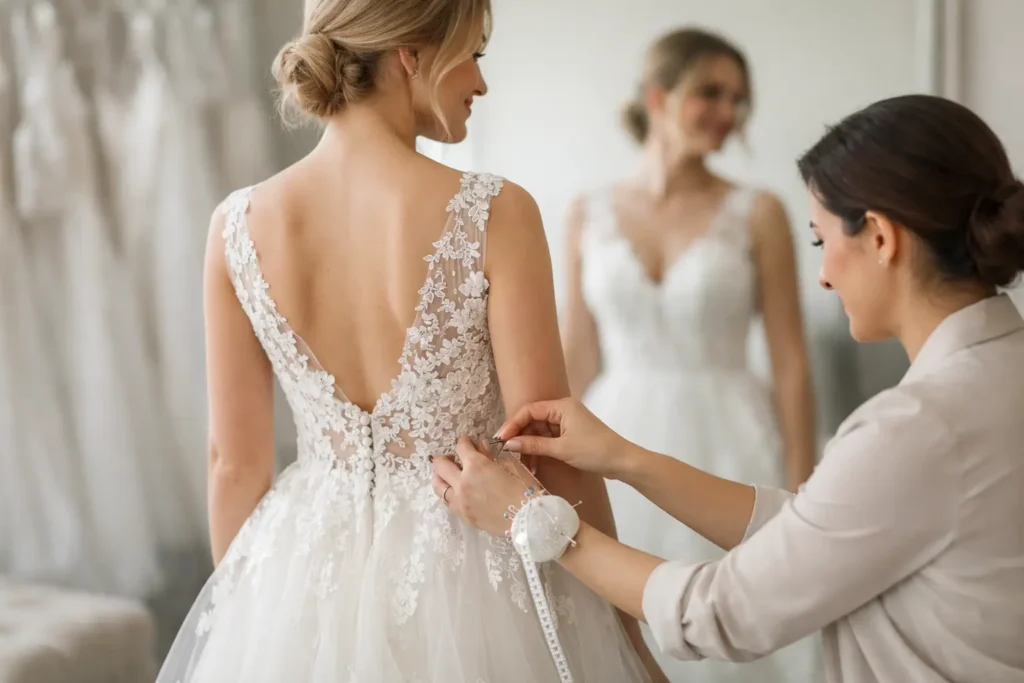
Guide to Wedding Dress Fittings for the Right Fit
A wedding gown can be breathtaking on the hanger and still feel wrong once you move, sit, hug someone or take a full breath. This guide to wedding dress fittings is designed to make the process feel clear and reassuring, so your dress supports the way you want to look and feel on the day – polished, comfortable and completely yourself.
The best fittings are not about chasing an impossible idea of perfection. They are about creating a balanced fit that flatters your shape, holds securely and lets you enjoy every part of the celebration without tugging at fabric or worrying about a slipping strap.
When to start wedding dress fittings
As a general rule, arrange your first fitting around eight to 12 weeks before the wedding. This gives your tailor enough time to assess the gown properly, complete the main alterations and allow for follow-up appointments if needed. A custom-made dress may arrive with less work required than an off-the-rack gown, but almost every wedding dress benefits from some level of adjustment.
The timing can vary. A simple crepe dress with a clean hem may need only modest changes, while a beaded gown, corseted bodice, lace sleeve or multi-layered skirt requires more care. If your dress needs substantial resizing, structural work or detailed hand-finishing, starting earlier is wise.
Try not to leave fittings until the final few weeks. Last-minute alterations can be possible in some cases, but they limit your options and add avoidable pressure during an already busy time. Booking early also gives you time to organise your veil, shoes and undergarments before the final fitting.
Keep your size as stable as practical
Bodies change, and there is no need to feel embarrassed about that. Let your tailor know if you expect a significant change in size before the wedding, whether from a planned fitness goal, pregnancy, medical treatment or anything else that may affect the fit.
Small adjustments can usually be managed at a later appointment. Major changes, however, can affect the placement of lace, boning, beading and seams. The most reliable approach is to complete major fitting work when your measurements are reasonably stable, then schedule a final check close to the wedding.
What to bring to your fitting
Your gown should be fitted with the items that will affect its shape and length. Wearing different shoes or undergarments at each appointment makes it harder to achieve an accurate result.
Bring your wedding shoes, even if they are not brand new. Heel height is especially important for hemming, as even a small difference can change how the skirt falls. If you have not chosen shoes yet, choose them before any hem is finalised. You should also bring the bra, shapewear or cups you plan to wear, plus any slip or petticoat that adds volume beneath the dress.
If you intend to wear a veil, cape, detachable sleeves, overskirt or statement jewellery, take these along to at least one later fitting. They may not change the dress measurements, but seeing the full look helps you assess proportion, movement and comfort.
It can also help to bring one trusted person. They can take photos, remind you of practical concerns and learn how to fasten buttons, hooks or a bustle. Too many opinions, though, can make a fitting feel more stressful than useful. Choose someone calm who understands that the final decision is yours.
What happens at a wedding dress fitting?
Your tailor will begin by looking at the gown on your body rather than relying on the size label. Bridal sizing is inconsistent, and a number on the tag says very little about how the dress should sit across your bust, waist, hips and shoulders.
You will be asked to stand naturally, walk, turn and sit where appropriate. This matters because a wedding dress is not only worn for a mirror moment. You will be greeting guests, posing for photographs, eating, dancing and moving through the day. A bodice that looks smooth while standing still may feel restrictive when you lift your arms. A skirt that appears perfect at the front may catch under your shoes as you walk.
The tailor may pin excess fabric, mark a hem, adjust straps or assess the internal construction. Depending on the gown, alterations may include taking in or letting out side seams, reshaping the bust, altering shoulders, shortening straps, refining sleeves, replacing a zip, adding support cups or creating a bustle for the train.
A skilled alteration is often subtle. The goal is not to make the dress look altered, but to make it look as though it was made for you.
Fit should be secure, not restrictive
A well-fitted bodice should stay in place without constant pulling, but it should not make breathing difficult. You should be able to sit and lift your arms comfortably. For a strapless dress, the support should come from the structure of the bodice rather than from squeezing the top edge tightly against the body.
There is a trade-off with highly structured gowns. A firm corseted silhouette can create beautiful shape, but it will naturally feel more fitted than a soft, flowing dress. Be honest about your comfort level and the type of day you are planning. If you expect a long ceremony followed by hours on the dance floor, comfort deserves as much attention as the initial visual effect.
The fittings that matter most
Most brides need two or three appointments, although the exact number depends on the dress and the scope of work. The first fitting identifies the changes needed and establishes the overall silhouette. A second fitting checks the alterations, refines the details and confirms the hem and support are right. The final fitting is your chance to wear the completed gown with your chosen accessories and make sure everything feels settled.
At the final appointment, walk in your shoes on a clean floor, take a few steps backwards and practise sitting down. Raise your arms as if greeting people or dancing. If the dress has a train, ask how it will be handled after the ceremony. A bustle lifts and secures the train for the reception, but there are different bustle styles, and the best choice depends on the fabric, train length and look of the gown.
Ask the person helping you on the day to attend if possible, or request clear instructions. Bustles, covered buttons and internal loops are simple once understood, but they are not things you want to figure out in a hotel room five minutes before dinner.
Common wedding dress alterations and why they need care
Hemming is one of the most common bridal alterations, yet it is rarely as simple as cutting fabric shorter. Many gowns have multiple lining and tulle layers, lace edging, horsehair braid or detailed appliqué. The hem must be even when you stand naturally in your final shoes, while still allowing enough clearance to walk without catching the skirt.
Straps often need adjustment too. A small change can improve bust support and stop the neckline gaping, but shortening straps too much can pull the bodice upwards or make the armholes uncomfortable. Sleeves need similar care, particularly with lace or sheer fabric where seam placement is visible.
Taking in a dress is usually more straightforward than letting one out, but it depends on the seam allowance inside the gown. A professional tailor will assess what is available before promising a particular result. Dresses with heavy beading, delicate lace, silk or complex boning need patient handling so the original finish remains clean and balanced.
Questions worth asking your tailor
A fitting should feel collaborative. Tell your tailor what you love about the gown and what feels uncomfortable or unfinished. Mention if you are worried about showing too much cleavage, if the neckline shifts when you move, or if you want more support without changing the overall design.
It is also sensible to ask when the gown will be ready, whether another fitting is recommended and how it should be stored and transported afterwards. If you are travelling with the dress, ask how best to hang or pack it and what to do if minor creasing occurs.
Do not ignore a small concern because you think it is too fussy. A strap that rubs during a ten-minute appointment can become a real irritation during a full wedding day. Equally, allow your tailor to explain when a requested change may alter the design or compromise the way the dress sits. Good advice protects both the gown and your comfort.
Before you take the dress home
Inspect the finished gown in good light and try it on once more with your shoes and undergarments. Check the zip, buttons, hooks and bustle loops. Make sure you know which way the dress should be lifted when walking and where your train sits once bustled.
Keep the gown safely hung or boxed as advised, away from food, pets, moisture and crowded wardrobes. Avoid repeatedly trying it on at home with make-up, fake tan or jewellery that could catch delicate fabric. The final fitting should leave you feeling relieved, not worried.
At AD Stitch, careful wedding dress alterations are treated as the finishing work they deserve. Arrive prepared, speak openly about how the gown feels, and give the fitting process enough time. When the dress fits your body and your day, you can stop thinking about it and simply enjoy the moment.