


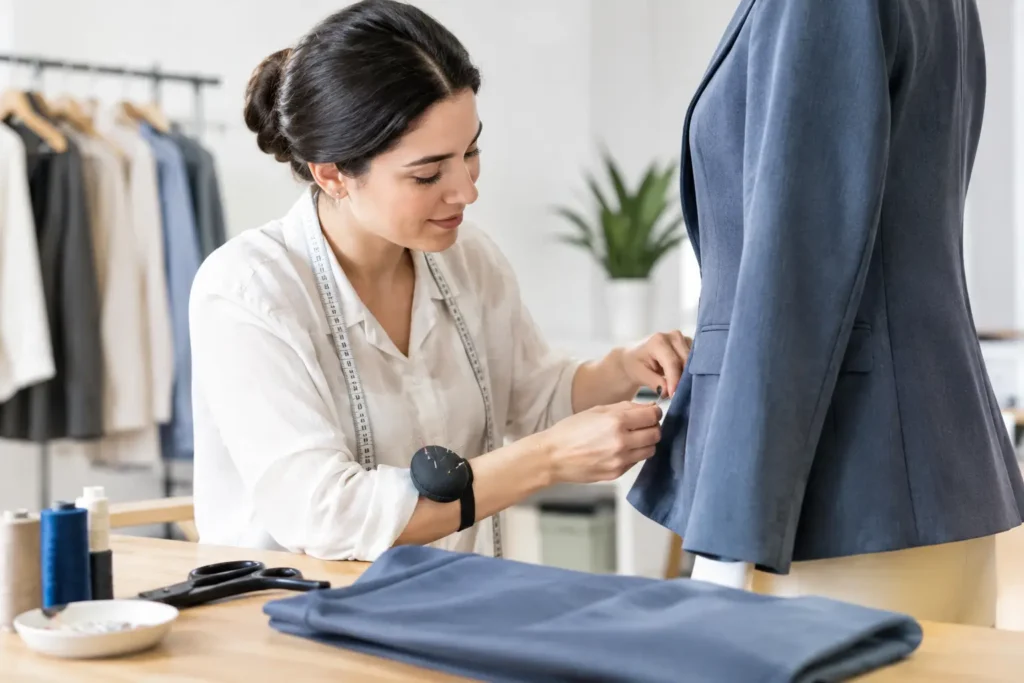
Garment Alteration Costs Explained Clearly
A pair of trousers that breaks neatly above the shoe, a dress that sits properly through the waist, or a jacket that follows your shoulders can change how an outfit feels immediately. Garment alteration costs are therefore about more than shortening fabric or moving a button. They reflect the skill, time and care required to make a garment look as though it was made for you.
At AD Stitch, every item is assessed on its own construction, fabric and desired result. A straightforward hem and a formal gown may both need shortening, but the work involved can be completely different. Understanding what shapes the price helps you choose alterations with confidence and avoid judging a job by a one-size-fits-all figure.
What affects garment alteration costs?
The largest factor is usually the amount of labour involved. Simple adjustments can be completed efficiently because the garment has uncomplicated seams and a clear finish. More detailed tailoring may require sections to be unpicked, reshaped and rebuilt so the alteration remains invisible when worn.
A basic hem on casual trousers, for example, is generally more straightforward than hemming lined suit trousers with a cuff. The latter may involve preserving the original finish, working around lining and ensuring both legs hang evenly. The difference is not just the number of centimetres removed. It is the construction that must be handled correctly.
Fabric also matters. Cotton, denim and many stable synthetic fabrics are familiar materials for everyday alterations. Delicate silk, chiffon, lace, velvet and beaded fabrics need slower handling and careful stitching to avoid marks, snags or distortion. Leather requires its own tools, needles and experience, as needle holes are permanent and cannot simply be unpicked like a woven fabric seam.
The condition of the garment can affect the quote as well. A clean, well-maintained item is easier to assess and work on than one with weakened fabric, previous poor repairs or a damaged zip. Sometimes a repair is possible and worthwhile; in other cases, the fabric around the damage may no longer be strong enough to support a lasting result. An experienced tailor should be honest about that trade-off before beginning.
Simple alterations versus tailoring work
Not all alterations deliver the same level of change. The most economical jobs are often small adjustments that improve day-to-day comfort: taking up a hem, replacing a button, shortening sleeves or repairing a minor seam split. These are practical services that can give a favourite garment many more wears.
More involved work includes reshaping a dress through the bodice, taking in a lined blazer, adjusting a suit jacket, altering a waistband or refitting a garment that is several sizes too large. These jobs take longer because a good result depends on balance. If the waist of a dress is reduced, the side seams, bust, hips, lining and zip may all need consideration. If only one area is altered without checking the rest, the garment can pull or sit awkwardly.
This is why a professional quote is based on the actual garment rather than a photo alone. Photos are useful for an initial conversation, but they cannot always show seam allowances, lining, internal structure or the way a piece moves on the body.
Suits need precise, balanced adjustments
Suit alterations are a strong example of why craftsmanship matters. Trousers may only need a hem or waist adjustment, while a jacket can involve complex work around the sleeves, shoulders, chest or lining. Some jacket alterations are excellent value because they transform an otherwise quality garment. Others may cost more than expected because the construction is highly structured.
For many people, a well-made suit is worth tailoring rather than replacing. The key is to focus on changes that improve fit without compromising the jacket’s original proportions. A fitting appointment allows the tailor to explain what is achievable and recommend the most effective alterations.
Wedding and formalwear deserve extra time
Wedding dresses, bridesmaid dresses and eveningwear are often made with multiple layers, boning, lace, delicate linings or hand-finished details. Altering them is careful dressmaking work, not simply a standard hem. The garment may need several fittings, particularly where a change in heel height, undergarments or shape wear affects the final length and fit.
For bridal alterations, timing is part of the cost equation. Booking early creates room for fitting, refinements and any unexpected adjustments. Leaving a detailed gown until the final week can limit options and may attract an urgency charge if the work needs to be prioritised.
Why a fitting is worth it
A fitting lets the tailor see where the garment sits when you stand, walk and move. This is essential for clothing such as dresses, trousers and jackets, where a measurement taken flat does not tell the whole story. Bringing the shoes and undergarments you plan to wear is particularly helpful for formal outfits and wedding garments.
During the fitting, be clear about how you want the garment to feel. Some clients prefer a close, streamlined fit, while others need extra room for comfort at work or ease of movement at an event. Neither preference is wrong, but it changes how the alteration should be approached.
A good tailor will also point out limitations before the work starts. A garment can usually be taken in only as far as its seam allowance permits. Letting a piece out depends on whether there is enough fabric inside the seams. Pattern placement, pockets, zips and decorative features can also restrict what can be changed cleanly.
The value behind a professional alteration
Comparing garment alteration costs only by the cheapest advertised price can be misleading. A low price has little value if the hem is uneven, a delicate fabric is damaged or a jacket loses its shape. Quality tailoring protects the garment while improving its fit.
There is also a sustainability benefit. Repairing a broken zip, reinforcing a seam or resizing a quality piece can keep clothing out of landfill and reduce the need for unnecessary replacement. This is especially worthwhile for garments with sentimental value, premium fabrics or a fit you already love apart from one problem area.
That said, not every garment is worth extensive work. An inexpensive item with thin, worn fabric may not justify a complex reconstruction. A trusted local tailor can help you make a practical call, rather than encouraging alterations that will not give you a reliable result.
How to get an accurate alteration quote
The clearest way to understand the cost is to bring the garment in for assessment. Explain what feels wrong, rather than only requesting a specific technical alteration. Saying, “The shoulders feel too broad” or “The skirt catches when I walk” gives the tailor useful information about the outcome you want.
If you are enquiring before a visit, send clear photos of the item, including the relevant area, and describe the fabric, lining and urgency. This can provide a useful guide, but final pricing should follow an in-person inspection where possible.
It also helps to ask about turnaround time before committing, especially for an upcoming wedding, work event or holiday. Standard work and urgent work are priced differently because fitting an item into a busy schedule may require rearranging the workflow. Planning ahead usually gives you the best choice of appointment times and avoids unnecessary pressure.
Choosing alterations that make a difference
The most worthwhile alteration is not always the biggest one. A correctly finished trouser hem can sharpen an entire work wardrobe. A small adjustment at the waist can make a dress feel comfortable enough to wear again. A repaired leather jacket or restored zip can save a piece that would otherwise sit unworn in the wardrobe.
Professional alterations are an investment in fit, comfort and the life of your clothing. Bring in the garment you have been putting off wearing, and let an experienced tailor assess what is possible. The right adjustment can make it feel like it belongs to you again.