


The Future of Clothing Alterations
A jacket that almost fits is rarely worn twice. A dress that pulls at the waist sits in the wardrobe for months. That is why the future of clothing alterations matters – not as a fashion trend, but as a practical shift in how people buy, wear and keep their clothes.
For years, alterations were treated as an afterthought. You bought something, hoped it fit well enough, and if it did not, you either put up with it or replaced it. That mindset is changing. More customers now see tailoring as part of the buying decision, not a last resort. They want better value from every garment, more comfort in daily wear, and a cleaner, sharper silhouette without starting from scratch.
Why the future of clothing alterations is changing now
Several forces are pushing alterations into a more central role. The first is simple: ready-to-wear sizing has never been truly standard. A size 12 in one brand can feel completely different in another. Online shopping has made that even more obvious. People are buying more clothes without trying them on first, which means the gap between off-the-rack sizing and real-world fit is harder to ignore.
The second shift is cost. Quality clothing is expensive, and replacing garments too quickly does not make financial sense. When a good suit, formal dress, leather jacket or pair of trousers can be adjusted to fit properly, alteration work becomes a smart investment rather than an optional extra.
The third factor is sustainability, although in practice most customers experience it as common sense. Extending the life of a garment, repairing damage, and improving fit reduces waste. Not every item is worth altering, and an honest tailor should say so, but many garments have far more life left in them than people realise.
Fit is becoming more personal
The strongest trend in the future of clothing alterations is personal fit. Customers are less willing to accept generic sizing, especially when clothing needs to perform in real life. Workwear has to move comfortably through long days. Occasionwear has to look polished in photos and feel secure through hours of wear. Wedding garments have to fit with precision, because there is no room for second-best on the day.
This is where alteration work is gaining more respect. Good tailoring is not only about making something smaller. It is about balance, proportion, movement and finish. A hem must suit the shoe. A sleeve must break at the right point. A waist adjustment has to sit cleanly without distorting the line of the garment. Those details are often invisible when done well, but they change how a person looks and feels.
As customers become more aware of fit, they are also becoming more selective about who handles their clothing. Convenience still matters, but trust matters more. People want to know their garment is being assessed by someone with technical skill, not passed through a rushed process with limited care.
Technology will help, but it will not replace craftsmanship
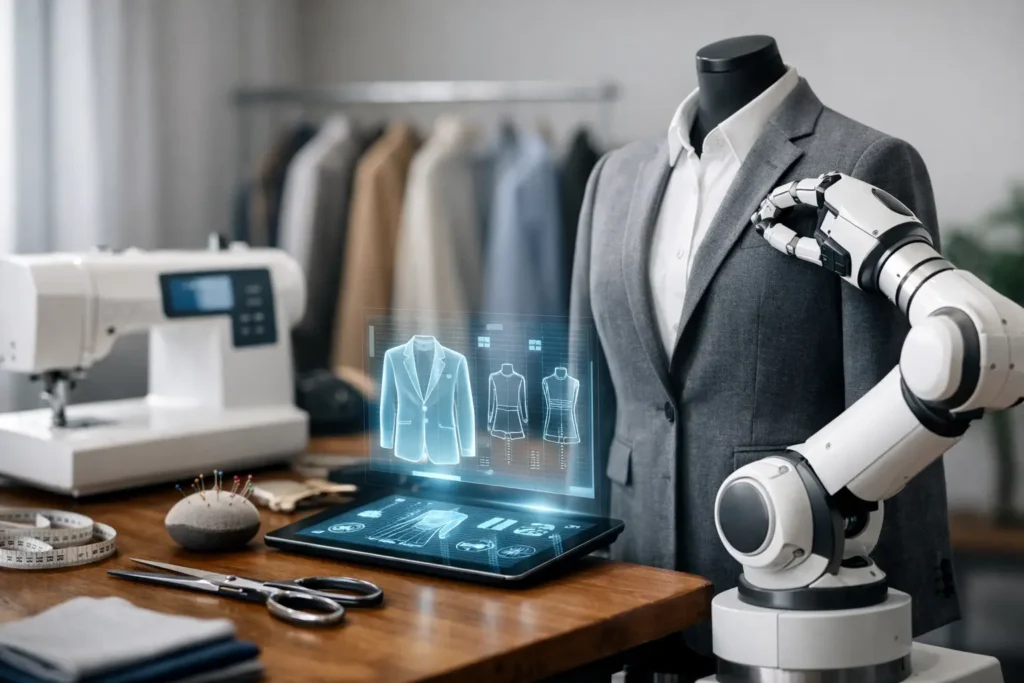
There is plenty of talk about body scanning, AI sizing tools and automated production. Some of that technology will improve the customer experience. Better measurements, clearer fit predictions and faster communication can all support alteration services. For busy customers, that means less guesswork and fewer fittings for straightforward jobs.
But technology has limits. It can measure a body, yet it cannot fully judge fabric behaviour, garment construction or the small choices that make an alteration look natural. Two jackets with the same chest measurement may need completely different approaches depending on shoulder structure, lining, seam allowance and fabric weight.
That is why the future of clothing alterations is likely to be a blend of modern convenience and traditional skill. Digital tools may make bookings easier, quotes quicker and fitting records more accurate. The actual work, though, will still depend on an experienced eye and a steady hand.
For customers, this is a good thing. It means faster service where speed helps, with craftsmanship preserved where quality matters most.
Repairs and alterations will increasingly overlap
Another change is the growing overlap between repairs and refitting. In the past, these were often treated as separate services. One fixed damage, the other adjusted size. In reality, customers usually want both outcomes at once. They have a favourite pair of jeans that needs repairing and tapering. They have a dress with a broken zip that also needs reshaping through the bodice. They have curtains that need shortening after a move and fresh finishing at the same time.
This matters because people are becoming more practical about clothing ownership. Instead of asking, “Should I keep this?” they are asking, “Can this be improved?” Sometimes the answer is no. Some garments are poorly made, heavily worn or too complex to alter cost-effectively. Yet many can be transformed with the right work.
That practical mindset suits a full-service tailor far better than a narrow, one-size-fits-all counter service. Customers want a real assessment of what is possible, what is worthwhile and what result they can expect.
Occasionwear will always need expert hands
Some areas of alteration will grow faster than others, and occasionwear is one of them. Bridal gowns, formal dresses and tailored suits carry higher expectations because the garment needs to perform under pressure. It must fit beautifully, photograph well and remain comfortable for hours.
There is also more complexity involved. Wedding and formal garments often feature delicate fabrics, internal structure, lace, beading or layered construction. Altering them requires patience and technical judgement. A quick adjustment that works on casualwear may not be suitable here.
This is unlikely to change, no matter how advanced clothing production becomes. Even if brands improve standard sizing, special occasion garments will still need individual refinement. Bodies vary, posture varies, shoes vary, and styling choices vary. Precision tailoring remains essential.
The local tailor will matter more, not less
It might seem logical to assume large retailers and online platforms will dominate the future of clothing alterations. In practice, local expertise may become more valuable. Alterations are personal. Customers want clear communication, realistic timeframes and the reassurance that comes from speaking directly with someone who understands the job.
That local relationship becomes even more important when the garment is expensive, sentimental or time-sensitive. A wedding dress is not just another booking. A suit needed for a job interview cannot be treated casually. A much-loved coat needs thoughtful handling, not a generic response.
For Melbourne customers, this is where a trusted studio with responsive service stands out. A business such as AD Stitch succeeds not by treating alterations as a side offering, but by making expert fit and careful service the main point. That difference will matter more as customers become less tolerant of poor fit and more aware of the value of professional tailoring.
What customers should expect next
The future of clothing alterations will probably feel less like a niche service and more like a normal part of wardrobe management. People will expect easier enquiries, faster turnaround for simple jobs and clearer advice on whether an item is worth altering. They will also expect honesty. Not every request should be accepted if the result will disappoint.
Customers should also expect more conversation around purpose. A garment for everyday wear may need a different alteration approach from one designed for a single event. Comfort may be the priority in one case, while sharp structure may matter more in another. Good tailoring has never been only about measurements. It is about how the garment needs to live on the body.
That is the part many people are only now starting to appreciate. Alterations are not simply corrective. They are expressive. They help clothing align with the person wearing it, rather than forcing the person to adapt to the garment.
As that thinking becomes more common, tailoring will no longer sit quietly in the background of fashion and wardrobe care. It will become one of the smartest ways to buy better, wear longer and feel more confident in what you already own.
The most useful question is no longer whether a garment fits straight off the rack. It is whether the right adjustment could turn it into something you genuinely want to wear.