


Can Jeans Be Tapered Professionally by a Tailor?
A pair of jeans can fit perfectly through the waist and seat, then bunch around the calves or flap at the ankles. That excess fabric can make otherwise good denim look less polished than it should. So, can jeans be tapered professionally? Yes. A skilled tailor can narrow the leg from the thigh, knee, calf or hem to create a cleaner shape while keeping the jeans comfortable and balanced.
The best result is not simply the narrowest result. Professional jean tapering is about reading the denim, the existing cut and the way you move in it. A well-executed alteration should look as though the jeans were made that way.
Can jeans be tapered professionally without looking altered?
They can, provided the jeans are suitable and the alteration is planned properly. Jeans are not all constructed in the same way. Stretch denim, rigid denim, heavy workwear styles, wide-leg cuts and slim jeans all respond differently when the leg is narrowed.
A tailor will first consider where the extra fabric sits. If the jeans are roomy only below the knee, a taper can begin around the knee and continue neatly to the hem. If they are oversized through the full leg, the adjustment may need to begin higher at the thigh. Taking in too much from the wrong point can pull the fabric out of line and make the leg twist when worn.
The aim is to maintain a natural silhouette. On most jeans, this means creating a gradual reduction rather than a sudden, sharp narrowing. The hem opening also matters. It needs enough room to sit comfortably over your footwear and allow you to take the jeans on and off without a struggle.
What a professional jeans taper involves
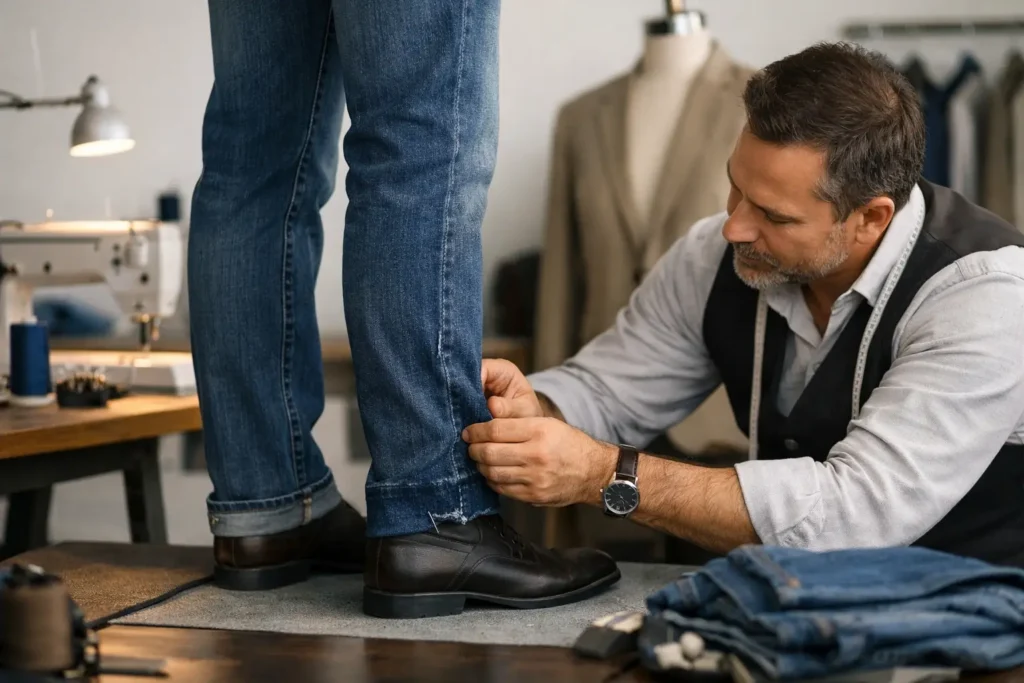
A proper taper begins with a fitting, ideally while wearing the shoes you usually wear with the jeans. Sneakers, boots and dress shoes all change how the hem sits. Your tailor can pin the leg to show the proposed shape, allowing you to check the look before any stitching begins.
Choosing the right seam
Jeans may be tapered through the inseam, the outer seam, or a combination of both. The right method depends on the construction and the desired finish. Altering the inseam is often the less noticeable option because it can preserve details on the outer leg, such as topstitching, rivets or a distinctive seam finish.
However, some jeans need adjustment from both seams to keep the leg centred and avoid an uneven profile. A tailor will also assess the position of the side seam and the grain of the fabric. These technical details are what separate a tidy, wearable taper from a pair that feels slightly off every time you put it on.
Preserving the original look
Quality denim often has visible topstitching, contrast thread, faded areas and a particular hem shape. These details need careful handling. If the taper reaches the hem, the original hem may need to be opened, reshaped and re-sewn so the finish remains clean.
Heavily washed jeans can be more challenging because fading is concentrated along seams and wear points. Removing a large amount of fabric may shift those faded lines. This does not always rule out tapering, but it is a reason to discuss expectations before work starts. A good tailor will tell you where the alteration will be discreet and where the original wash may reveal that the jeans have been adjusted.
Working with stretch and rigid denim
Stretch jeans are forgiving in some ways, but they must not be tapered too aggressively. Denim with elastane may feel comfortable during a fitting yet become tighter as you sit, bend or walk over a full day. The tailor should allow for movement, not just create a close fit while you are standing still.
Rigid denim has less give and often needs a little more ease through the thigh, knee and calf. It can produce a particularly sharp tapered shape, but it is less forgiving if the fit is too tight. If you cycle, drive frequently, work on your feet or prefer to wear boots, that extra room matters.
When tapering jeans is worth it
Jeans are usually worth tapering when the waist, rise and seat already fit well. These areas are more complex to alter, so a good fit through the top half gives your tailor a strong starting point. Tapering the leg can then turn a pair you rarely reach for into a reliable part of your wardrobe.
It is especially worthwhile for quality denim, favourite jeans that have softened with wear, and classic cuts that no longer suit your preferred shape. Many people have straight-leg or relaxed jeans that feel comfortable but look too loose below the knee. A subtle taper keeps that comfort while giving the outfit more definition.
The alteration may be less suitable if the jeans are already tight through the thigh or calf, badly twisted, worn thin along the inner seams, or heavily distressed in the areas that need reshaping. In those cases, narrowing the leg can stress weakened fabric or make the fit restrictive. An experienced tailor can assess this at a fitting and give straightforward advice before you commit.
How tapered should your jeans be?
There is no single ideal measurement. The right taper depends on your build, your footwear and how you want the jeans to work in your wardrobe. A professional who wears jeans to an office may want a neat, straight-to-slim line that works with leather shoes. Someone wearing casual denim with runners may prefer a modest reduction that still stacks slightly at the ankle.
A few practical decisions make the fitting clearer:
- Decide whether you want a subtle clean-up, a slim fit or a pronounced taper.
- Bring the shoes you wear most often with the jeans.
- Move around during the fitting by sitting, squatting lightly and walking.
- Mention whether you prefer a full break at the ankle, a slight break or a cropped finish.
A taper should complement your proportions rather than follow a trend blindly. Very narrow hems can make larger footwear look oversized, while a wider hem may suit boots or a more relaxed outfit. The most successful adjustment looks intentional from the front, side and back.
Will a jeans taper affect the length?
Not necessarily. Tapering and shortening are separate alterations, although they are often considered together. If your jeans are the right length, the hem can usually stay where it is while the leg is narrowed above it.
If the jeans are also too long, your tailor can advise whether to shorten them with a standard hem or retain the original hem. Keeping an original hem is often preferred on premium or faded denim because it preserves the worn finish at the ankle. It is a more detailed process, but it can make a noticeable difference to the final appearance.
For cropped, ankle-length or cuffed styles, the relationship between width and length is particularly important. A narrow taper can make a cropped hem appear sharper, while a more relaxed taper can suit a casual cuff. Trying on the jeans with your intended footwear is the simplest way to avoid surprises.
What to expect from a fitting
Bring your jeans clean and dry, and wear or bring the shoes you plan to pair with them. Tell your tailor what you do not like about the current fit rather than relying only on terms such as “slim” or “skinny”. For example, you might say the calves feel too loose, the hem catches on your shoes, or the jeans look bulky with a jacket.
During the fitting, the tailor can pin each leg and check that both sides sit evenly. This is also the time to raise practical concerns, such as needing room for work boots or wanting the jeans to remain comfortable for long days. Small adjustments in width can have a large effect on wearability.
At AD Stitch, a careful fitting helps ensure the finished taper suits both the denim and the person wearing it. That attention to proportion, comfort and construction is what gives altered jeans a refined result rather than a makeshift one.
A good pair of jeans should move easily, sit neatly and make getting dressed feel simple. If the fit is right everywhere except the leg, a professional taper can give your existing denim the shape you have been looking for – without replacing a pair you already love.