


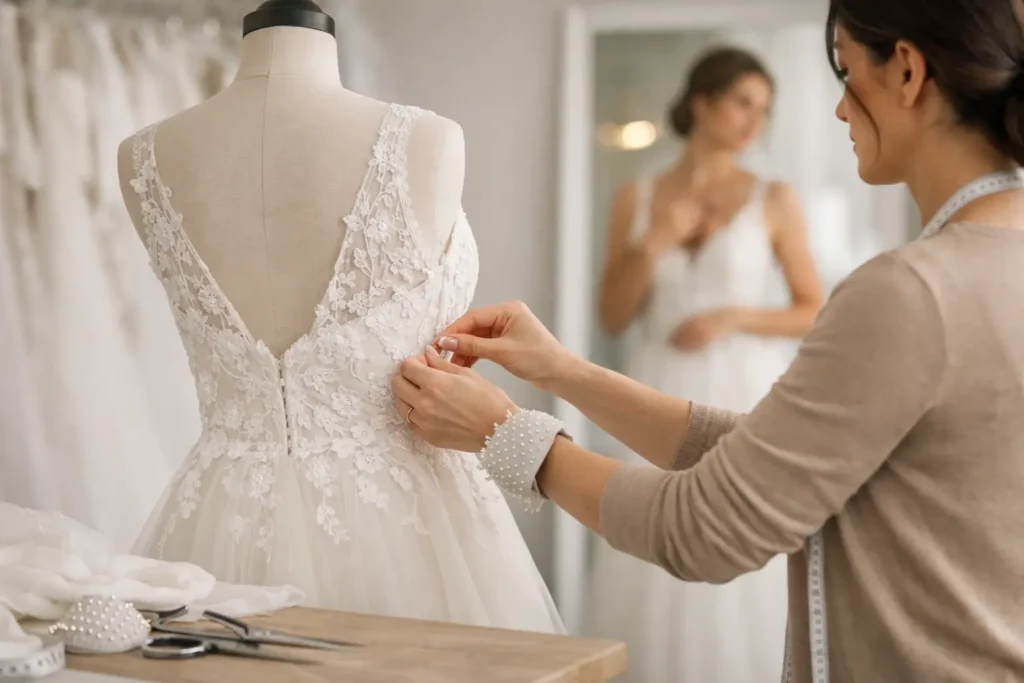
Can a Wedding Dress Be Altered?
A wedding dress can look beautiful on the hanger and still need expert work before it feels right on your body. So if you’re asking can a wedding dress be altered, the answer is usually yes – and in many cases, alterations are what turn a lovely dress into your dress.
Bridal gowns are rarely a perfect fit straight off the rack. Bodies are individual, sizing varies between designers, and the structure of a gown can change how it sits once it’s actually on. The right alterations can improve comfort, shape, movement and confidence. The key is knowing what’s realistically possible, what takes more craftsmanship, and when to start.
Can a wedding dress be altered in every case?
Not every gown can be altered in every way, but most wedding dresses can be adjusted significantly. Common bridal alterations include taking in the bodice, adjusting the waist, shortening the hem, refining straps, reshaping sleeves, adding bust support and bustling the train. These are standard changes for an experienced alterations specialist.
Where it gets more complex is with gowns that need to be let out by more than a small amount, heavily redesigned, or altered around delicate construction. Lace placement, boning, built-in corsetry, beading and layered skirts all affect what can be done and how long it takes. A simple satin gown and a fully embellished bridal dress may need very different approaches, even if the fitting issue looks similar at first glance.
That’s why bridal alterations are not just about making a dress smaller or shorter. They’re about preserving the balance of the gown while improving the fit. Done well, the changes should look like they were always part of the original design.
What wedding dress alterations are most common?
Most brides need a combination of adjustments rather than one single fix. The bodice is often the main focus because that is where support and silhouette come from. If the bust sits too low, the neckline gaps, or the waist seam doesn’t sit in the right place, the whole dress can feel off.
Hemming is another very common alteration. Wedding dresses are usually made long to allow for different heights and heel choices. The hem needs to be set with your wedding shoes in mind, and sometimes with a second look at how the train falls once the bodice fit is corrected.
Straps and sleeves also matter more than many people expect. Even a small strap adjustment can lift the bodice, improve comfort and stop you from constantly pulling the dress up. For gowns with trains, adding a bustle is often essential if you want easier movement for the reception.
Some brides also ask for changes that go beyond fit, such as adding cups, modesty panels, off-shoulder straps, sleeves or a more secure closure. These can often be done, but they require careful planning so the gown still feels cohesive.
What can make alterations harder?
Fabric and construction make a big difference. Plain crepe, mikado or satin can sometimes look simple, but they show every stitch, so precision matters. Lace can be more forgiving visually, yet matching motifs and repositioning trim takes time. Beaded and sequinned dresses often need embellishment removed and reapplied by hand before the actual alteration can even begin.
The internal structure matters just as much. A bridal gown may have boning, multiple linings, horsehair braid, cups, corsetry or several skirt layers. Altering one visible section often means opening and adjusting several hidden ones underneath. That’s one reason bridal work should be handled by someone who understands garment construction, not just surface-level sewing.
Timing can also become a complication. Last-minute alterations are possible in some cases, but bridal fitting usually works best when there is enough time for proper pinning, sewing and follow-up fittings. Rushing increases stress and limits options.
Can a wedding dress be altered up or down in size?
Taking a wedding dress in is generally more straightforward than letting it out. If a gown is too loose through the bodice, waist or hips, there is often scope to shape it more closely to the body. That said, the amount matters. Taking a gown down several sizes can affect proportions, strap placement and the way design details sit.
Letting a gown out depends on seam allowance. Some dresses have enough extra fabric inside the seams for a small size increase, while others have very little room to work with. If the dress needs more space than the original construction allows, a tailor may need to look at creative options such as adjusting closures, adding panels or reworking specific sections.
This is where an in-person assessment matters. Two dresses labelled the same size can have completely different alteration potential depending on brand, fabric and internal finish.
When should bridal alterations start?
Earlier is better, but not excessively early. Most brides benefit from starting alterations once they have their shoes and a clear idea of undergarments or shapewear. You want the fitting to reflect how the dress will actually be worn on the day.
A good window is usually a couple of months before the wedding, with enough time for more than one fitting if needed. If the gown is heavily structured or highly embellished, allow more time. If your weight is likely to fluctuate, your tailor may recommend holding certain final adjustments until closer to the date.
Leaving it too late creates unnecessary risk. Even if the work itself is possible, last-minute bridal alterations leave less room to refine the fit properly. For a dress this important, it is worth giving the process the time it deserves.
What should you bring to a fitting?
Bring your wedding shoes, or shoes at the exact same heel height. If you’re wearing shapewear, a specific bra, or any bust support under the gown, bring that too. These details affect posture, hem length and bodice fit.
It also helps to bring an open mind. Many brides focus on one area, like the hips or hem, when the real issue starts at the shoulders or bodice. An experienced fitter will look at how the entire gown sits on your body, because small corrections in one place can improve the whole silhouette.
If you have inspiration for custom changes, photos can be useful, but practicality still comes first. The fabric, seams and structure of your dress set the boundaries. The best results usually come from working with the gown rather than forcing it into a completely different style.
How much can the design be changed?
This depends on the dress and your expectations. Minor design updates are often achievable. Adding cups, tightening a neckline, softening a sleeve, adjusting a train or improving modesty are common requests. These changes can make the dress feel more secure and more like you, without compromising the original design.
A major redesign is another story. Turning a zip-back gown into a full corset, converting a strapless dress into long sleeves, or dramatically changing the silhouette can sometimes be done, but it takes more labour and carries more risk. The more complex the change, the more important it is to balance your vision against the gown’s construction.
A trusted local business with strong bridal experience will be honest about that. Good advice is not saying yes to everything. It is explaining what will work beautifully, what may become costly, and what could affect the finish.
How do you know your dress is in the right hands?
Bridal alterations call for more than speed. You want precision, patience and clear communication. A skilled alterations specialist should be able to explain how the gown will be adjusted, where changes will happen, and whether the work will affect detail, drape or comfort.
You should also feel listened to. The right bridal fitting is technical, but it is also personal. You need to move, sit, breathe and enjoy the day. A dress that looks fitted but feels restrictive is not properly finished.
For Melbourne brides, working with an experienced tailor who understands both formalwear structure and fine finishing can make the process far more reassuring. At AD Stitch, that craftsmanship-led approach is at the heart of every alteration, with careful attention to fit, detail and wearability.
If you’re wondering whether your gown can be adjusted, the most useful answer will always come from seeing the dress on your body. In most cases, the question is not can it be altered, but how to alter it well so you feel completely at ease when the day arrives.