


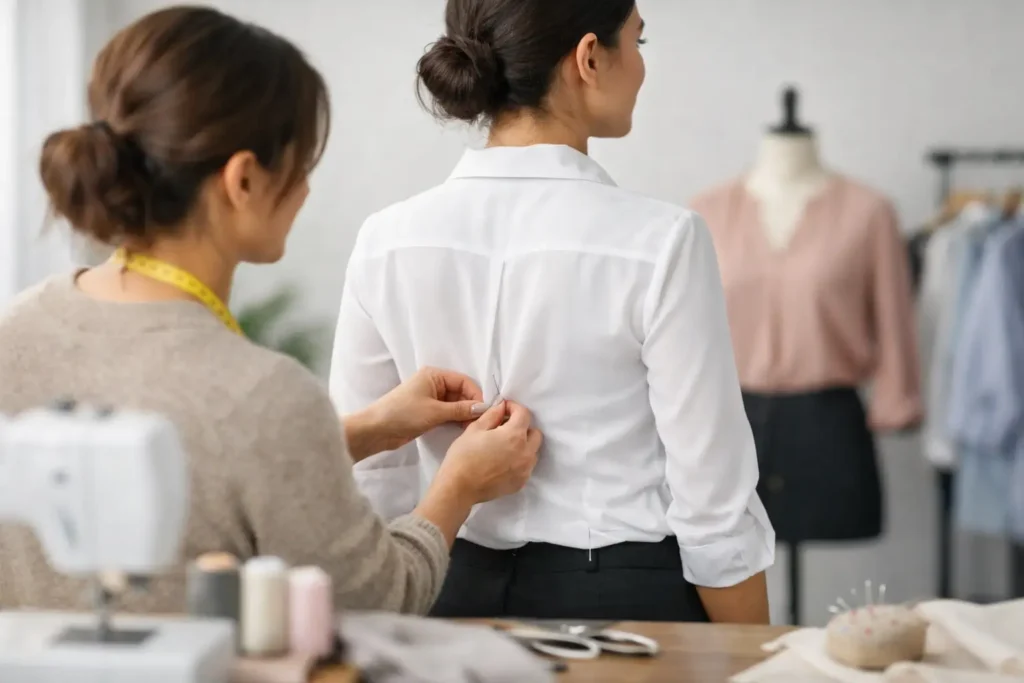
Blouse Alterations That Improve Fit Fast
A blouse can look perfect on the hanger and still feel wrong the moment you put it on. The collar sits away from the neck, the bust pulls, the sleeves pinch, or the hem lands at an awkward point that throws off the whole outfit. Blouse alterations are often the difference between a top you keep adjusting all day and one you wear with complete confidence.
Unlike simpler clothing fixes, altering a blouse usually involves lightweight fabrics, finer seams and more visible detail. That means the work needs a careful hand. When the fit is corrected properly, the change can be subtle to the eye but significant in how the garment looks, moves and feels.
Why blouse alterations matter
A blouse is one of the hardest garments to get exactly right off the rack. Sizing is often inconsistent between brands, and even when the bust measurement is close, the shoulders, sleeve width or length may not suit your shape. One part fits, another does not.
That is why blouse alterations can be so worthwhile. A well-fitted blouse sits neatly through the shoulders, skims the body without strain and allows easy movement through the arms and back. It should feel polished without feeling restrictive. For workwear, occasionwear and traditional garments alike, that balance matters.
There is also a practical value. Instead of replacing a blouse you otherwise love, alterations can help you keep wearing it. This is especially useful when the fabric, colour or design is hard to find again, or when the garment has sentimental value.
The most common blouse fit problems
Some fit issues are obvious, while others show up only after a few hours of wear. Bust gaping is one of the most common concerns, especially with button-up blouses. If the front pulls open between buttons, the blouse is either too tight through the bust or not shaped correctly for your frame.
Sleeves are another frequent issue. They may be too long, too wide at the cuff, or too tight at the upper arm. In a soft blouse fabric, poor sleeve fit can make the whole garment feel untidy. Shoulder fit is equally important. If the shoulder seam drops too low or sits too far in, the blouse can never hang properly through the rest of the body.
Length also affects wearability. A blouse that is too long can bunch under skirts and trousers, while one that is too short may ride up or sit awkwardly when tucked. Side seams, darts and hems all play a role in getting the final shape right.
What can usually be altered
Most blouse alterations focus on improving proportion and shape rather than completely remaking the garment. Taking in the sides is common when a blouse feels boxy or oversized. Adding or adjusting darts can improve contour through the bust and waist without making the fit too tight.
Sleeve shortening is usually straightforward, though the method depends on the cuff and any detailing. Narrowing sleeves can also help if the blouse feels bulky through the arm. Hem shortening is often possible, provided the design stays balanced once the length changes.
In some cases, the shoulders can be adjusted, but this is more involved. Button placement may also be altered to help reduce front gaping, though this depends on the blouse style and the amount of strain across the bust. For saree blouse alterations or more structured fitted blouses, the work can be more technical and may involve reshaping multiple areas at once.
What depends on the garment
Not every blouse alteration is equally simple, and not every blouse should be altered in the same way. Fabric makes a big difference. Silk, chiffon, satin and sheer materials require precision because every stitch mark and seam line can show. Cotton and linen may be more stable, but they can still shift in shape if the cut is not handled correctly.
Construction matters too. A loose pull-on blouse is very different from a collared button-up with plackets, cuffs and topstitching. Lace panels, pleats, ruffles and embellishments can all affect what is possible. Sometimes a requested change can be done, but it may alter the original balance of the design.
That is where honest advice matters. A good tailor will tell you not only what can be altered, but what will give the best result. Occasionally, a small adjustment in one area delivers more benefit than a major change elsewhere.
When blouse alterations are worth it
If the blouse already fits well in the shoulders and you like the fabric and style, alterations are often a very good investment. The shoulder area is usually the hardest part to correct, so when that section is right, many other changes become much more achievable.
Work blouses are a common example. If you wear them regularly, even a modest fit improvement can make a real difference to comfort and presentation across the week. Occasion blouses are another strong candidate, particularly when worn with tailored skirts, trousers or formal outfits where every proportion shows.
Blouse alterations are also worth considering for cultural and ceremonial garments. These pieces often carry personal importance, and getting the fit right is not just about appearance. It is about comfort, confidence and being able to wear the garment properly for the event.
How to prepare for a fitting
The best alterations start with the right fitting. Wear or bring the undergarments you would normally use with the blouse, especially if the fit issue is around the bust or neckline. If you plan to wear the blouse tucked into certain trousers or a skirt, that can also affect the ideal hem length and overall balance.
Be clear about what bothers you. Saying a blouse feels wrong is understandable, but pointing out where it pulls, billows or shifts helps the tailor assess the problem more accurately. Movement matters as well. Raise your arms, sit down and turn side to side. A blouse that looks fine standing still may not feel right once you start moving.
Photos can help if the blouse is for a specific event or if you usually style it a certain way. The goal is not just to make the garment smaller or shorter. It is to make it work for how you actually wear it.
Choosing the right tailor for blouse alterations
Blouse work calls for precision. Fine fabrics, narrow seam allowances and visible details leave less room for error than heavier garments. A trusted local business with experience in expert clothing alterations will be better placed to assess both the technical side and the visual finish.
Good communication is part of that service. You should feel comfortable asking what is possible, how the garment will change and whether the result will suit the original style. Clear advice builds trust, especially when the blouse is delicate, expensive or important for an upcoming event.
For Melbourne customers, that local relationship can be especially valuable when time matters. If a blouse needs a quick turnaround before work, a function or a family occasion, responsive service and accurate fitting make the process much less stressful. That is one reason many clients choose AD Stitch for detailed garment work that needs both care and experience.
A better fit changes more than the blouse
When a blouse fits properly, you stop thinking about it. You are not checking the front for gaping, tugging the hem down or avoiding certain movements because the sleeves feel tight. You simply wear it as intended.
That ease has a flow-on effect. Clothes sit better with the rest of your outfit, your silhouette looks cleaner and you feel more comfortable in your own shape. Sometimes the fix is small, but the result feels like a completely different garment.
If you have a blouse sitting in the wardrobe because it almost works, it may not need replacing. It may just need the right adjustment by someone who understands how fit, fabric and finish come together. A carefully altered blouse does more than improve appearance – it gives you one more piece you can rely on.