


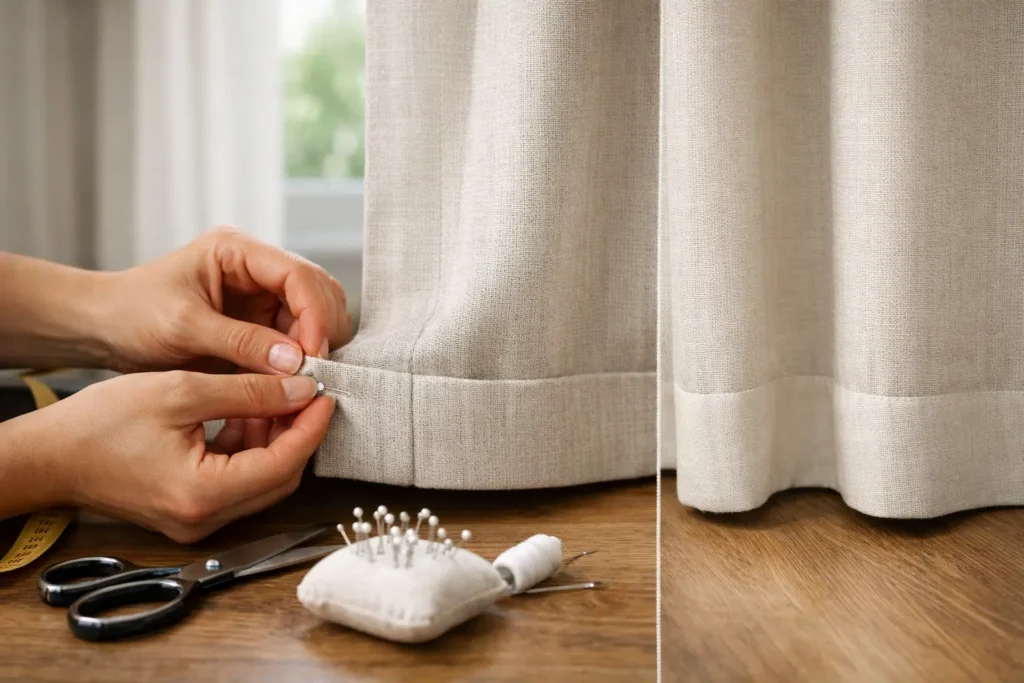
Are Curtain Hems Worth Altering? A Clear Guide
Curtains that pool on the floor, sit unevenly above the skirting board, or catch under furniture can make an otherwise well-kept room feel unfinished. So, are curtain hems worth altering? In many cases, yes. A carefully adjusted hem can make existing curtains look made for the room, work better day to day, and postpone the unnecessary cost of replacement.
The right choice depends on the fabric, the curtain construction, the amount of length to remove and the overall condition of the window covering. Professional curtain alterations are particularly worthwhile when the fabric is good quality, the style suits the room, and the problem is mainly the length.
When curtain hems are worth altering
Curtain length has a bigger effect than most people expect. A hem that is too long gathers dust, becomes a trip hazard and can be damaged by shoes, pets, vacuum cleaners or regular foot traffic. One that is too short can expose the wall or window frame below, making the room feel slightly out of proportion.
Altering the hem is usually a sensible investment when your curtains are lined, blockout, thermal, custom-made or made from a fabric you genuinely like. These are not always inexpensive to replace, and a professional alteration preserves the original heading, fullness and fabric quality while correcting the part that is not working.
It is also useful after a practical change to the room. New flooring can alter the finished floor height enough to make curtains suddenly drag. Moving a curtain rod, changing tracks, installing a pelmet or relocating curtains to another window can also leave a previously correct pair sitting at the wrong level. Hemming allows you to keep the curtains rather than start again.
For Melbourne homes, a well-finished length can also support better light control and insulation. Curtains that reach close to the floor can reduce visible gaps at the bottom, especially with blockout or thermal linings. They will not replace proper window insulation, but they can help the curtains perform as intended.
A better finish than a quick fold
A temporary fold held with tape may be tempting, particularly before an event or rental inspection. It rarely gives a clean result over time. Adhesive tapes can loosen with heat, leave residue, create a stiff line in the fabric or show through lightweight sheers. They are also unsuitable for many lined curtains and delicate materials.
A tailored hem is measured, pressed and stitched to suit the curtain. With lined curtains, both the face fabric and lining need careful handling so they hang smoothly and do not pull against each other. That attention is what keeps the panels looking even when closed and when stacked back at either side of the window.
When altering may not be the best value
Not every curtain deserves repair work. If fabric is badly sun-faded, brittle, mould-affected, torn in several places or discoloured along the hem, shortening it may only draw attention to other ageing issues. Curtains with heavy staining, worn lining or damaged coating can be better replaced, particularly if their blackout or thermal performance has already declined.
The same applies where there is very little fabric available. A curtain can usually be shortened neatly, but lengthening is more limited. Letting down an existing hem may reveal fade marks, stitch lines or a crease that cannot be fully removed. Adding a fabric border can work as a design choice, though it changes the look and is not always a cost-effective fix.
Very inexpensive ready-made curtains are another case where it pays to compare costs honestly. A simple hem on a basic unlined panel may still be worthwhile if it solves a clear problem. But if the fabric is thin, the heading has lost shape and the panels no longer provide enough coverage, replacement may offer better long-term value.
How should curtains sit above the floor?
There is no single correct curtain length. The best finish depends on the fabric weight, room style and how the curtains are used.
For most practical living areas, curtains should sit just above the floor or lightly kiss it. This provides a tidy, tailored appearance without constant dragging. A small clearance is often sensible where floors are uneven, where a robot vacuum passes underneath, or where curtains are opened and closed frequently.
A slight break on the floor can look relaxed and generous in a bedroom or formal room, especially with soft linen-look fabrics. The trade-off is more dust collection and a greater chance of the hem shifting, becoming soiled or being caught under furniture. Deliberate pooling can suit a decorative setting, but it is less practical for busy family homes, pets and high-traffic spaces.
For sheers, precision matters. Their light fabric makes unevenness easy to notice, and a hem that catches on carpet can quickly lose its graceful drape. For blockout curtains, the aim is often a close, even finish that supports coverage without leaving the fabric rubbing along the floor.
Why uneven floors need professional measuring
Many rooms are not perfectly level from one side of the window to the other. Measuring one curtain panel on the floor, cutting both to the same amount and hoping for the best can leave one side noticeably longer.
A professional tailor considers the installed track or rod, the hook position, the curtain heading and the floor level across the full window. The curtains should be assessed while hanging where possible, because fabric can settle differently once it carries its own weight. This is especially relevant for long, heavy lined drapes, wave-fold curtains and curtains with multiple panels.
What affects the cost and difficulty of hemming?
Curtain hemming is not always a basic straight stitch. The material and construction determine the level of work involved. A lightweight unlined sheer is handled differently from a wide, interlined drape with a weighted hem and separate lining.
The amount of fabric also matters. Wide windows may have several panels, and each one must be measured consistently so the finished set aligns. Patterned fabric needs extra care to keep horizontal stripes or design features sitting at a pleasing height. Curtains with weighted corners, trims, tape, eyelets or specialty headings can require the hem to be rebuilt rather than simply turned up.
Lining deserves particular attention. If the lining is hemmed incorrectly, it can hang below the face fabric, pull the curtain out of shape or create a bulky edge. A quality alteration accounts for the layers and leaves enough flexibility for the curtain to move naturally.
This is why a quote is best based on seeing the curtains or understanding their measurements, lining and heading style. The lowest price is not always the best result if it means uneven panels, visible stitching or fabric that no longer hangs correctly.
Before you book a curtain hem alteration
Leave the curtains hanging for a day or two if they are newly purchased or have just been moved. Creases can relax and the fabric can settle, giving a more accurate picture of the finished length. Avoid cutting or pinning the fabric yourself unless you are certain of the desired clearance.
Think about how the room is used. Do you want the curtains to clear a thick rug? Is there a door nearby that needs to open freely? Will the panels be opened daily, or mostly remain closed? These small details influence the best hem length.
It also helps to identify any concerns before the alteration begins, such as sun fade near the old hem, water marks, fabric damage or an uneven floor. A skilled tailor can explain what is achievable and recommend a finish that balances appearance with everyday practicality.
At AD Stitch, curtain alterations are approached with the same precision as a well-fitted garment: careful measurement, respectful handling of quality fabric and a finish designed to look right in your home.
The value is in the finished room
Curtain hems are worth altering when a good set of curtains is being held back by an avoidable fit problem. The improvement is often immediate: cleaner lines, easier operation, less wear at floor level and a more considered look around the window.
Rather than living with fabric that drags, bunches or sits awkwardly, have the curtains assessed before replacing them. A precise hem can be a small adjustment that makes the whole room feel more comfortable, polished and properly yours.