


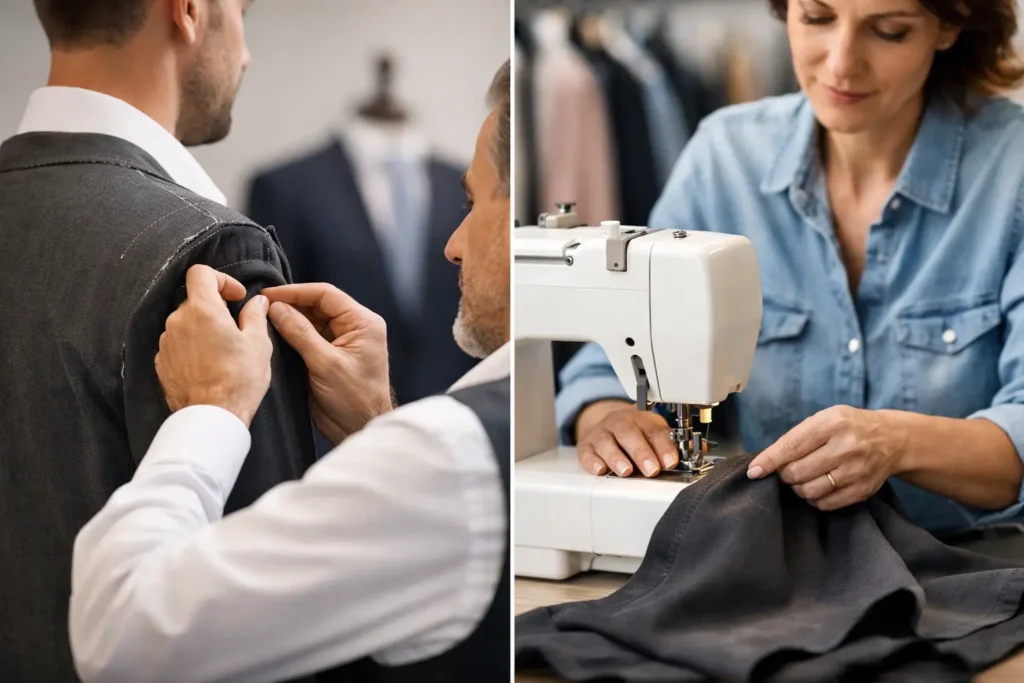
Tailor vs Alterations Service: What to Choose
You notice it the moment you put the garment on. The shoulders sit slightly off, the hem breaks in the wrong place, the waist feels tight when you sit, or the dress looks close but not quite right. That is usually when the question comes up – tailor vs alterations service, and which one do you actually need?
For most people, the two terms get used interchangeably. In everyday conversation, that is understandable. But when you are spending money on a suit, adjusting a bridesmaid dress, repairing leather pants, or trying to rescue a favourite jacket, the difference matters. The right service can improve fit, comfort and appearance. The wrong one can leave you paying for work that does not match the garment or the result you want.
Tailor vs alterations service: the real difference
A tailor traditionally makes, shapes or reconstructs garments with a strong focus on fit and garment structure. That can include creating clothing from scratch, but in a modern local service setting it often means handling more technical fit work, reshaping key areas, and understanding how a garment is built.
An alterations service usually focuses on adjusting an existing item so it fits better or functions properly. That might mean taking in a dress, shortening trousers, replacing a zip, repairing a seam, tapering sleeves, or adjusting curtain hems. Alterations can be simple or highly skilled depending on the garment.
Here is the part many customers do not realise: there is a lot of overlap. A high-quality alterations specialist may also have tailoring expertise, and that is often what you want. If your garment needs precise reshaping rather than a quick basic fix, skill matters far more than the label on the shopfront.
When an alterations service is the right choice
If the garment already fits reasonably well and only needs refinement, an alterations service is usually the practical option. This suits everyday wear and event clothing where the structure of the garment is sound, but the fit needs adjustment.
Trouser hems are a good example. So are taking in a shirt through the sides, shortening sleeves, adjusting a skirt waistband, repairing worn seams, or replacing a broken zip. These jobs are about improving wearability and finish rather than redesigning the garment.
Alterations are also the right path when you want to extend the life of clothing you already own. A jacket that feels dated can look sharper with a cleaner sleeve length. Jeans that sit awkwardly at the ankle can become a regular favourite with the right hem. A dress that has sat untouched in the wardrobe may only need a few careful changes to become event-ready.
In many cases, this is the most cost-effective choice. You are working with what is already there, improving fit without starting from zero.
Common garments suited to alterations
Dresses, business shirts, school uniforms, jeans, skirts, curtains and many formalwear pieces often fall into this category. Wedding and occasion garments can too, although they usually require more experience because the fabrics, linings and finishes are less forgiving.
The key question is whether the garment needs adjustment or genuine reshaping. If it is mostly adjustment, an alterations service is likely enough.
When a tailor is the better option
If the garment has more complex fit issues, a tailor is often the better choice. This is especially true for structured clothing such as suits, blazers, coats and formal jackets, where balance and proportion matter as much as measurements.
A tailor is also valuable when the item needs changes in multiple areas at once. Taking in the waist on a pair of trousers is one thing. Correcting seat shape, tapering the leg, adjusting rise balance and refining the hem is another. One is basic alteration work. The other requires deeper garment knowledge.
The same applies to jackets. Changing sleeve length is common, but adjusting shoulder line, chest shape or jacket suppression through the body calls for more technical skill. If the garment has canvassing, lining, padding or detailed finishing, the work needs to be approached carefully.
A tailor is often the right choice when you want the garment to look as if it was made for you, not just altered to fit you well enough.
Tailoring matters most when structure matters
Structured garments hold their shape because of how they are constructed. That includes internal layers, seam placement, lining and balance. Once you start changing those areas, experience becomes critical. A poor adjustment can distort the drape of the whole garment.
That is why suit alterations, bridalwear and leather work often benefit from a tailoring mindset even when the job is technically an alteration.
Why the overlap matters to customers
For customers, the real issue is not dictionary definitions. It is whether the person handling your garment understands fabric, fit, proportion and finish.
A basic counter service may be fine for straightforward hems and minor repairs. But if you are altering a wedding dress, reshaping a suit, adjusting delicate fabric, or working on a sentimental item, you need someone who can assess what is possible and what is not.
That honest assessment is part of professional service. Not every garment can be altered perfectly. Sometimes there is not enough seam allowance. Sometimes a design feature limits what can be changed. Sometimes the cost of the work will outweigh the value of the item. A good specialist will explain those trade-offs clearly.
How to choose between tailor and alterations service
Start with the garment itself. Ask whether it needs simple adjustment, complex reshaping, repair, or a combination of all three.
If it is casualwear with a minor fit issue, alterations are usually straightforward. If it is formalwear, structured suiting, bridal clothing, leather, or a garment with several fit problems, look for a service with tailoring-level expertise.
Then consider the result you want. Are you hoping it will be good enough for everyday use, or do you want a precise polished fit? There is nothing wrong with either goal, but they lead to different expectations. A work shirt may only need practical improvement. A suit for an important event needs sharper attention to line and proportion.
Communication is another strong clue. A skilled professional will inspect the garment, pin it carefully, explain what can be achieved, and mention any limitations before work begins. That conversation is often what separates expert workmanship from a rushed transaction.
Questions worth asking
It helps to ask whether the service regularly works on garments like yours, whether the alteration will affect the original design, and whether there are any risks with the fabric or construction. You do not need technical language. You just need clear answers.
If the response feels vague, overly confident, or dismissive of fit concerns, that is usually a sign to keep looking.
Tailor vs alterations service for common situations
For business wear, especially suits and tailored trousers, choose experience with structured garments. Office clothing needs comfort, but it also needs clean presentation.
For dresses, it depends on the fabric and occasion. A cotton day dress is different from a beaded evening gown. The latter needs a steadier hand and more planning.
For wedding alterations, expertise is essential. Bridal garments often involve lace, boning, multiple layers and delicate finishing. Precision matters because there is little room for error and even small changes can affect the whole silhouette.
For repairs, an alterations service is often enough unless the item is leather, heavily structured, or requires reconstructive work. A simple seam repair is one thing. Restoring the shape of a damaged jacket is another.
For culturally specific garments or specialty pieces, choose a service that respects both fit and design intention. The technical side matters, but so does understanding how the garment is meant to sit and move.
What good service should feel like
Whether you choose a tailor, an alterations service, or a business that offers both, the experience should feel attentive and precise. You should not feel rushed through fitting. Your concerns should be heard. The garment should be assessed on its own merits, not treated like a standard quick fix.
That is often why customers prefer a trusted local specialist over a generic counter setup. There is more accountability, better communication and a stronger focus on finish. At AD Stitch, that means approaching each garment with craftsmanship, honest advice and the goal of helping people feel comfortable and confident in what they wear.
The best choice is rarely about terminology alone. It is about finding someone who can look at your garment, understand what is possible, and carry out the work with care. When that happens, the difference is easy to see the next time you try it on.