


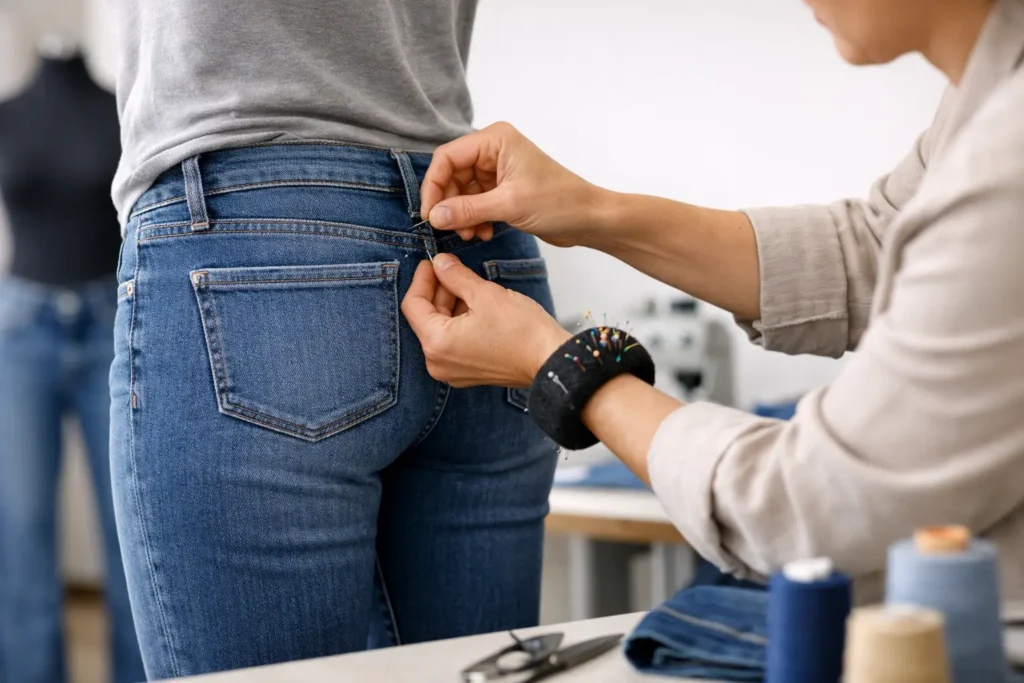
Jeans Alterations That Actually Improve Fit
A great pair of jeans can still end up sitting in the wardrobe if the fit is just slightly off. Maybe the waist gaps at the back, the hems drag on the ground, or the leg shape feels bulkier than it looked in the change room. That is where jeans alterations make a real difference. Done properly, they turn a pair you almost wear into a pair you reach for every week.
Jeans are also worth treating differently from other casual clothes. The heavy denim, topstitching, rivets and original hems all affect how alterations should be approached. A quick fix can be tempting, but with denim, precision matters. The goal is not only to make the jeans fit better, but to keep them looking like jeans, not like they have been obviously reworked.
What jeans alterations can fix
The most common issue is length. Jeans that stack too much at the ankle can look sloppy, while jeans that are too short can throw off the whole proportion of the outfit. Hemming is straightforward in many cases, but there is a choice to make. A standard hem gives a clean result, while an original hem alteration keeps the worn edge and factory finish. If you love the existing look of your jeans, preserving that detail is often the better option.
Waist adjustments are another frequent request, especially when jeans fit through the hips and legs but leave a gap at the back. This is one of the most worthwhile alterations because it improves comfort as well as appearance. The amount that can be taken in depends on the construction of the jeans and how much needs to change. A small to moderate adjustment is usually very effective. Larger changes can be possible, but they need careful assessment to avoid distorting the back pockets or seat.
Tapering the legs is also popular. Sometimes the thigh fits well but the lower leg feels too wide. In other cases, straight-leg jeans need a cleaner line from knee to ankle. A good taper should look balanced with the rest of the garment. Too aggressive, and the jeans can twist or sit awkwardly around the calf and hem. It is not just about making them narrower. It is about keeping the shape natural.
Repairs belong in this conversation too. Frayed hems, split seams, torn knees and worn inner thighs are common denim problems. Good repair work can extend the life of a favourite pair considerably, especially when the denim has already softened and moulded to your shape. For many people, that comfort is hard to replace with a new pair straight off the rack.
When jeans alterations are worth it
Not every pair of jeans should be altered. The key question is whether the jeans already fit well in the areas that are hardest to change. Rise, overall seat shape and the basic hip fit matter most. If those are wrong, alterations may become more complex and less economical.
If the jeans fit well through the body and only need refinements like hemming, waist adjustment or tapering, tailoring is usually well worth it. This is especially true for premium denim, workwear favourites or jeans you wear several times a week. Spending a little to improve the fit can be better value than buying multiple pairs that never feel quite right.
There is also the question of sentiment and practicality. Many customers bring in jeans they have worn for years because the fabric, wash and comfort are already exactly right. Replacing them is not easy. In that case, alteration or repair is not just about saving money. It is about keeping a garment that still earns its place.
The limits of jeans alterations
Good tailoring can do a lot, but denim has limits. Jeans are built with fixed features such as pockets, yokes, rivets and heavy seam construction. Those details are part of the look, but they also restrict how far a garment can be reshaped.
Taking in the waist slightly is usually manageable. Completely resizing the seat and hips is a different matter. If too much is changed, the back pockets can end up too close together or unevenly placed, and the whole pair can lose balance. Likewise, shortening jeans too much can affect the knee position and leg line, especially on fitted styles.
Stretch denim adds another variable. It can be easier to wear but trickier to alter cleanly because the fabric behaves differently under tension. Very rigid denim, on the other hand, can require stronger handling and specialist equipment. This is why jeans should be assessed as an individual garment rather than treated as a simple standard job.
Why denim needs a tailor, not a quick fix
Jeans might be casual, but altering them well is technical work. Matching thread colour, preserving topstitching style and managing bulk at seams all affect the final result. A hem that is even a little off can be obvious once the jeans are on. A waist adjustment that is not properly balanced can pull through the back and change how the jeans sit on the body.
This is where craftsmanship matters. Denim shows poor workmanship quickly. Uneven stitching, puckering, mismatched thread or bulky seams can make even expensive jeans look cheap. Careful tailoring protects the original character of the garment while improving the fit.
That is also why fittings are valuable. Seeing how the jeans sit on your actual body, rather than relying on a flat measurement, leads to a better result. Sometimes what seems like a length problem is really a fit issue through the waist or seat. Sometimes a customer asks for a strong taper when a softer adjustment would create a cleaner line. Expert advice saves guesswork.
Common jeans alterations and what to expect
Hemming is usually the simplest starting point, but even here there are choices. If you wear your jeans with sneakers most days, the break will differ from the length you would want with boots. Bringing the shoes you wear most often can help get the right finish.
Waist reduction can improve shape and comfort, particularly for curvier fits or for men who find the waistband sits loose by the afternoon. The result should feel secure without digging in. A proper alteration also considers belt loops, centre back seams and topstitching so the change blends in.
Leg tapering works best when it respects the original style of the jeans. Slimming a relaxed leg into a sharper silhouette can work beautifully, but it should still allow movement and sit evenly from knee to hem. Over-tapering can make the jeans look strained and feel restrictive.
Repairs vary depending on the damage. A small split seam is very different from worn-through denim at the inner thigh. Some repairs can be made discreetly, while others are always going to show a little. In many cases, reinforcing worn areas before they become holes is the smartest option. Preventative work can keep jeans going much longer.
How to know if your jeans need altering
If you are constantly wearing a belt to compensate for a waistband gap, they probably need attention. If the hem is shredded from dragging, or you keep cuffing the jeans just to make them wearable, the length is off. If the jeans feel good at the thigh but loose and flappy through the calf, tapering may help.
There is also a simple test. If you like the jeans when you first put them on but find yourself adjusting them all day, the fit is not doing its job. Good jeans should move with you, sit comfortably and look balanced without constant fixing.
For many Melbourne customers, jeans are not occasional wear. They are daily wear. That makes fit even more important. The right alteration can improve a garment you rely on every week, not just for one event or season.
Getting the best result from jeans alterations
Bring your jeans in clean and be ready to explain what bothers you most about the fit. Saying “they just feel wrong” is understandable, but more detail helps. Is the problem the waist, the leg width, the length, or how they sit when you walk? The clearer the issue, the more precise the solution.
It also helps to be open to advice. Not every requested change is the right one for the garment. Sometimes a modest adjustment gives a better and more natural result than a dramatic one. A trusted local business will tell you what is possible, what is worth doing and where the limits are.
At AD Stitch, this practical, honest approach is central to good tailoring. The aim is not to force every pair of jeans into a trend-driven shape. It is to make them fit your body better, feel better to wear and last longer.
A well-made pair of jeans should not be written off because the hem is too long or the waist is slightly loose. With the right alteration, denim can go from almost right to genuinely dependable – and that is often what makes a favourite pair stay in regular rotation for years.