


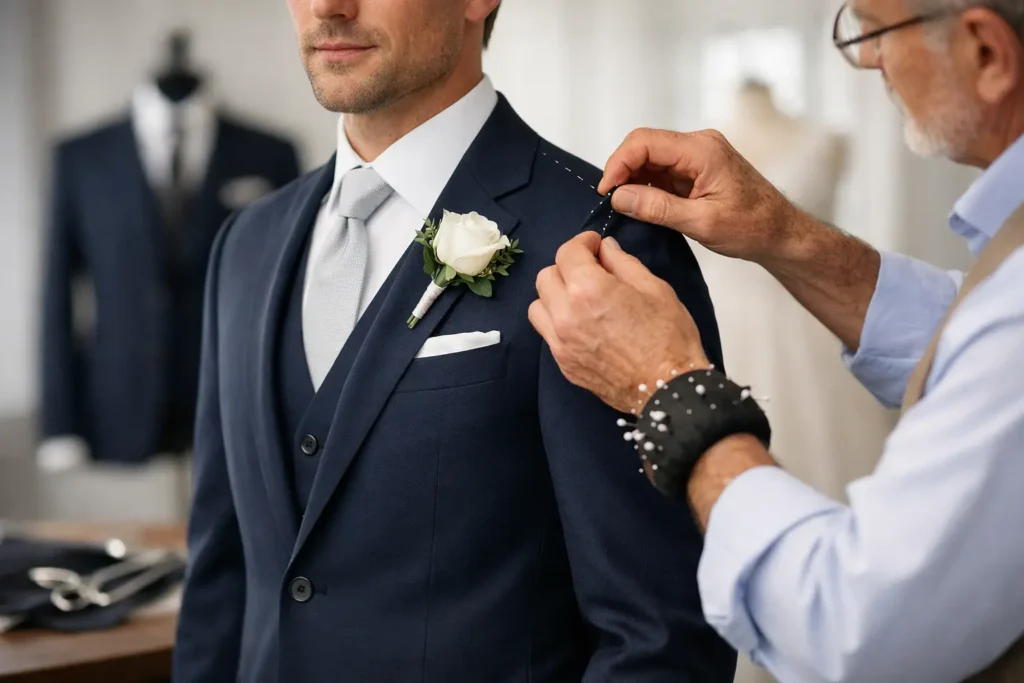
Wedding Suit Alterations That Actually Matter
You can spot an unaltered wedding suit straight away. The jacket collapses at the shoulders, the trousers bunch at the shoe, and the groom spends half the day tugging at his sleeves instead of enjoying it. Wedding suit alterations are not about chasing perfection for its own sake. They are about making sure your suit sits cleanly, feels comfortable, and looks right in every photo from the ceremony to the last dance.
For a wedding, fit carries more weight than it does for an ordinary work suit. You will be standing, sitting, hugging, walking, dancing and being photographed from every angle. A suit that is almost right in the change room can quickly become one that feels awkward after a few hours. Good alterations close that gap. They turn a decent suit into one that looks considered and feels like it was chosen for you, not borrowed from a rack.
Why wedding suit alterations matter more than most men expect
Many people assume that if a suit can be buttoned and the hem is somewhere near the shoe, it is good enough. For everyday wear, you might get away with that. For a wedding, small fit issues become obvious very quickly.
The camera tends to exaggerate problems. Sleeves that are slightly too long can hide the shirt cuff entirely. Trousers that are too slim through the seat or thigh can pull and crease in a way that looks strained in photographs. A jacket that is too loose through the waist can make even an expensive suit look generic. Alterations help create clean lines, better balance and a sharper silhouette, but they also improve movement. That matters when you are wearing the suit for a full day rather than an hour.
There is also the confidence factor. When a suit fits properly, you stop thinking about it. You are not adjusting the collar, worrying about the trouser break, or wondering if the jacket looks boxy. You can focus on the day itself.
What can usually be altered in a wedding suit
Most ready-to-wear suits are designed with alterations in mind. That is helpful, but not every part of a suit can be adjusted equally. Some changes are simple and worthwhile. Others are complex, costly, or limited by the garment’s construction.
Jacket alterations
Sleeve length is one of the most common changes. A well-fitted sleeve usually allows a small amount of shirt cuff to show. Too long, and the jacket looks oversized. Too short, and the proportions feel off. Jacket sleeves can often be shortened or lengthened, but the amount depends on the cuff detail and how much fabric is available.
Taking in the jacket waist is another common adjustment. This creates a neater shape through the body and can make a standard off-the-rack jacket look far more refined. The collar and shoulders are a different story. Minor improvements are sometimes possible, but shoulder work is among the most technical and expensive alterations in tailoring. If the shoulders are significantly too wide or the jacket does not sit well across the upper body, it may be better to start with a different size or a different suit altogether.
Trouser alterations
Trouser hemming is nearly always required. The right length depends on the look you want, the shoe you are wearing and the cut of the trouser. A cleaner, modern finish usually calls for less break, while a more traditional style may sit with a little more fabric at the shoe.
The waist can often be taken in or let out slightly. The seat, thigh and taper can also be adjusted in many cases, which helps the trousers sit better and move more comfortably. This is where experience matters. Trousers should look clean, but they still need enough room for walking, sitting and dancing.
Vest alterations
If your wedding suit includes a vest, fit becomes even more noticeable. A loose vest can bubble under the jacket, while one that is too tight may pull at the buttons. The sides and back are often the areas that can be refined for a closer and cleaner fit.
Timing matters more than people think
One of the biggest mistakes with wedding suit alterations is leaving them too late. Even straightforward changes need time for fittings, adjustments and final checks. If the suit arrives close to the wedding or if your schedule is already packed with other planning, it is easy to end up rushed.
A sensible approach is to buy your suit well in advance and book alterations as soon as possible after purchase. That leaves room for careful fitting rather than quick fixes. If your weight, training routine or general shape is likely to change before the wedding, mention that early. A good tailor will guide you on what should be done immediately and what is better left until closer to the date.
Final fittings are often best done near enough to the wedding that the fit reflects how you will actually wear the suit, but not so late that there is no margin for adjustment. It depends on the garment, the amount of work needed and whether multiple people in the wedding party are being fitted.
Wedding suit alterations for grooms, groomsmen and family
The groom’s suit usually gets the most attention, and rightly so, but consistency across the broader wedding party matters too. If groomsmen are hiring or buying from different places, tailoring helps bring the overall look together. Hem lengths, sleeve finishes and trouser shape all affect how coordinated the group appears.
That does not mean everyone should be altered to look identical. Body shapes vary, and what suits one person may not suit another. The goal is balance. The wedding party should look polished as a group while still fitting each individual properly.
For fathers, brothers or other close family members, alterations can also be a practical way to improve an existing suit rather than buying new. A well-made suit that has been adjusted for current fit can look excellent at a wedding and often offers better value than a rushed new purchase.
What to bring to your fitting
A proper fitting is easier and more accurate when you bring the right items. Wedding shoes are especially important because trouser length depends on the height and shape of the shoe. Bring the shirt you plan to wear if possible, especially if collar fit, sleeve length or vest position need to be checked.
If you will be wearing accessories such as braces, a belt or a specific waistcoat, those details can affect the final result. Even something as simple as the thickness of the shirt fabric can change how a jacket sits. The more complete the outfit at fitting time, the better the alterations can be judged.
It also helps to speak plainly about how you want the suit to feel. Some people want a very close fit. Others prefer a little more room through the chest, seat or thigh. Neither is wrong, but the finished result should suit the wearer, the style of the wedding and the amount of movement expected throughout the day.
The balance between style and comfort
This is where wedding tailoring often goes right or wrong. A sharply fitted suit can look excellent standing still, but if it is too tight, it will fight you all day. You need enough ease to sit comfortably during the ceremony, move naturally during photos and enjoy the reception without feeling restricted.
That balance depends on the cloth, the cut and the occasion. A formal winter suit in a heavier fabric behaves differently from a lighter suit worn for a summer garden wedding. A slim silhouette can still be comfortable if the garment has been adjusted carefully through the right areas. The problem is not close fit itself. The problem is forcing a suit into a shape it was never built to hold.
An experienced tailor will tell you when an alteration will improve the suit and when it may push the garment too far. That honesty is part of good service. Not every request leads to a better result.
Choosing the right tailor for wedding suit alterations
Wedding work benefits from precision, clear communication and reliable timing. You want someone who understands formalwear, takes fit seriously and can explain what is possible without overpromising. A rushed pinning session at a generic counter is rarely enough for an outfit that will be worn on one of the most photographed days of your life.
Look for a tailor who pays attention to posture, body shape and how the whole suit works together. The best results come from craftsmanship and judgement, not just measuring tape numbers. In Melbourne, that level of personal service still matters, especially when you want reassurance as much as technical skill.
A wedding suit should never feel like an obligation you have to tolerate until the reception ends. With thoughtful alterations, it becomes part of the day in the best way – comfortable, sharp and easy to wear from the first photo to the final farewell.