


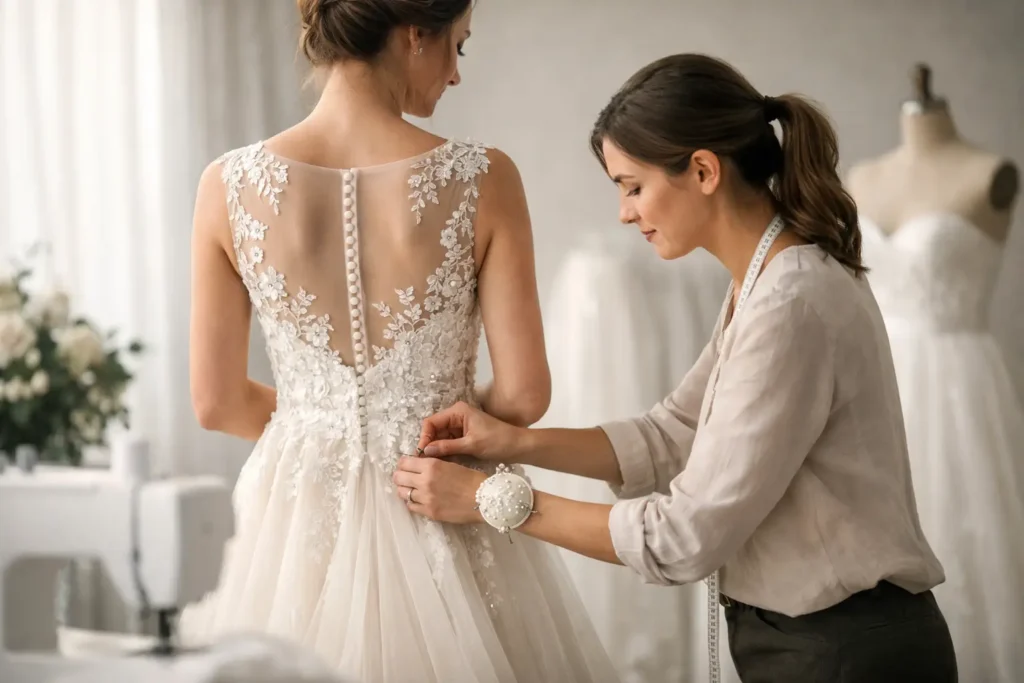
Bridal Gown Alterations That Truly Matter
A wedding dress can look perfect on the hanger and still feel wrong the moment you put it on. That is why bridal gown alterations matter so much. The right adjustments do more than improve the shape – they help you move comfortably, sit properly, walk with confidence and enjoy the day without tugging at straps or worrying about the hem.
For most brides, the dress is not truly finished when it arrives. Even a beautiful gown often needs fine-tuning through the bodice, waist, bust, straps or skirt. That is normal. Bridal wear is made to be altered, and the difference between a dress that simply fits and one that feels made for you is often in the tailoring.
Why bridal gown alterations are rarely optional
Wedding gowns are unlike everyday dresses. They use more structure, more layers and more delicate fabrics, and they need to perform for a full day of standing, walking, photos, dancing and hugging half the guest list. A gown that is slightly loose in ordinary circumstances can become frustrating very quickly on a wedding day.
Fit also affects how the gown falls in photos. A bodice that sits too low can flatten the shape of the dress. A waist that is not quite right can throw off the whole silhouette. Even a hem that is a touch too long can change how a bride moves and how the fabric pools on the floor.
Good alterations are not about changing the identity of the dress. They are about refining it so the design works properly on your body. Sometimes that means a subtle nip at the waist. Sometimes it means rebuilding support through the bust or adjusting layers so the skirt hangs evenly. The work may look small from the outside, but the effect is significant.
The most common bridal gown alterations
Bodice and bust adjustments
The bodice is usually the most important area to get right. If it is too loose, the gown can slip or wrinkle. If it is too tight, it can dig in, restrict breathing or create tension lines across delicate fabric. Taking in or letting out the bodice, reshaping cups and adjusting internal support are common changes.
This is also where experience matters. Structured bodices, boning, lace overlays and beading all add complexity. The dress needs to sit securely without losing its original balance or finish.
Hemming the gown
A proper hem is about more than length. Bridal gowns often have multiple layers, horsehair braid, lace edging or a train, and each element needs careful handling. The right hem allows you to walk naturally while keeping the overall shape intact.
Shoe choice matters here. Your final fitting should always happen with the shoes you plan to wear, or at least a pair with the same heel height. Even a small change can alter where the gown falls.
Strap, sleeve and shoulder changes
Straps that are too long can affect the bust fit and neckline. Sleeves may need easing for comfort or reshaping for symmetry. These changes sound simple, but they often influence how the whole upper part of the dress sits.
A good tailor will look at the relationship between straps, neckline and bodice support rather than treating each part in isolation.
Waist, hips and skirt shaping
Some gowns need gentle contouring through the waist or hips to create a cleaner line. Others need extra room for comfort. This depends heavily on the cut of the dress and the fabric. Satin, crepe, tulle and lace all behave differently under alteration.
The goal is not to force a body into a shape. It is to help the gown sit smoothly while still allowing natural movement.
Bustle and train adjustments
If your gown has a train, you will likely need a bustle so it can be lifted for the reception. This is one of the most practical bridal gown alterations, and one of the most overlooked until late in the process.
A bustle should be secure, discreet and easy enough for a bridesmaid or family member to manage on the day. There is no single best style. It depends on the gown, the train length and how visible you want the fastening points to be.
When to start bridal gown alterations
The best timing depends on the gown, but in general, earlier is better than rushed. Most brides should begin the process a couple of months before the wedding, with enough time for fittings and any fine adjustments closer to the date.
Starting too early can be unhelpful if your size is still changing, but leaving it too late creates pressure and limits options. Bridal fabrics and detailing often require hand finishing, and complex gowns cannot be rushed without risk.
If your wedding is in Melbourne during a particularly busy event season, booking ahead is even more important. Skilled alteration appointments fill quickly, especially when many brides are working to similar timelines.
What to bring to your fitting
A fitting goes better when the tailor can see the full picture. Bring your wedding shoes, the undergarments you plan to wear and any shapewear or bra solutions you expect to use. If you have a veil or accessories that affect how the gown sits or looks, bring those as well.
It also helps to think practically. Will you be walking on grass, climbing stairs or dancing for hours? Are you changing into a second outfit later? Will someone need to help you fasten the dress? These details can influence alteration decisions.
A good fitting is not just about standing still in front of a mirror. It should account for how the gown functions in real life.
How to tell if your gown needs more than basic adjustments
Some dresses only need standard hemming and a few fit corrections. Others need more involved work, especially if they are sample gowns, vintage dresses, online purchases or garments bought in a size chosen for availability rather than exact fit.
Warning signs include a bodice that twists, cups that sit in the wrong place, zips that strain, lace patterns that pull unevenly or a skirt that looks heavier on one side. These issues can often be improved, but they need proper assessment.
This is where craftsmanship makes a real difference. An experienced alterations specialist can explain what is achievable, what may affect the design and where there are trade-offs. Not every change is equally simple. Letting out a gown depends on seam allowance. Reshaping a heavily beaded bodice takes more labour than altering plain fabric. Adding support to a backless dress has different limits from a gown with full structure.
Honest advice matters just as much as technical skill.
What brides often underestimate
Many brides focus on the visible front of the gown and forget about comfort. Yet comfort is often what determines whether the dress feels wonderful or distracting on the day. If you cannot raise your arms easily, sit down properly or breathe comfortably through dinner, the dress will become hard work.
Another common oversight is the bustle. It is easy to treat this as a minor detail, but once the ceremony is over, being able to lift the train properly changes everything. A well-made bustle protects the gown, reduces trip hazards and makes moving around far easier.
Brides also sometimes expect dramatic resizing to be straightforward. Some changes are possible, but every gown has structural limits. The best results usually come from refining an already suitable dress rather than trying to make the wrong dress work through major alteration alone.
Choosing the right tailor for bridal gown alterations
Bridal work requires patience, precision and a very careful eye. It is not the same as shortening trousers or taking in a work shirt. Delicate fabrics, lining, boning, lace motifs and hand-finished details all need specialised handling.
When choosing someone for bridal gown alterations, look for clear communication as much as technical ability. You want a tailor who listens, explains the process and gives realistic guidance. Precision is essential, but reassurance matters too. Weddings come with enough stress already.
A trusted local business with strong craftsmanship can make the process feel much more manageable. At AD Stitch, this is exactly the focus – expert clothing alterations delivered with personal service and careful attention to fit.
What a good final fitting should feel like
By the final fitting, the gown should feel secure, balanced and comfortable. You should be able to walk naturally, turn, sit and move your arms without feeling like something is slipping out of place. The hem should suit your shoes, and the overall silhouette should look clean from every angle.
Most importantly, you should stop thinking about the dress as a problem to manage. Once alterations are right, the gown becomes something you can simply wear and enjoy.
A wedding dress carries enough emotion on its own. The tailoring should remove stress, not add to it. When the fit is right, you stand differently, move more easily and feel more like yourself – which is exactly how a bride should feel on her wedding day.