


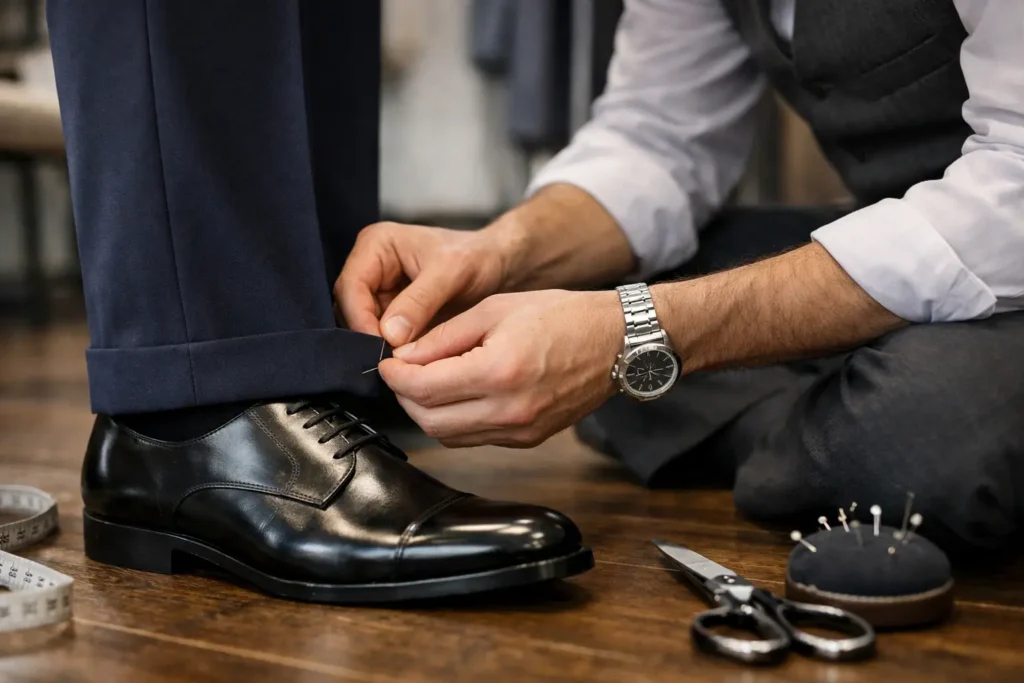
Hemming Pants for Dress Shoes Done Right
A good pair of trousers can still look slightly off if the hem is wrong. Hemming trousers for dress shoes is not just about stopping fabric from dragging on the ground. It is about getting the line, break and proportion right so your trousers sit cleanly over your shoes and your whole outfit looks more considered.
For many people, this is where frustration starts. One pair feels too short when standing, another bunches at the ankle, and a third looked fine in the fitting room but not once worn with the shoes you actually use for work or events. The fix is usually simple, but the right hem depends on more than a measurement taken off the floor.
Why hemming trousers for dress shoes matters
Trouser length changes how polished you look. Even an expensive suit can appear untidy if the hem puddles over the shoe or swings too high above it. On the other hand, a clean, well-set hem helps the leg look longer and the outfit feel sharper.
Dress shoes make this more specific because they sit differently from sneakers, runners or boots. The shape of the toe, the height of the heel and the way the upper meets the trouser all affect where the fabric should finish. That is why a trouser hem set for casual shoes often does not work once the same pants are worn with Oxfords, Derbies or loafers.
This matters most with suit trousers, tailored pants and formalwear, but it also applies to chinos worn with more polished shoes. If the goal is to look neat at work, at a wedding or at a special event, the hem should support the shoe rather than fight it.
What is the right trouser length?
There is no single perfect answer, because trouser hems are partly technical and partly personal. The usual reference point is the break – the small fold or crease created where the trouser meets the shoe.
A full break gives you more fabric resting on the shoe. It is a traditional look and can suit conservative business dress, taller men or wider-cut trousers. The trade-off is that too much break can look heavy, especially on slimmer legs or lighter fabrics.
A medium break is the most forgiving option for many people. It looks tidy, works well in office settings and gives enough length to feel balanced without looking sloppy.
A slight break or no break creates a cleaner, more modern line. This can look excellent with tapered trousers and sleek dress shoes, but it needs to be judged carefully. If taken too short, the trousers can appear skimpy when walking or sitting, and more sock will show than some people want.
In practical terms, the back hem usually sits around the top of the shoe heel, while the front just touches or lightly rests on the vamp. That is often the sweet spot for trousers worn with dress shoes.
The shoe changes the hem
One of the biggest mistakes in hemming is treating all shoes the same. They are not. A slim Oxford with a low profile needs a different finish from a chunkier derby or a dress boot.
Loafers often suit a slightly cleaner hem because the open top of the shoe creates a lighter visual line. Lace-up business shoes can handle a little more break. Dress boots may need extra consideration because the shaft changes how the trouser falls, especially if the leg opening is narrow.
Heel height also matters. Even a modest difference can alter where the hem lands. That is why fittings should always be done with the actual shoes you plan to wear most often. If one pair of trousers needs to work across several shoes, the best result is usually a balanced middle ground rather than an extreme short or long finish.
How a tailor judges the correct hem
A proper hem fitting is not only about measuring from the waist down. An experienced tailor will look at how the trousers sit on your body first. Rise, seat, hip shape and leg line all affect the final length. If the trousers are dropping at the back or pulling through the seat, the apparent hem length can be misleading.
That is why two people of the same height can need different hems in the same trouser style. Posture also plays a part. Someone who stands very upright may wear length differently from someone whose trousers naturally settle lower through the hip.
Fabric matters as well. Heavier wool usually falls more cleanly and can carry a traditional break nicely. Lighter cloth may flutter or collapse if left too long. Linen blends and softer fabrics can need a slightly more controlled hem to avoid looking rumpled.
A good tailor will pin the trousers while you are wearing the right shoes, then check the front, back and side view. The goal is balance. You want the hem to look intentional from every angle, not just straight on in a mirror.
Common mistakes with dress trouser hems
The most common problem is hemming too short for the sake of a modern look. Cropped trousers can work in some fashion settings, but for most professional or formal dressing, there is a fine line between sharp and underdone. If you are constantly exposing socks while standing still, the trousers are probably too short.
The opposite issue is leaving too much fabric. This often happens when people ask for extra length just in case. The result is bunching at the ankle, faster wear at the hem and a less refined finish overall.
Another mistake is fitting trousers without proper shoes. Trainers, slides or being barefoot will not give an accurate result. If the trousers are meant for dress shoes, they need to be fitted with dress shoes.
Lastly, people sometimes ignore the width of the trouser opening. A narrow hem opening tends to sit differently over the shoe than a wider one. The same measured inseam can look completely different depending on the cut.
Hemming trousers for dress shoes in different settings
For office wear, most people want something classic and reliable. A medium or slight break is usually the safest choice because it works well across meetings, commuting and long days on your feet without looking either fussy or dated.
For weddings and formal events, the trouser hem often benefits from a slightly cleaner finish, especially with a sharper tailored silhouette. The outfit tends to be more intentional, the shoes are usually more polished, and photos matter. A neater break can help the whole look appear more elevated.
For everyday tailored trousers or chinos worn with dressier shoes, the best hem depends on how often you switch footwear. If one day you wear loafers and the next you wear heavier lace-ups, the ideal alteration may be a compromise that still looks polished with both.
Should trousers touch the ground?
No. With dress trousers, the hem should not drag on the ground. Apart from looking untidy, it causes unnecessary wear and can spoil the shape of the trouser over time. If the back hem is fraying quickly, that is often a sign the trousers are too long.
There is a difference between a graceful break and fabric pooling around the ankle. One looks intentional. The other looks like the trousers were never properly finished.
Cuffs, plain hems and style preference
If your trousers have turn-ups, also called cuffs, the hem still needs to be set correctly for the shoe. Cuffs add weight to the bottom of the leg, which can help the trouser hang more neatly, but they do not excuse extra length.
Plain hems often suit slimmer, cleaner styles and can make the leg line feel lighter. Cuffs can look excellent on pleated trousers or more classic tailoring. Neither is automatically better. It depends on the trouser design, your build and how formal you want the outfit to feel.
When professional hemming is worth it
A trouser hem sounds simple, but small errors are obvious once the garment is on. A professional alteration gives you more than a shorter leg length. It gives you a trouser that sits properly with your shoes, complements the cut and feels right every time you wear it.
That is especially worthwhile for suits, work trousers and event wear. Once the hem is set properly, getting dressed becomes easier. You are not second-guessing whether the trousers look too long, too short or slightly awkward with your favourite pair of shoes.
If you are bringing in trousers for a hem, wear the dress shoes you use most and be clear about where you will wear them – office, wedding, formal dinner or daily business wear. That helps the tailor shape the finish around real use, not guesswork. For Melbourne locals who want that kind of careful fit, AD Stitch offers the sort of measured, craftsmanship-led service that makes a visible difference.
The best trouser hem is the one you stop noticing because everything else starts looking right.