


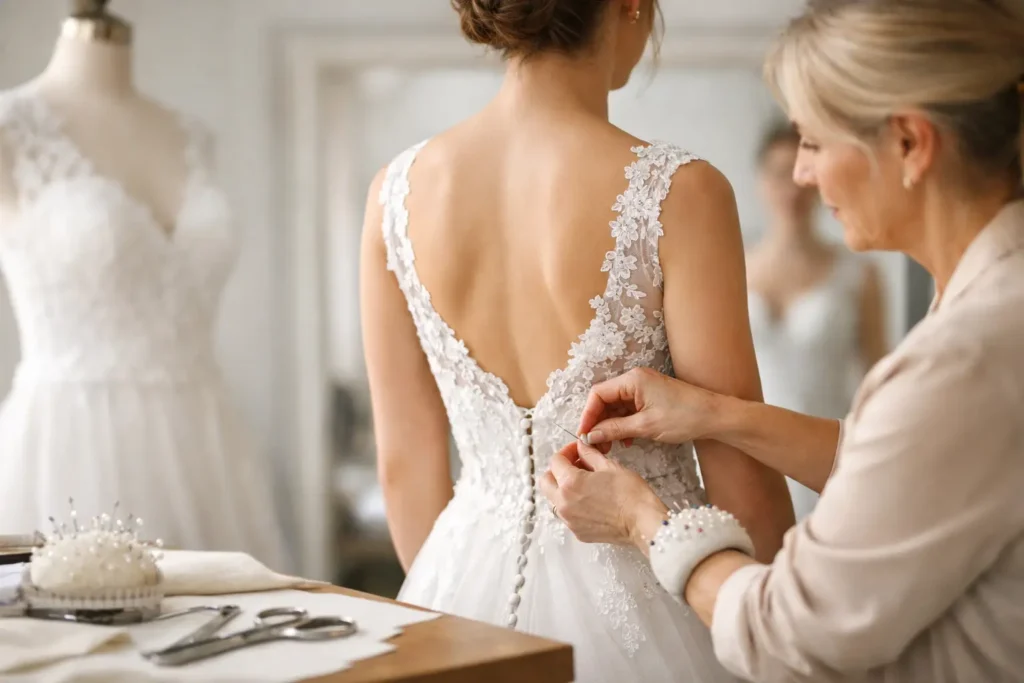
Wedding Dress Alteration Reviews That Matter
A wedding gown can look beautiful on the hanger and still feel wrong the moment you move, sit or take a full breath. That is why wedding dress alteration reviews deserve more attention than a quick glance at a star rating. The right review can tell you whether a tailor understands delicate fabrics, listens at fittings, keeps to agreed timeframes and delivers a gown that feels like it was made for you.
For most brides, alterations are not a minor finishing task. They are the step that turns a dress into their dress. A hem that clears the floor properly, a bodice that supports without pinching, or straps that stay in place through photos and dancing can change how confident you feel on the day.
What Wedding Dress Alteration Reviews Should Tell You
The most useful reviews describe the experience, not simply the outcome. “Great service” is encouraging, but it does not tell you whether the tailor handled beadwork safely, adjusted a complex lace bodice, or made a last-minute change calmly and accurately.
Look for comments that explain what was altered. Specific details such as shortening layers of tulle, reshaping a neckline, taking in the waist, adding bust support, altering sleeves or repairing a zip suggest that the reviewer had work comparable to your own. A skilled tailor may work on many garment types, but bridal alterations require particular care because fabrics are often fine, layered, structured or highly detailed.
Pay attention to the language around fit. Strong reviews often mention comfort as well as appearance. Phrases such as “I could move easily”, “the bodice felt secure”, or “the hem was perfect with my wedding shoes” are far more meaningful than compliments about the dress looking nice. Your gown needs to work for a long day of standing, walking, hugging, sitting and celebrating.
A good review also gives clues about communication. Brides should feel comfortable asking questions, raising concerns and attending more than one fitting where needed. If several customers mention that the tailor listened carefully, explained options clearly and checked details at each appointment, that is a reassuring sign of personalised service.
Read Beyond the Overall Rating
A high average rating is a useful starting point, but it is not the whole picture. Read a selection of recent reviews, including the longer ones. You are looking for consistent patterns rather than one glowing comment or one unhappy experience.
Consider how recent the feedback is. A business may have an excellent reputation built over years, but current reviews are more likely to reflect its present workload, communication and turnaround times. This matters especially during Melbourne’s busy wedding periods, when sought-after tailors can have limited appointment availability.
It is also worth noticing how a business responds when something has not gone to plan. Alterations can involve variables: a bride may change shoes, lose weight, decide on different shapewear, or request an adjustment close to the wedding. A professional response should be respectful, practical and focused on resolving the concern. No tailor can promise that every garment challenge will be simple, but they should be transparent about what is achievable.
Be cautious with reviews that are extremely vague, repetitive or centred only on price. Value matters, of course, but the cheapest quote may not account for the time and workmanship required to handle a multi-layered gown. A fair alteration price reflects the garment’s construction, fabric, detailing and the number of fittings involved.
Details That Signal Genuine Bridal Experience
Reviews are particularly helpful when they mention the practical elements that brides tend to worry about. These include a clear fitting process, careful pinning, advice to bring wedding shoes and undergarments, reliable collection timing and tidy finishing.
Comments about difficult fabrics are valuable too. Satin can show needle marks or puckering if handled poorly. Lace needs to be repositioned with care so motifs remain balanced. Beading may need to be removed and reattached around a seam. A tailor who understands these considerations will assess the gown before promising a particular alteration.
Photos can add context, but they should not be your only test. Lighting, posing and the style of the original gown can make a difference. When looking at before-and-after images, focus on the details: does the hem sit evenly, does the bodice lie smoothly, and do altered areas look natural rather than obvious? Respect for client privacy is also a positive sign, so do not expect every bridal tailor to publish images of their work.
Match Reviews to Your Own Dress and Priorities
Not every five-star bridal review will be relevant to your gown. A simple crepe dress with a straightforward hem presents a different job from a heavily beaded ballgown or a vintage family gown requiring sympathetic restoration.
If your dress has a corset back, intricate sleeves, a long train, a sheer bodice or many layers, seek comments from customers with similar garments. If you are pregnant, have a changing body shape, or are planning alterations close to the wedding, look for evidence of flexible fitting advice and realistic timing.
Your priorities matter as well. Some brides value frequent communication and detailed consultation. Others mainly need a fast, dependable alteration because they bought a sample gown or ordered online. Neither approach is wrong, but reviews should show that the tailor can deliver the service you need without rushing craftsmanship.
A few questions can help you compare feedback more thoughtfully: Did the reviewer have a similar dress? Were they happy with both fit and comfort? Did they mention timelines? Did the tailor solve a problem rather than simply complete a standard hem? And would you feel confident having the same conversation with that business?
Use Reviews to Prepare for Your First Fitting
Reviews can help you choose a tailor, but the fitting itself is where trust is confirmed. Bring the shoes, bra or shapewear and any accessories you expect to wear on the day. Even a small change in heel height can affect the hem, while different undergarments can alter the way a bodice sits.
At the appointment, explain how you want to feel in the dress. Do you want firm support through the waist, more room to sit comfortably, or freedom through the arms for dancing? A precise brief helps the tailor recommend suitable adjustments. It is better to discuss concerns openly than to assume they will be fixed automatically.
Ask about the number of fittings likely to be required, when the gown should be collected, and what to do if your shoes or undergarments change. A trustworthy tailor will give straightforward advice rather than making unrealistic promises. Some gowns need only a hem and small bodice adjustment; others require staged fittings to achieve the right result.
Do not leave the final fitting without moving in the dress. Walk, sit, raise your arms and take a few steps as though you are entering the ceremony. If possible, check the gown in natural movement, not only while standing still in front of a mirror. The aim is a polished fit that remains comfortable after hours of wear.
When a Negative Review Is a Useful Warning
One negative review does not automatically rule out a business. Occasionally, expectations are unclear or a customer’s circumstances change. However, repeated concerns about missed deadlines, poor communication, unfinished seams, damage, unexpected charges or dismissive service should be taken seriously.
Wedding alterations are personal and time-sensitive. A tailor should be honest if a requested change is risky, if fabric limitations affect the result, or if the calendar does not allow enough time. Clear advice may not always be what a bride hopes to hear, but it is far better than a rushed solution days before the wedding.
The best wedding dress alteration reviews leave you with a clear picture of how a tailor works: carefully, respectfully and with attention to the person wearing the gown. At AD Stitch, that standard begins with listening at the fitting, assessing the dress properly and making each adjustment with the care a wedding day deserves.