


How to Fix Uneven Hems Without Ruining the Fit
An uneven hem can make an otherwise well-fitting garment look unfinished. You may notice one trouser leg sitting higher over your shoe, a dress dipping at one side, or a skirt that looks straight on the hanger but not when you walk. Learning how to fix uneven hems starts with identifying why the hem is uneven, because the right solution for jeans is not always the right solution for a flowing dress or formal trousers.
The key is to measure the garment while it is being worn in the way it will actually be worn. Floors are not always level, bodies are rarely perfectly symmetrical, and the shoes you choose can change where a hem should fall. A careful approach protects the garment’s fit, fabric and original finish.
Why hems become uneven
Not every uneven hem is the result of poor sewing. A garment can hang unevenly because of posture, one hip sitting slightly higher, a curved waistline, a stretched fabric or an uneven original cut. This is especially common with soft dresses, bias-cut skirts and wide-leg trousers.
Shoes also matter. Trousers marked while barefoot may appear too short once you put on work shoes. A long dress marked with flats may drag at a formal event when worn with heels. Before making any adjustment, wear the undergarments and shoes you intend to wear with the garment. For bridal and occasionwear, this step is essential.
Sometimes the hem itself is simply coming undone. If the stitching has loosened or the fabric has pulled away at one section, the garment may be the correct length but look uneven because the folded edge is no longer secure. That repair is usually more straightforward than changing the overall length.
How to fix uneven hems: measure before you cut
The safest rule is simple: do not cut first. Pin, assess and re-check before any fabric is removed. Once excess length has been cut away, there is limited room to correct a mistake.
Start by pressing the existing hem gently so you can see the original fold line. Avoid using excessive heat on delicate synthetics, satin, velvet, leather or fabrics with a textured surface. If you are unsure how the fabric will react, test a hidden area first or leave the pressing to a professional tailor.
Put the garment on and stand naturally on a hard, level floor. Do not straighten your posture unnaturally or shift your weight to make the hem appear even. The aim is for the garment to look balanced when you stand and move as you normally would.
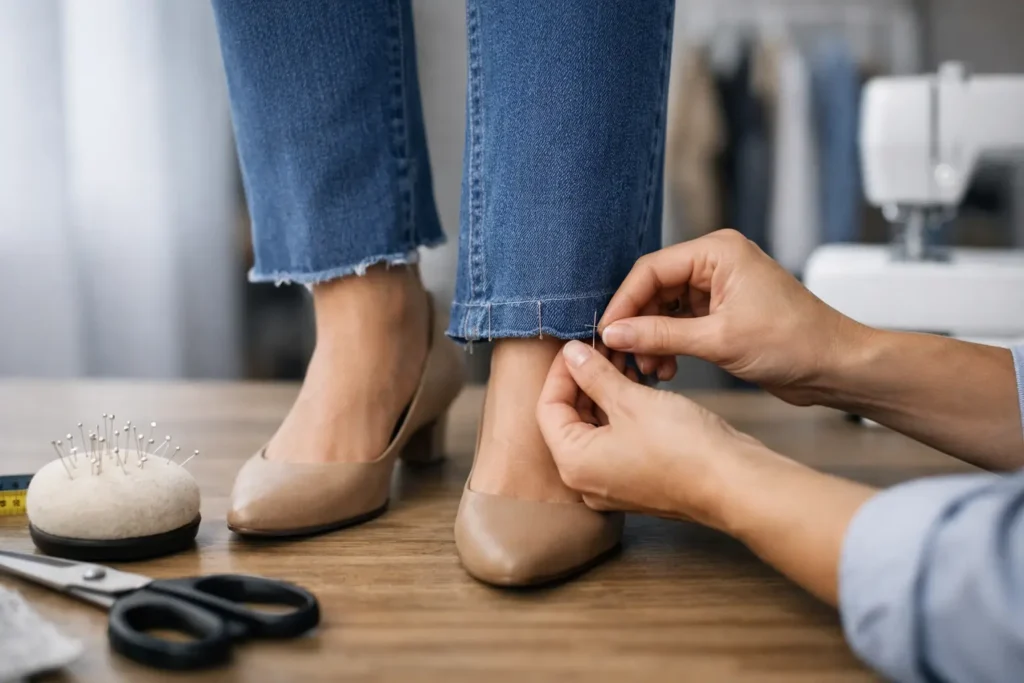
Ask someone else to place pins around the hemline. Trying to pin your own trouser legs or dress hem while bending over changes your posture and makes an accurate result less likely. Pins should sit horizontally and be placed close enough together to show the intended line, particularly around curved sections.
For trousers, check the break over the shoe at the front and the amount of fabric at the back. For skirts and dresses, measure from the floor upwards at several points rather than relying on the waistband. Waistbands can sit differently on the body, particularly on high-waisted garments, garments with elastic, or styles that are designed to sit on the hip.
Walk a few steps, sit down, then stand again. If the pins twist, pull or reveal a noticeable difference between sides, revisit the marking. A hem that looks good when still but catches awkwardly in motion is not finished yet.
Use the existing hem as a guide, not a guarantee
If only one side has dropped, the original hem can provide a useful reference. Measure from the waistband, side seam or inseam to the fold line on the side that looks correct, then compare it with the uneven side. This works well for structured garments such as school uniforms, straight skirts and tailored trousers.
However, do not assume both sides must measure exactly the same from the waistband. If the wearer has a slight hip or posture difference, a technically equal measurement can still look visibly uneven. The garment should look level on the person, not merely on a worktable.
Choose the right hemming method for the garment
A successful repair should suit the fabric, garment style and the finish already in place. The quickest option is not always the neatest or most durable one.
Jeans and casual trousers
Standard jeans hems are often folded twice and stitched with a visible, heavier thread. If only a small amount needs to come up, a similar double-fold hem can work well. The challenge is matching the original thread colour, stitch spacing and slightly worn look of the denim.
For premium denim or jeans with a distinctive factory finish, preserving the original hem may give the better result. This technique shortens the leg while retaining the worn edge, but it must be positioned carefully so the alteration does not create a bulky ridge or an obvious line above the original hem.
Dress trousers and suit pants
Dress trousers often have a blind hem, where the stitching is barely visible from the outside. This creates a clean finish and is usually the best choice for wool, wool blends and formal trousers. If there is enough hem allowance inside, the trousers may also be able to be lengthened later.
Be cautious with suit trousers that have cuffs. The cuff depth, crease line and leg shape all need to remain balanced. A small unevenness can be more noticeable on formal tailoring because the clean lines are part of the garment’s look.
Skirts and dresses
A straight cotton skirt is usually straightforward to shorten. A circular, pleated, layered or bias-cut skirt requires more care. Bias-cut fabric can stretch after hanging, which means a hem marked immediately after sewing may change again. Letting the garment hang before final marking helps the fabric settle.
Flowing fabrics such as chiffon, georgette and satin can shift while being cut and stitched. A narrow rolled hem is often appropriate, but it requires steady handling to prevent waviness. With a lined dress, both the outer layer and lining need to be checked so neither peeks below the other.
Knitwear, stretch fabrics and activewear
Stretch garments need a stitch that moves with the fabric. A regular straight stitch can pop when the garment is worn. A stretch stitch, twin needle or coverstitch may be suitable, depending on the fabric and original construction. Pinning is particularly important because jersey can curl at the edge and make an otherwise straight hem look uneven.
A practical at-home method for simple hems
For a stable, unlined cotton garment or a basic pair of casual trousers, you can make a neat repair at home with a tape measure, pins, fabric chalk, sharp scissors, an iron, matching thread and a sewing machine or hand-sewing needle.
After marking the desired length while wearing the garment, take it off and lay it flat. Measure the marked line from the existing hem at several points. If you are shortening, add enough extra fabric below the new line for the hem allowance – commonly 2 to 4 centimetres, depending on the garment and finish. Trim only after checking the line again.
Press the raw edge under, then fold it up to your marked hemline and press once more. Pin in place, making sure the side seams and inseams align cleanly. Stitch slowly, removing pins as you go. Finish by pressing the hem from the inside, using a pressing cloth where needed.
Hand stitching is often worth the extra time for a dress hem or formal garment. Small, evenly spaced blind stitches can keep the outside looking clean. The trade-off is durability: machine stitching is usually stronger for everyday denim and workwear, while hand finishing can look more refined on delicate or tailored pieces.
When an uneven hem needs professional attention
Some hems are best handled by an experienced tailor rather than corrected at home. This includes wedding dresses, beaded or sequinned garments, leather, lined jackets, formal suits, pleated skirts and garments with a curved or scalloped edge. The same applies when a hem is uneven because the whole garment is pulling out of shape.
A tailor can assess whether the issue lies in the hem, the waist, the side seams or the way the garment sits on your body. This matters because shortening one side alone may hide the symptom without solving the fit problem. For special garments, a professional fitting also ensures the hem is marked for your actual posture and footwear.
At AD Stitch, hems are assessed as part of the overall fit, so trousers, dresses and occasionwear sit naturally and look balanced when worn. A precise alteration can preserve the garment’s original character while making it more comfortable and confident to wear.
A well-finished hem should not draw attention to itself. It should let you move easily, wear the right shoes and enjoy a garment that looks as though it was made to fit you.