

Tailoring vs Alterations: What’s the Difference?
A dress can be the right size on the label and still feel wrong everywhere that matters. A suit jacket may pull across the shoulders, jeans may bunch at the ankle, or a wedding gown may need careful reshaping before it feels like yours. So, tailoring vs alterations: what’s the difference? The terms are often used interchangeably, but they describe different levels of garment work.
Both services aim to improve fit, comfort and wearability. The key difference is in the scope of the work. Alterations usually adjust an existing garment to fit better, while tailoring can involve more detailed reshaping, construction knowledge and, in some cases, making a garment from scratch. Knowing which one you need helps set realistic expectations for cost, timing and results.
Tailoring vs alterations: what’s the difference?
An alteration changes a specific part of a finished garment. Think shortening trousers, taking in a waist, replacing a zip, repairing a seam or adjusting dress straps. The garment already exists, and the work focuses on making it sit, move or function better on your body.
Tailoring is broader and more technical. It refers to the craft of shaping clothing around a person, particularly structured garments such as suits, jackets, coats and formal dresses. A tailor considers balance, proportion, grain, construction and how the fabric responds to movement. Tailoring may include alterations, but not every alteration requires full tailoring expertise.
A simple way to think about it is this: alterations refine a garment; tailoring can transform it. There is overlap, especially when an experienced tailor carries out the work, but the complexity of the fit is what usually separates the two.
What counts as an alteration?
Most people need alterations more often than they realise. Ready-to-wear clothing is made to standard measurements, not the individual differences in torso length, shoulder shape, hip position or posture that affect how clothes look and feel.
Common clothing alterations include hemming trousers, jeans, skirts and dresses; taking in or letting out waistbands; shortening sleeves; narrowing shirt sides; replacing buttons, hooks and zips; repairing torn seams; and adjusting straps. These are targeted changes that can make an off-the-rack item feel far more considered.
Alterations are especially useful when you already like the style, fabric and overall fit of a garment but need one or two areas corrected. For example, a pair of work trousers may fit perfectly through the waist and seat but be too long. A hem alteration is the sensible solution. There is no need to rebuild the trousers when a precise adjustment will do the job.
The same applies to a favourite dress with loose straps, a blouse that gaps at the bust, or a leather jacket with a damaged lining. Quality alterations preserve what works while correcting what does not.
Not every adjustment is simple
The word “alteration” can sound minor, but some alteration work is highly skilled. Taking in a lined jacket, resizing a formal dress with beading, altering leather, or reshaping a garment with multiple layers requires careful handling. A quick change in the wrong place can affect the way the whole garment hangs.
This is why it helps to bring the garment in for an assessment rather than assuming a job is straightforward. A professional can check seam allowances, fabric condition, linings, zips and construction before recommending the best approach.
What does tailoring involve?
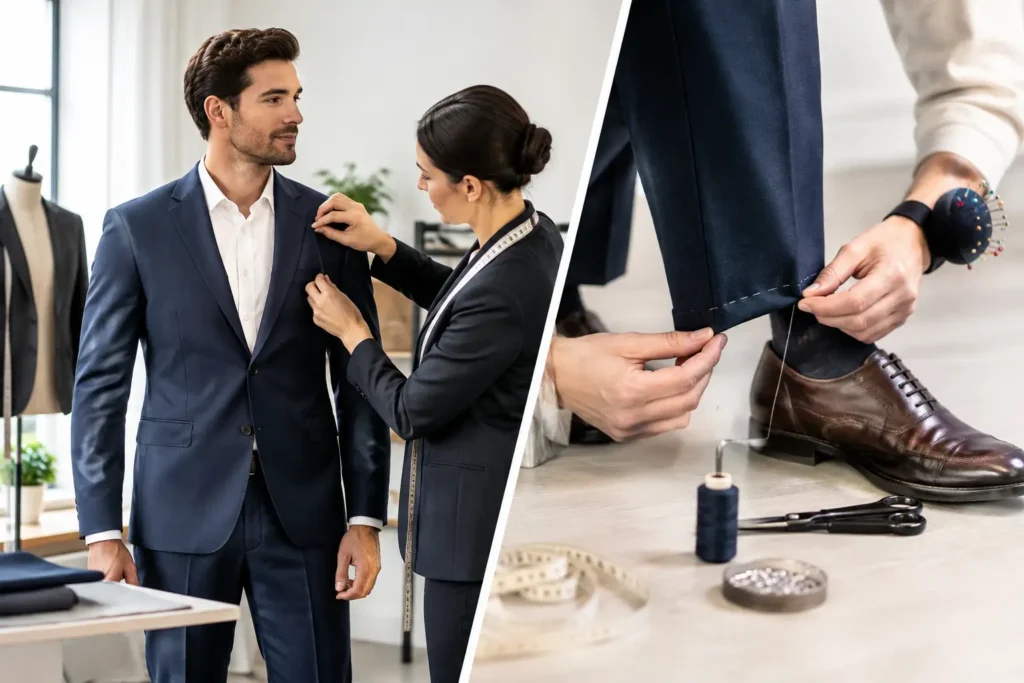
Tailoring is most visible in garments where structure matters. A well-tailored suit does more than feel snug or loose. Its shoulders sit cleanly, the collar rests against the neck, the sleeves finish at the right point, and the jacket follows your frame without restricting movement.
For a tailored result, the garment may be adjusted through several areas rather than just one. A jacket might need work through the body, sleeves, waist and trouser break to create a balanced silhouette. A formal dress may need the bodice, bust, waist and hem assessed together so it looks proportional from every angle.
Tailoring also involves custom-made clothing. In that context, the garment is cut and constructed around your measurements and preferences. This is a different service again from adjusting ready-made clothing, although the principles of fit remain the same.
For Melbourne professionals, tailoring is often the difference between a suit that merely fits and one that looks polished in a meeting, at an interview or at a special event. The goal is not to make clothing tight. It is to create clean lines and ease of movement, so you look put together without feeling restricted.
The garment determines the right service
The best choice depends on the item, the desired result and what the construction allows. A basic cotton shirt with sleeves that are too long is an alteration job. A suit jacket with excess fabric through the body may need more considered tailoring. A vintage dress that is two sizes too large could require extensive alterations, but the final result will depend on where the seams can be moved and whether the proportions can be retained.
Fabric makes a difference too. Denim, cotton and many synthetics are generally more forgiving than silk, lace, leather or heavily embellished fabric. Delicate materials can show needle marks, while leather does not recover once stitching holes have been made. Beading and sequins may need to be removed and reapplied before seams can be altered.
It also depends on the original garment quality. A well-made piece with generous seam allowances often offers more options than a cheaply constructed item. Sometimes an adjustment is technically possible but not cost-effective. An honest tailor should explain this before work begins.
When is tailoring worth it?
Tailoring is worth considering when the garment has quality fabric, sentimental value or a role in your regular wardrobe. It can extend the life of a favourite coat, make a good suit look significantly more expensive, or save a special occasion outfit that is almost right.
It is also a practical choice after weight changes. You do not necessarily need to replace every item in your wardrobe if key pieces can be adjusted for a better fit. Workwear, formalwear and well-made jackets are often excellent candidates because their value comes from both the material and the construction.
For wedding attire, detailed tailoring is usually essential. Bridal gowns, bridesmaid dresses and suits need to work with footwear, undergarments, movement and the timing of the day. A hem that is perfect standing still may be too long when walking, and a bodice that looks secure may need refinement to stay comfortable through hours of photos, hugs and dancing.
Fit is about movement, not just measurements
A good fitting is more than taking a tape measure around the waist. You should try the garment on, stand naturally, sit down, raise your arms and, where relevant, wear the shoes and undergarments you plan to use.
Bring the right items to the fitting. For trousers and dresses, shoe height affects the hem. For a wedding dress or fitted eveningwear, the right bra or shapewear can change the fit through the bodice. For suits, bring the shirt you expect to wear underneath. These details help the tailor make decisions based on how the garment will actually be worn.
Clear communication matters as well. Let the tailor know whether you prefer a close fit or extra room, whether you need to sit at a desk all day, and when you need the garment ready. A technically neat alteration is only successful if it suits your routine and feels like you.
How to decide before booking
Start by identifying the problem. Is the garment too long, too loose in one area, damaged, or generally out of proportion? If the answer is specific, such as “the sleeves are too long”, you are likely looking at an alteration. If several parts need attention or the garment is structured, tailored or formal, arrange a fitting with an experienced tailor.
Avoid pinning or cutting anything yourself before an appointment, particularly on delicate fabrics or formal garments. Temporary pins are useful for showing a rough preference, but they are not a substitute for checking balance and movement on the body.
At AD Stitch, each fitting begins with the garment, the wearer and the intended occasion in mind. Whether it is a quick trouser hem, a precise suit adjustment or detailed wedding alterations, skilled workmanship gives you the best chance of a result that feels comfortable and looks natural.
The right service is the one that lets you wear the garment with confidence rather than constantly adjusting it. Bring in the piece you have been putting off, and let its fabric, construction and fit guide the next step.