


How to Preserve Leather Garments Properly
A leather jacket that fits perfectly is more than a seasonal purchase. It becomes part of your wardrobe – the piece you reach for on cool Melbourne mornings, weekend dinners and evenings out. Knowing how to preserve leather garments helps protect that investment, keeping the leather supple, the shape clean and the finish looking considered rather than worn out.
Leather is strong, but it is not maintenance-free. Heat can dry it out, moisture can mark it, and poor storage can leave permanent creases or misshapen shoulders. A little regular care is usually enough, while serious stains, tears and fit issues are best handled professionally before they become harder to repair.
How to Preserve Leather Garments Between Wears
The best care often happens before a garment goes back into the wardrobe. After wearing a leather jacket, coat, skirt or trousers, give it a little air before storing it. Hang it somewhere dry and out of direct sunlight for a few hours, particularly if you have worn it in light rain, warm weather or a crowded venue.
Use a broad, sturdy hanger that supports the shoulders. Thin wire hangers can distort a jacket over time, especially around the sleeve head and neckline. Leather trousers and skirts should be hung with padded clips or folded carefully over a wide bar, avoiding sharp creases at the waistband.
Avoid placing leather near heaters, fireplaces, vents or direct sun through a window. Fast heat pulls natural moisture from the hide and may cause stiffness, shrinking or cracking. If your garment is damp, resist the urge to speed things up with a hairdryer or heater. Let it dry naturally at room temperature, then gently reshape it on its hanger.
Leather also needs breathing room. Do not compress a jacket between tightly packed clothes or leave it folded in a suitcase for weeks. Pressure can create creases that are difficult to remove, while poor airflow can encourage mould in damp conditions.
Clean Gently, Not Often
A common mistake is treating leather like ordinary fabric. Most leather garments do not need frequent deep cleaning. Over-cleaning can strip oils and affect the finish, particularly on soft lambskin, suede and nubuck.
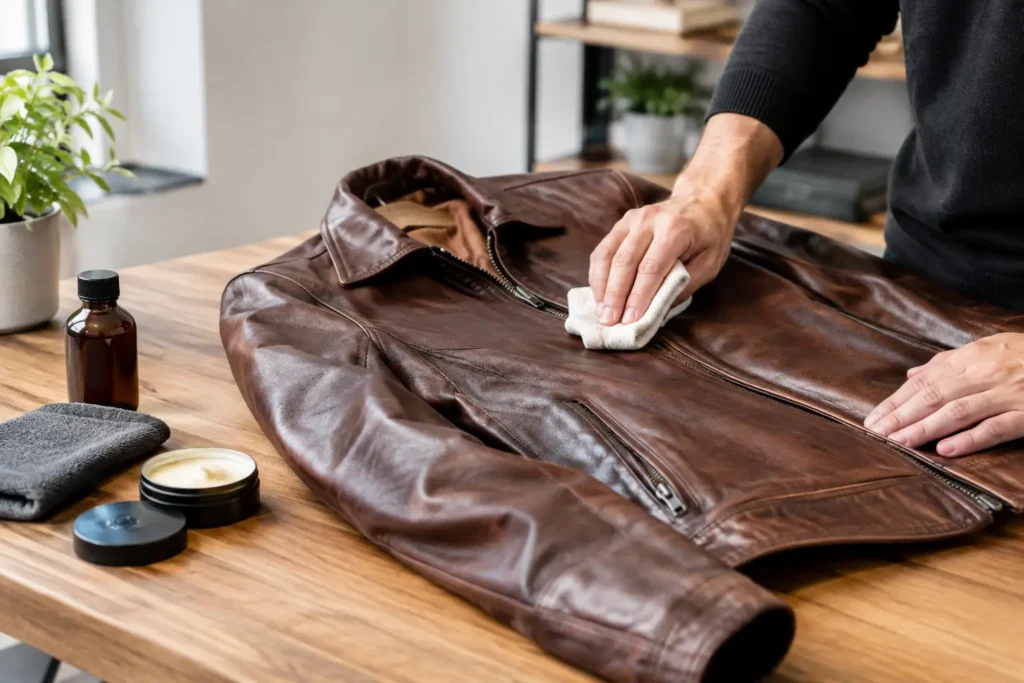
For routine care, use a soft, dry cloth to remove surface dust. If there is a small fresh mark on smooth leather, lightly dab it with a clean cloth that is barely damp. Do not rub vigorously, as friction can spread the stain or alter the colour. Always test any cleaner or conditioner on a hidden area first, such as inside a hem or under a collar.
Water spots are often less serious than they look. Blot excess moisture, allow the entire garment to dry evenly, then reassess it. Trying to clean one wet patch aggressively can leave a more obvious mark than the original spot.
Suede and nubuck need different treatment. Their raised finish can be damaged by water and standard leather creams. A specialist suede brush may lift light surface dirt, but grease, ink, heavy soiling and stains should go to a leather-care professional. Home remedies found online can darken the nap or create a patchy finish that cannot be fully reversed.
Be cautious with conditioners
A quality leather conditioner can help smooth leather retain flexibility, but more is not better. Apply it sparingly only when the leather feels dry or looks dull, following the product directions. Some finishes, including patent leather, metallic leather and coated fashion leather, may not suit conditioning at all.
The trade-off is simple: conditioning can nourish dry leather, but the wrong product may change its sheen, deepen its colour or leave residue. If you are unsure what type of leather you have, professional advice is safer than experimenting on a favourite garment.
Store Leather for the Season, Not in Plastic
When a leather garment will not be worn for several months, clean off surface dust, make sure it is fully dry and store it in a cool, well-ventilated wardrobe. A breathable cotton garment bag is a good choice for jackets and coats because it protects against dust while allowing air to circulate.
Plastic dry-cleaning bags are not suitable for long-term storage. They can trap moisture and contribute to mildew, particularly during humid weather. If the garment came with a plastic cover, remove it once you are home.
Keep leather away from coloured plastics, newspapers and rough materials that may transfer dye or leave impressions. For structured jackets, button or zip them lightly and use a proper hanger to retain the silhouette. Do not overstuff pockets. Even a mobile, keys or wallet left inside for long periods can pull the leather out of shape.
Check stored leather occasionally, especially after wet weather or if your wardrobe is against an external wall. A musty smell, pale surface spotting or visible mould needs prompt attention. Do not brush mould indoors, where spores can spread through the room. Isolate the garment and arrange specialist cleaning.
Protect the Fit as Carefully as the Finish
Leather can relax with wear, but it is far less forgiving than most woven fabrics. A jacket that is too tight across the back, trousers that pull at the seat, or a skirt that twists at the waist will be under constant strain. Over time, stress can affect seams, zips, linings and the leather itself.
This is why fit matters when preserving leather garments. Wear your piece as it was designed to be worn, rather than forcing it to stretch into a shape it cannot comfortably hold. If you have changed size, inherited a leather coat or bought a vintage find that is nearly right, an experienced tailor can assess what is possible.
Leather alterations require specialised handling. Stitch holes are permanent, and every adjustment needs careful planning to avoid visible marks, uneven panels or tension at the seams. Some changes, such as sleeve shortening, lining repairs, zip replacements and selective seam adjustments, can be very worthwhile. Others depend on the garment’s construction, leather thickness and available seam allowance.
At AD Stitch, leather garments are assessed with the same attention to fit, finish and wearability as a well-made suit or special-occasion dress. Early repair is usually the most economical option – particularly when a lining has started to split or a zip is catching but has not yet failed.
Deal With Damage Early
Small problems rarely stay small on leather. A loose stitch can place extra pressure on the next section of a seam. A snagged lining can catch each time you take the garment on or off. A broken zip can strain the surrounding leather if it is forced.
Look for warning signs after each season: worn cuffs, lifting edges, loose buttons or snaps, thinning lining, cracked areas around folds, and hardware that does not run smoothly. Addressing these concerns early can extend the working life of a garment considerably.
Do not use household glue, adhesive tape or a standard sewing needle to repair leather. Glue can stiffen the area and discolour the surface, while an incorrect needle leaves a line of permanent punctures. Professional leather repair is about more than closing a tear. It involves matching thread, supporting the surrounding area, working with the lining and maintaining the garment’s original balance.
Everyday Habits That Make a Difference
Leather holds up well when it is worn thoughtfully. Rotate between jackets if you wear leather often, so one piece is not exposed to constant friction and weather. Take care with shoulder bags that repeatedly rub against the same area, especially on soft leather or delicate finishes.
Apply perfume, hair products and body moisturiser before putting on your garment, allowing them to dry first. These products can transfer to collars and cuffs, where oils and residue build up gradually. If you are caught in heavier rain, dry the garment naturally and have it checked if it becomes stiff, blotchy or noticeably misshapen.
A well-cared-for leather garment should develop character, not neglect. Give it room to breathe, clean it with restraint, store it properly and seek expert help before a minor fault becomes permanent. That is how a favourite piece stays comfortable, stylish and ready to wear for many years.