


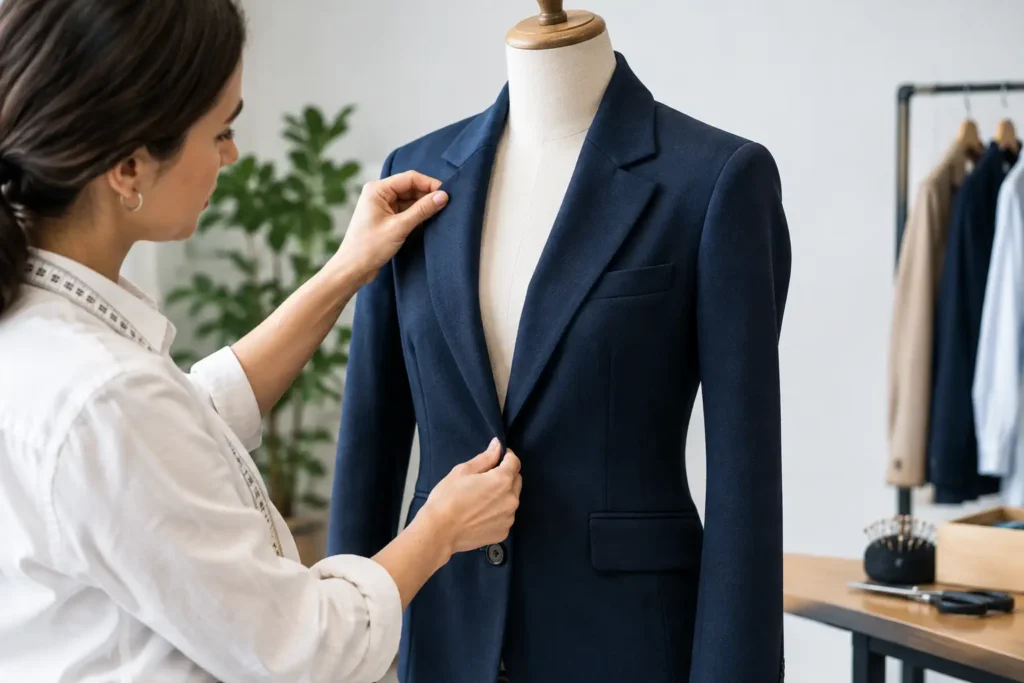
Blazer Alterations: What Can Be Changed Safely?
A blazer can look expensive on the hanger and still feel wrong the moment you put it on. Perhaps the shoulders sit too wide, the sleeves hide your hands, or the waist hangs straight instead of shaping your frame. The practical question behind blazer alterations: what can be changed? Quite a lot, in the right hands – but some adjustments are straightforward while others are limited by the jacket’s original construction.
A well-fitted blazer should allow you to move comfortably while keeping a clean line through the shoulders, chest, waist and sleeves. For work, weddings, dinners and everyday smart dressing, that difference is immediately noticeable. Professional tailoring can turn an almost-right blazer into one you reach for often, provided the garment has enough fabric, sound construction and a fit issue that is worth correcting.
Blazer alterations: what can be changed?
The easiest way to assess a blazer is to start at the top. The shoulders and chest set the foundation, while the body, sleeves and finishing details can often be refined afterwards. A tailor will look at the fabric, lining, seams, buttons, vents and internal canvas before recommending the most sensible option.
Taking in the waist and side seams
Taking in the body is one of the most effective blazer alterations. If a jacket is loose through the waist or flares away from the body, the side seams and centre back seam can often be shaped to create a neater silhouette. This is particularly useful when a blazer fits well through the shoulders and chest but looks boxy through the middle.
There are limits. A jacket can only be reduced as far as its seams and pockets allow. If it is taken in too aggressively, the pockets may sit too close to the side seams, the back vents can pull open, or the jacket may feel restrictive when buttoned. The goal is a clean, comfortable shape rather than the tightest possible fit.
Letting out a blazer
A blazer can sometimes be let out at the side seams or centre back, but this depends on the seam allowance left by the manufacturer. Many ready-to-wear jackets have limited extra fabric, especially in slimmer modern cuts. A tailor can inspect the inside seams and tell you what is realistically available.
Letting out a small amount may relieve tightness around the waist or chest. If the blazer is very tight across the shoulders, upper chest or armholes, however, buying a larger size and tailoring it down is usually the better choice.
Shortening or lengthening sleeves
Sleeve length is among the most common and worthwhile changes. A blazer sleeve should generally end near the wrist bone, allowing a small amount of shirt cuff to show when worn with a long-sleeve shirt. If the sleeves cover much of your hand or sit noticeably short, the jacket can look borrowed rather than fitted.
Sleeves can be shortened from the cuff or, in some cases, from the shoulder. Shortening from the cuff is generally simpler, but working buttonholes, contrast trim, zips or detailed cuffs may affect the method and cost. Functional buttonholes close to the sleeve edge leave less room for adjustment. Lengthening is possible only if there is sufficient hem allowance inside the cuff.
Adjusting sleeve width
Sleeves that are overly loose can be narrowed for a sharper profile, while sleeves that feel restrictive may sometimes be eased slightly. The tailor needs to preserve the sleeve’s shape and ensure it still moves comfortably at the elbow. Changes to sleeve width often work well alongside sleeve shortening, as the proportions can be corrected together.
The armhole is more complicated. Raising or substantially reshaping it involves more extensive reconstruction and may not be economical on every blazer. A good tailor will explain whether the improvement justifies the work.
Shortening the jacket body
A blazer that is too long can make the wearer look shorter or overwhelm their proportions. The body can often be shortened from the hem, particularly on a simple single-breasted jacket with no unusual details near the bottom edge.
This alteration requires careful judgement. Shortening too much can bring the pockets and button position out of balance, making the jacket look oddly proportioned. It can also affect vents at the back. A modest reduction usually gives the best result, especially where the goal is simply to modernise the line rather than change the garment’s entire style.
Lengthening the body is far less common because there is rarely enough spare fabric in the hem. Even when a small allowance exists, the original crease line or lining may make the alteration visible.
Replacing buttons and refining details
Buttons do more than fasten a blazer. They influence how formal, current and polished it looks. Replacing worn, damaged or dated buttons is a practical way to refresh a favourite jacket, and button placement can sometimes be adjusted slightly if the front closure pulls or sits awkwardly.
Minor repairs can also make a meaningful difference. Loose lining, frayed pocket edges, split seams, worn elbow areas and damaged vents may be repaired depending on the fabric and the extent of wear. A quality repair extends the useful life of a garment and helps it continue looking intentional rather than tired.
What is difficult to change on a blazer?
Shoulder alterations are possible, but they are among the most complex changes on a tailored jacket. The sleeves need to be removed, the shoulder line reshaped, and the sleeves reset without distorting the jacket’s balance. On a high-quality blazer you genuinely love, narrowing overly wide shoulders may be worthwhile. On a lower-cost garment, the labour can outweigh its value.
The chest is also difficult. A jacket that pulls sharply across the upper chest, lapels or front buttons is not always fixable by letting out the side seams. The issue may come from the jacket’s underlying canvas, chest piece or overall cut. Similarly, changing the lapel shape, moving pockets substantially or altering the position of buttonholes is specialist reconstruction rather than a routine adjustment.
Patterned fabrics add another consideration. Checks, stripes and plaids must align across seams, pockets and sleeves. A skilled tailor can plan around this, but there may be limits to how much fabric can be removed without disrupting the pattern.
Choose the blazer size by the shoulders
When buying a blazer, choose the size that fits your shoulders and upper chest best. The shoulder seam should finish close to your natural shoulder point, while the collar should sit against the neck without a visible gap. These areas are the hardest and most expensive to alter.
It is usually far easier to take in the waist, shorten sleeves and refine the body than it is to correct shoulders that are too wide or a chest that is too small. If you are between sizes, try both while wearing the shirt or top you expect to wear underneath. Button the blazer, sit down, reach forward and lift your arms. A fitting should work in motion, not only in front of a mirror.
For women’s blazers, consider how the jacket sits across the bust and whether the lapels lie flat. For men’s suit jackets, check for pulling at the button, collar gaps and excess fabric below the shoulder blades. The principles are similar: the garment should follow your shape without strain or excess bulk.
Bring the right items to your fitting
Wear or bring the shoes and clothing you would normally pair with the blazer, especially if you are having the sleeves or jacket length assessed. A work blazer worn over a fine shirt may need a different fit from one intended for knitwear or a special event outfit.
Tell your tailor how you plan to use it. A jacket for office meetings may need more ease through the arms than one worn briefly at a wedding. If you have recently changed size, mention whether your weight is stable before investing in detailed alterations. Clear information helps create a result that feels natural in your real routine.
At AD Stitch, each blazer is assessed individually, because fabric, lining and construction matter as much as the measurements. An honest fitting consultation should identify the changes that will improve the jacket most and flag those that are unlikely to deliver good value.
A blazer does not need to be perfect off the rack to become a dependable part of your wardrobe. Start with a sound shoulder fit, keep the alterations proportionate, and let skilled workmanship bring the rest into line. The right adjustment can make an old favourite feel considered, comfortable and ready to wear again.