


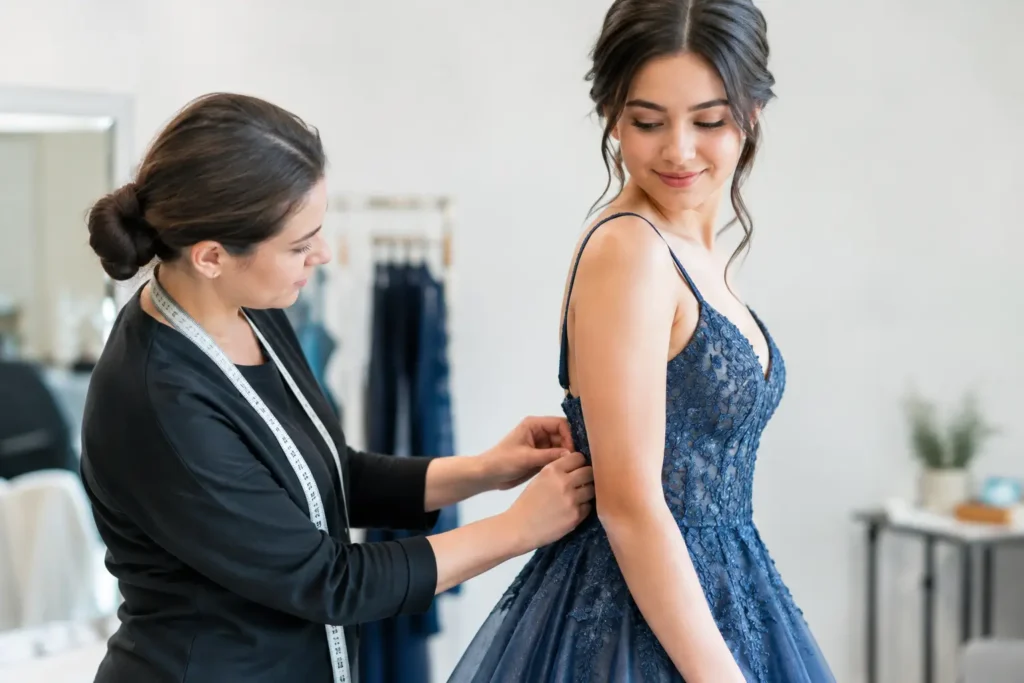
Dress Alterations for School Formals That Fit
The dress looked perfect on the hanger, but the straps slip, the hem catches under your heel, or the bodice gaps when you move. That is where dress alterations for school formals make the difference between spending the night adjusting your outfit and simply enjoying it. A formal dress should feel secure, comfortable and unmistakably yours from photos through to the last dance.
School formals are a big occasion, and a well-fitted dress helps you feel confident without changing the personality of the garment. Whether you have found a ready-to-wear gown, ordered online or borrowed a special piece, professional alterations can refine the fit while protecting delicate fabrics, beading and structure.
Why fit matters on formal night
A formal dress is not worn like an everyday dress. You will sit, stand, walk, dance, pose for photos and possibly wear heels for several hours. A dress that only looks right while standing still can quickly become uncomfortable.
The best alterations consider movement as well as appearance. The bodice should sit smoothly without pinching or slipping. Straps should support the dress without digging in. The hem needs enough clearance to prevent tripping, while still looking balanced with your chosen shoes. These details may seem small separately, but together they create a polished result.
Fit also changes how a dress photographs. A waistline sitting in the right place, a bust that lies flat and a hem that falls evenly help the whole garment look more intentional. It is not about chasing an unrealistic shape. It is about making the dress work properly for your body.
Common dress alterations for school formals
Most formal dresses do not need a complete remake. Often, a few careful adjustments deliver the greatest improvement. The right work depends on the fabric, construction and how much extra room is available in the seams.
Hemming for your shoes
Hemming is one of the most common formal dress alterations. The correct length depends on whether the dress is designed to skim the floor, sit just above it or fall at ankle length. Bring the exact shoes you plan to wear to your fitting. Even a small difference in heel height can change the hemline noticeably.
Long dresses with multiple layers, lace overlays or a shaped hem need extra care. A tailor may need to work with each layer separately to preserve the original fall of the skirt. This takes more time than a simple straight hem, but it prevents the lining from showing or the outer layer sitting unevenly.
Taking in the bodice or waist
If the dress is loose through the bust, waist or back, taking it in can give it a much cleaner line. This is especially useful with dresses bought to fit the widest part of the body, then adjusted elsewhere for comfort and shape.
There is a limit, though. A dress can only be taken in as far as its seam allowances and construction allow. Heavily boned bodices, dresses with side zips and garments covered in embellishment require a considered approach. An experienced tailor will assess what can be done neatly rather than promising a dramatic change that compromises the dress.
Adjusting straps and shoulders
Straps that are too long can cause a bodice to sit low, gape at the neckline or shift during the evening. Shortening them is often a straightforward alteration with a significant effect on support and comfort.
For dresses with delicate spaghetti straps, beaded straps or unusual shoulder details, the alteration point matters. The aim is to retain the original design while placing the dress correctly on the body. If you are considering strapless shapewear or a particular bra, wear it to the fitting so the adjustment is based on the full outfit.
Refining necklines, backs and side seams
A neckline that gaps, a low back that feels insecure or loose side seams can often be improved, but these areas need careful handling. The solution may involve taking in seams, adjusting darts or adding discreet support. For some dresses, a modesty panel or small hook-and-eye addition can offer reassurance without changing the overall look.
Ask early if you are unsure about coverage. It is easier to plan a subtle change before final fittings than to make a rushed decision in the final days before the event.
When to book your formal dress fitting
Do not leave alterations until the week of the formal if you can avoid it. Ideally, book your first fitting three to six weeks before the event, especially during busy formal, wedding and festive seasons. More complex work may need additional time, and a second fitting is often worthwhile for dresses with detailed construction.
If you are ordering online, arrange the fitting once the dress arrives and after you have tried it on properly at home. Check the size chart carefully before buying, but remember that sizing varies between brands. Ordering a dress that fits your fullest measurement is generally safer, as taking a garment in is usually more achievable than letting one out.
Last-minute alterations are sometimes possible, but options may be limited by time, fabric and the tailor’s existing workload. Booking early gives you more choice and a calmer lead-up to the night.
What to bring to your appointment
A fitting works best when the tailor can see the dress as it will be worn. Bring your formal shoes, bra or shapewear, and any jewellery or cover-up that could affect how the dress sits. If you intend to wear a hoop, petticoat or other underskirt, bring that too.
Try to wear underwear similar to what you will choose on the night. Different bra styles can alter bust position and neckline coverage, while shapewear can change the fit through the waist and hips. A few minutes of preparation helps avoid avoidable adjustments later.
At the fitting, move naturally. Sit down, lift your arms, take a few steps and check how the dress feels from different angles. Let the tailor know if you are worried about the neckline, want room to dance, or are planning a particular heel height. Clear communication supports a better result.
Protecting delicate fabrics and details
Formal gowns often include satin, chiffon, tulle, sequins, lace, mesh, boning or fine straps. Each material responds differently to stitching, pressing and handling. A seemingly simple alteration may become more involved when seams are hidden beneath beading or the fabric marks easily.
Be honest about the condition of a pre-loved or hired dress. Loose beads, a damaged zip, small tears or weakened fabric can often be addressed as part of the work, but they should be assessed before alterations begin. It is better to reinforce a vulnerable area than discover a problem while getting ready.
After collection, store the dress on an appropriate hanger or laid flat if the weight of the skirt could pull on delicate straps. Keep it away from food, makeup and pets, and avoid trying it on repeatedly with shoes that could catch the hem. Save the full try-on for close to the event, with clean hands and a clear space.
Choose alterations that suit the dress
Not every change is worthwhile. A simple hem and strap adjustment can transform many dresses, while major redesigns may cost more than the garment is worth or affect its original structure. This does not mean you should settle for a poor fit. It means the best alterations are the ones that improve comfort and proportion while respecting how the dress was made.
For a formal dress you love, professional advice can save money and stress. A skilled local tailor can explain what is practical, identify any risks before work starts and help you choose the adjustments that matter most. At AD Stitch, careful fittings and craftsmanship are focused on helping Melbourne students step into formal night feeling comfortable, secure and ready to enjoy every photo and every dance.
Your formal dress does not need to be perfect when you buy it. It needs the potential to become the right fit for your night.