


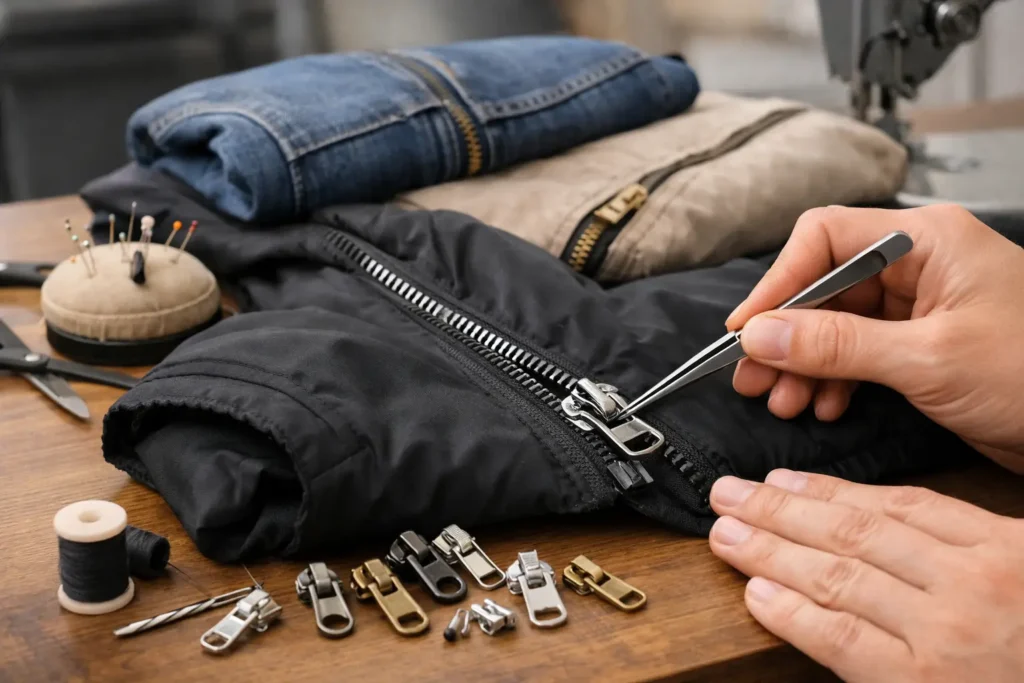
Zipper Replacement Melbourne for Your Garments
A zip that stops working can make an otherwise perfect garment feel unwearable. A stuck jacket, a dress that will not close, or trousers with broken teeth should not automatically end up in the rubbish. Professional zip replacement Melbourne services can restore the function, comfort and appearance of clothing you already know and love.
The right repair is rarely just about fitting a new zip. It involves assessing the fabric, seams, lining, stress points and original construction so the finished garment sits properly again. For quality pieces, occasionwear and favourite everyday clothing, careful zip work is often a far better option than replacement shopping.
Why zips fail in the first place
Zips work hard, particularly on garments that are fitted, frequently worn or pulled under pressure. A slider may loosen over time and stop gripping the teeth correctly. Teeth can bend, break or separate, while the zip tape itself can tear away from a seam. In some cases, the issue is simply fabric caught in the slider.
Jackets and jeans often develop problems through repeated use. Dresses can be affected by delicate fabrics, close-fitting construction or stress at the waist and hip. On leather garments, a worn zip may be paired with thicker material that requires specialised handling. The cause matters because it determines whether a small repair is possible or whether a full replacement will deliver the most reliable result.
A zip that occasionally catches may not need replacing. However, a zip that repeatedly opens behind the slider, has missing teeth, or pulls away from the garment is unlikely to improve with a quick fix. Continuing to force it can damage the surrounding fabric and make the eventual repair more involved.
Zip replacement Melbourne: repair or full replacement?
The best option depends on the condition of the zip and the garment itself. A skilled tailor will inspect more than the visible problem before recommending a solution.
When a zip repair may be enough
If the teeth are intact and the tape is secure, replacing or adjusting the slider can sometimes bring the zip back to life. A slider that has become loose may no longer close the teeth firmly, causing the zip to split open even though it appears closed. This is a common issue on jeans, skirts and some jackets.
Minor stitching repairs can also help where the end of the zip has come loose or the fabric has caught in the mechanism. These repairs are generally suitable when the zip is otherwise in good condition and the garment has not been stretched or torn around the opening.
When replacement is the smarter choice
A full replacement is usually recommended when teeth are missing, the tape is frayed, the zip is badly distorted, or the slider has failed alongside other damage. It is also the sensible choice when an old zip is unreliable and the garment is worth keeping.
Replacing the entire zip gives the tailor an opportunity to select a suitable length, colour, strength and type of closure. For example, a fitted dress may need an invisible zip that lies flat beneath the fabric. A winter coat may require a stronger open-ended zip, while trousers need a secure, neatly finished zip fly that can handle daily movement.
A new zip should complement the garment rather than look like an obvious repair. Colour matching matters, but so do the puller style, tape width and finish at the top and bottom of the opening. These details are especially important on formal dresses, tailored trousers and leather pieces.
The garment makes a difference
Not all zip replacements involve the same level of work. A straightforward skirt zip is very different from replacing a zip in a lined gown, a leather jacket or a structured suit trouser. The time required often depends on how the original garment was made and how much needs to be carefully opened and restitched.
On dresses, the zip may sit beside delicate seams, boning, lace or beading. The replacement needs to preserve the garment’s shape and avoid puckering the fabric. For bridal and formal wear, a well-installed invisible zip should close smoothly and remain discreet when worn.
For jeans and trousers, precision is essential around the fly front, waistband and topstitching. A zip replacement that is functional but poorly aligned can affect the fit and appearance of the whole garment. Tailored trousers deserve particular care because their clean lines make uneven stitching easy to notice.
Jackets present their own considerations. An open-ended zip needs to engage cleanly at the base and remain stable through regular use. Leather and heavier fabrics require appropriate needles, machinery and handling techniques to minimise marking and maintain a tidy result. If a jacket is lined, the lining must be opened and closed neatly so the repair looks considered from the inside as well as the outside.
Choosing the right zip for the job
A good replacement zip is selected for the garment, not simply chosen because it is available. Metal zips suit many jeans, leather garments and heavier jackets, providing durability and a classic finish. Nylon coil zips are flexible and useful for many dresses, skirts and lightweight garments. Moulded plastic zips are often practical for casual jackets and outerwear.
Invisible zips are popular for dresses and skirts because they sit concealed in the seam when closed. They create a clean finish, but they must be installed accurately to avoid rippling or a visible gap. For garments under strain, the zip also needs to be strong enough for its purpose. A delicate zip may look appropriate, but it is not always the best choice for a very fitted garment.
This is where an experienced tailor’s judgement is valuable. The closest visual match is not always the most durable option, and the strongest zip may not suit a fine fabric. The goal is a considered balance of appearance, function and comfort.
What to bring when arranging a zip replacement
Bring the garment in clean and dry, with the zip fully accessible if possible. If the zip has come apart or a piece has broken off, bring any loose parts with you. They can help identify the original zip type and show how the closure was intended to sit.
It is also helpful to mention when and where the problem occurs. Does the zip separate while walking? Is it difficult to pull over a particular point? Does the garment feel tight at the waist, bust or hips? A recurring zip problem can sometimes indicate that the garment needs a small fit adjustment as well as a new zip.
For special occasion clothing, allow time before the event. A quality replacement may involve sourcing a suitable zip, carefully unpicking existing stitching and reconstructing sections of the garment. Rushing a repair on delicate or complex clothing is rarely the best path to a polished result.
Why professional workmanship matters
It can be tempting to use a quick home repair, especially when the issue seems small. For a loose slider on a casual garment, this may occasionally be enough. But replacing a zip requires accurate measuring, stable stitching and careful control of the fabric throughout the process.
A zip installed even slightly unevenly can twist a seam, cause fabric to bunch or make a dress sit incorrectly on the body. On lined garments, there is also the challenge of preserving the internal finish. A professional repair protects the clothing around the zip rather than treating the closure as a separate part.
At AD Stitch, zip repairs are approached as part of the garment’s overall construction and fit. That craftsmanship-led approach is especially worthwhile for favourite pieces, professional clothing and garments chosen for important occasions.
Before deciding a garment is beyond saving, have the zip assessed by a trusted local tailor. A carefully chosen and properly fitted replacement can give your clothing many more years of comfortable, confident wear.