


Best Repairs for Favourite Clothes That Last
A broken zip on the trousers that fit perfectly, a hem coming loose on a much-loved dress, or a jacket lining starting to tear can make a good garment feel suddenly unwearable. The best repairs for favourite clothes are rarely about making do. Done properly, they restore comfort, preserve the original shape and help you keep wearing pieces that already suit your life.
Repair is particularly worthwhile when the garment fits well through the shoulders, waist or hips, has quality fabric, or holds sentimental value. A carefully repaired piece often looks better and lasts longer than a quick replacement from the shops.
Repair or replace? Start with the garment itself
Not every item needs saving, but many clothes are discarded for faults that are entirely repairable. A missing button, split seam or damaged hook is usually straightforward. Even more involved issues, such as replacing a trouser zip or repairing a torn lining, can be excellent value when the garment is otherwise in good condition.
The key question is whether the fabric around the damage is still sound. If a zip has failed but the waistband, seams and cloth are strong, a replacement zip can give the garment years more wear. If the fabric is thinning across several areas, tearing repeatedly or badly faded, repair may only delay its retirement.
Fit matters too. A favourite blazer that sits neatly across the shoulders or a dress that flatters you in all the right places is worth more than its original price tag. Replacing it with something that fits as well can be surprisingly difficult.
Best repairs for favourite clothes
Replace a broken zip properly
Zips fail in different ways. Sometimes the slider has worn out, sometimes teeth are missing, and sometimes the zip tape has pulled away from the fabric. For jeans, trousers, skirts and dresses, a full zip replacement is often the neatest and most dependable option.
A good repair considers more than function. The replacement needs to be the right length, strength and colour, while the waistband or seam must sit flat once it is sewn back together. This is especially important on fitted trousers and dresses, where a poorly installed zip can cause puckering or alter the fit.
Restitch split seams before they grow
A seam opening at the underarm, side seam, crotch or inner leg may look minor, but it should be repaired early. Continued wear puts pressure on the surrounding stitches and can stretch or fray the fabric edges, making the repair more visible later.
Professional restitching follows the original seam line and uses an appropriate stitch length and thread. On tailored garments, the seam allowance may also need reinforcing so the repair can withstand regular movement. This is a small repair that makes a real difference to the life of workwear, school uniforms and everyday favourites.
Repair hems with the right finish
Loose hems are common on trousers, skirts, dresses and sleeves. They are also easy to spot when the finish does not match the rest of the garment. A blind hem on a dress trouser, for example, needs a different approach from the topstitched hem on denim.
The best result retains the garment’s original look. That may mean matching the thread colour precisely, preserving a faded jean hem, or hand-finishing a delicate fabric so stitches stay discreet. Hem repairs are also a good time to check the length, particularly if you now wear different shoes or have found the garment sitting awkwardly.
Patch holes without losing the garment’s character
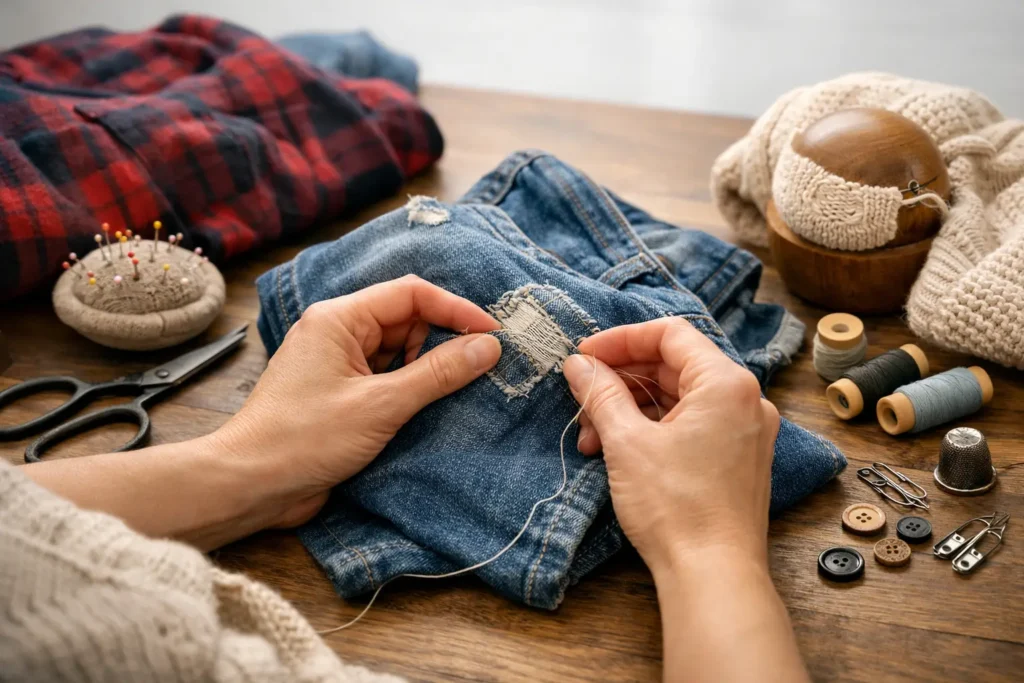
A small hole does not always call for a large, obvious patch. The right method depends on where the damage sits and what the fabric is. A discreet repair may work for a tear near a pocket or seam, while a carefully placed patch can become a practical design detail on casual denim or workwear.
Fine fabrics need a more delicate approach. Snags and small holes in silk, wool blends or lightweight dresses can worsen quickly if pulled or roughly stitched at home. The aim is to stabilise the area with as little bulk as possible, so the garment remains comfortable and retains its drape.
Replace buttons, hooks and fasteners
Missing buttons are one of the simplest reasons clothing ends up unworn. Yet matching the right button can be trickier than it seems. Size, colour, finish, shank depth and placement all affect how a jacket, shirt or coat sits when fastened.
Hooks, press studs and trouser bars are equally important, especially on formalwear and fitted garments. If a fastener keeps coming loose, it may be a sign that the surrounding fabric or backing needs reinforcement, not simply another stitch through the same weakened area.
Restore jacket and coat linings
A torn lining can make an otherwise excellent jacket feel shabby and uncomfortable. Linings tend to fail at points of friction, including the armholes, centre back and pockets. Replacing or repairing the affected section can make the garment easier to wear while protecting the outer fabric from strain.
For suits, blazers and coats, lining work requires care because it affects how the garment moves. A lining that is too tight can pull at the shoulders or restrict your arms. A properly fitted repair gives enough ease for movement without bunching inside the garment.
Repair leather with specialist handling
Leather jackets, skirts and trousers should not be treated like ordinary fabric garments. Needle marks can be permanent, and the wrong thread, machine setting or repair placement can cause further damage. Tears, damaged seams, broken zips and lining issues all need an assessment based on the leather’s thickness, finish and condition.
When leather is well cared for, repairing a fault is often worthwhile. These are garments that can improve with age, and a thoughtful repair helps retain the look that made them a favourite in the first place.
When a repair should include an alteration
Sometimes the damage reveals a fit problem. Repeated splitting at the crotch of trousers may mean there is not enough ease through the seat or thigh. A zip that strains on a dress may indicate the bodice is too tight. A hem that keeps catching under your heel could simply be too long.
Combining a repair with an alteration can prevent the same issue from returning. Taking in a loose waist, adjusting a shoulder strap, reshaping a side seam or shortening a hem may be a sensible addition while the garment is already being worked on. It depends on the construction and fabric, but this approach can turn an unworn item back into a reliable part of your wardrobe.
This is also where a fitting is valuable. Photos can show damage, but they cannot always show how a garment sits when you move, sit or lift your arms. An experienced tailor can identify whether the issue is isolated or linked to the fit.
Why quick fixes can cost more later
Iron-on patches, safety pins, adhesive hem tape and hand stitching all have their place as temporary solutions. They can get you through an event or a busy week. However, they may leave adhesive residue, add stiffness, pull delicate fabrics or make a later repair harder.
The same applies to forcing a stuck zip or continuing to wear a seam after it has opened. Small faults tend to spread under pressure. Addressing them promptly usually keeps the repair cleaner, more affordable and less noticeable.
For garments you wear often or value highly, professional workmanship is about protecting the original design as much as repairing the damage. At AD Stitch, each repair is assessed with attention to fabric, construction and fit, so the finished garment feels like yours again, not like a compromise.
Before placing a favourite piece in the back of the wardrobe, check whether the problem is truly beyond repair. Bring it in clean, point out when and where the issue occurs, and wear the shoes or undergarments you would normally pair with it if fit is involved. A careful repair may be all that stands between a forgotten garment and many more confident wears.